How the Internet of Behavior (IoB) Enhances Customer Relationship Management

A network of linked physical objects known as the Internet of Things (IoT) uses the Internet to gather and exchange information and data. The complexity of the IoT is continually growing and changing, including how devices are connected to one another, what calculations these items are capable of performing on their own, and how data is stored in the cloud. The Internet of Behavior (IoB) refers to the collection of data (BI, Big Data, CDPs, etc.) that offers useful information on client behaviors, interests, and preferences. The IoB makes an effort to comprehend user online activity data from a behavioral psychology standpoint. It addresses the issue of how to comprehend the data and how to use that comprehension to develop and advertise new products, all from the viewpoint of human psychology.

IoB and its contribution

The Internet of Behavior, often known as the Internet of Behaviors or IoB, is a relatively new industry idea that aims to comprehend how customers and companies make decisions based on their digital experiences. The IoB unites three academic disciplines: Internet of Things, edge analytics, and behavioral science (IoT). The IoB’s objective is to record, examine, and react to human behavior in a way that makes it possible to follow and comprehend that behavior utilizing developing machine learning algorithms and upcoming technical breakthroughs. The IoB uses cutting-edge data-driven technology to sway consumer purchase choices in a way that prioritizes the requirements of the customer.

Many users are happy to provide their data as long as it adds value, data-driven value whereas some users are hesitant to do so. For businesses, this includes having the ability to alter their brand, promote their goods to consumers more successfully, or enhance the Customer Experience (CX) of a good or service. It is conceivable that data on every aspect of a user’s life could be gathered with the ultimate aim of enhancing effectiveness and quality.

Applications of IoB in Customer Relationship Management

Every day, the number of IoB applications grows significantly. For businesses, this is currently a crucial marketing strategy. IoB’s “intelligence” can be advantageous to both people and businesses. It appears as a cutting-edge means of transferring and storing data. This examines the opportunities and assesses the hazards. IoB seeks to accurately comprehend and apply data in order to build and market products. It is utilized to put into practice cutting-edge customer experience strategies, enhance the search experience, and create and market goods and services for enterprises. Organizations increase their data collection and mix and use of data from numerous sources. IoB is capable of collecting, combining, and processing data from a range of sources, including social media, consumer data, citizen data gathered by government organizations, and facial recognition and geolocation.

The advantages of IoB in specific are:

  • Analyze the buying patterns of customers across all platforms.
  • Analyze previously unobtainable information on how consumers utilize items and technologies.
  • Learn additional specifics about the stage of the purchasing process that a consumer is at.
  • Targeting and real-time POS notifications are provided.
  • Quickly resolving issues will help you close sales and keep consumers satisfied.

Conclusion

IoB has quickly evolved into a universal setting that regulates human behavior. To connect people and computers for behavior analysis, a milestone is required. IoB analyses behavioral data before determining its potential. In order to develop methods for producing and selling things to consumers, businesses have examined, tested, and used a variety of methodologies. The information can serve as the foundation for corporate growth, marketing, and sales strategy. Various fresh data and materials may be analyzed by the industry. Additionally, it contributes to greater consumer pleasure and profit. The IoB assists with research by collecting information from many touch points along the way. This results in the creation of more points and new channels of consumer communication. IoB is used for marketing and advertising and will assist business people in enhancing their operations. It boosts market revenue and the use of connected devices that connect to the Internet and use wireless networks to collect and transfer data without the help of humans. The IoB uses the data collected to transform the information into knowledge. It links people to their behaviors and combines behavioral psychology. IoB issues a warning about a bad scenario and provides advice for altering the course of action. It gathers behavioral and user data from devices connected to the Internet and gives consumers perceptions of their needs, interests, and behaviors. Internet of Behavior (IoB) will undoubtedly advance the field of customer relationship management in the upcoming years with all these potential and capabilities.

CRM-ERP Integration Advantages and Benefits

Offering extremely good client experiences at every stage in the consumer venture is not only a differentiator but a customer expectation. Optimizing every customer touchpoint or interaction will increase the likelihood of customer satisfaction. But without access to integrated data, agencies struggle to maintain their customers’ happiness.

The mixing of Client Relationship Management (CRM) and Enterprise Resource Planning (ERP) systems is critical in delivering seamless client experiences. Now, let’s take a look at how connecting CRM and ERP applications can advantage your enterprise.

5 proven key benefits of CRM & ERP integration

1. Comprehensive view of customers

CRM and ERP integration offers a holistic view of the customers. It may be the most essential reason why you want it. Whenever you combine ERP and CRM systems, you get a complete view from your customers. From accounting to funds, income, and support, it offers all-out visibility and accuracy. It assists you with providing a higher value to your customer base. Your agency will have all the total facts it wishes to pursue extra certified choices and the most talented techniques to keep up with, and in addition, broaden your commercial enterprise relationship with customers.

2. Enhances performance

Companies repeatedly are caught investing strength in manual, strenuous obligations that call for loads of resources. Using an integration platform with a prebuilt ERP gadget and CRM system enables simplifying those strategies as they automate the work tactics for you and improve performance.

3. Eliminates data duplication

A good ERP system or business management solution will be able to incorporate the individual departmental gaps and completely eradicate the need for duplicate data. Using ERP and CRM it removes the possibility of duplicate or incorrect information and advances facts-pushed procedures for the duration of your corporate environment. Inaccurate statistics also can be controlled via your integrated platform. As a result, your corporation benefits from advanced statistics-driven workflows and consequences.

4. Advanced employee collaboration

Connected employees get an advantage from increased productivity and performance. Because everyone is on an equal page, they could push for more results. Previously, each group had a completely unique set of comparable statistics and as a result, getting the right records at the proper time turned out to be almost impossible.

While ERP and CRM work together, your team can proportion and expend up-to-date information. It increases their possibilities of manufacturing higher, more effective consequences. Salesforce confirms that high performers opt for cross-departmental collaboration. According to an AON study, engaged groups can drive 17 percent better productiveness, which can cause 21 percent better profitability and, ultimately, 10 percent better client rankings.

5. Accelerated motility with ERP and CRM integration

Constant facts assist sales and operations in correctly managing client contracts. It enables them to shorten settlement approval stages and even have same day signing. Therefore, an integrated system will help with shortening prolonged and sluggish performance. Cloud-based CRMs likewise make it easy to get to facts and update duties from any vicinity. It helps quicker time-to-income and expands valuable business possibilities.

The integration Challenge

In general, ERP and CRM systems are slow because their distinct configurations make integration difficult. Custom point-to-factor integration is frequently used by those seeking seamless connectivity between the two. This method is more delicate and difficult to manipulate. While using point-to-point connections, a developer must manipulate connectivity and make changes. Furthermore, changes have an impact on the entire system, leaving room for errors. These point-to-point integrations provide a quick recovery but become more complex as organizations grow.

Integrating workflow automation together with your CRM and ERP structures.

Your CRM and ERP system are primarily used by your organization for the dissemination of key strategies, the most notable of which is a quote-to-cash. To truly transform these processes so that they are resilient, scalable, and environmentally friendly, you’ll want to create workflow automation that can work from commercial enterprise activities; once activated, real-time enterprise outcomes (or actions) should occur across your CRM, ERP (among other apps), statistics, and groups.

Conclusion

ERP and CRM integration can enhance corporate efficiency and help you develop your client base. To enjoy the perks of CRM and ERP integration, recognize your vital necessities. Survey your systems, arrange your information, and sort out how you’ll combine. Eventually, you may locate the proper combination that supports your requirements now and later.

The Role of IoT in Sustainable Transportation

How IoT creates value and increases sustainability for different segments in the transportation industry

Research proves that 95% of companies are investing in IoT since it will help them improve their sustainability practices as well it is also the backbone for many solutions in the present and future. IoT solutions such as real-time tracking, route optimization, predictive asset, and product maintenance can help increase sustainability and productivity. According to Gartner the aviation and transport industry will account for the largest opportunities to increase and generate $64 and $11 billion by 2028 with the help of IoT features. Implementing IoT approaches for different segments of the transport industry such as sensors on railways, highways, roads, bus stops, airports can smoothen the entire operation process as well as increase visibility and transparency.

Air travel
The use of IoT not only provides passengers with real-time information about their baggage and boarding details but also helps reduce excess waste and utilize energy and power in a sustainable manner by switching off lights in empty areas and controlling the temperature.

Public transport
IoT technology not only updates passengers with real-time data about the bus schedule and timings but also reduces wastage of fuel, resources, materials, and cost with its real-time and automation features. IoT sensors are beneficial since they provide data about real-time air pollution as well as reduces pollution. Moreover, the sensors help address issues regarding temperature, fuel, and route optimization.

Road traffic department
The use of IoT helps in managing the road traffic department in an effective manner. The real-time features help in managing traffic, accidents, and roadblocks. It helps with parking issues and also helps individuals in identifying where they parked their cars to avoid wasting time and fuel.

Supply chain
Implementing IoT with supply chain strategies for companies has proved to be effective and efficient since it helps in reducing waste, fuels, and costs. It even smoothens the transport solution process with its real-time features and tracking devices. It even minimizes the usage of electricity.

Logistics
This sector accounts for 1.6 billion of CO2 emissions. IoT technology can be used to improve communication, usage of resources and materials, and navigation. The real-time feature will help drivers to avoid routes where there is a lot of traffic or delay which will reduce wastage of fuel. Better navigation due to real-time data will help minimizing harmful emissions. IoT data can help update owners regarding maintenance issues such as faulty parts which can reduce waste. IoT is a great way to minimize the use of power and electricity due to its smart features, real-time data, and sensors.

Automotive Industry
The connected vehicle technology enables communication among vehicles and infrastructure which can reduce crashes, energy, and gas emissions with the help of real-time and navigation IoT features. It even improves customization and the complete fleet operation becomes much more effective and efficient since it reduces gas emission and fuel.

The advantages of integrating IoT practices with day to day operations

IoT technology is beneficial not only for the present but for the future as well. It helps increase effectiveness for different operational activities at a low cost. Not only does it help with sustainability but also increased the security of different stored information.
PwC states that technologies such as IoT can help reduce environmental challenges and increase sustainability.

Sustainable environment – Real-time data and sensors help in better route optimization, planning, understanding traffic issues as well as reducing fuel, wastage of resources, and energy.

Smooth operational practices – Real time data enhances the entire operational process. It helps reduce cost and improve productivity and monitoring.

Better customer experience – Increases focus on customization as well as with real time data customers can plan better. It increases transparency, communication, and efficiency.

Increased safety and protection – With the use of sensors, important aspects such as temperature, speed of vehicle, issues and accidents can be minimized. It helps improve the safety of various aspects of the transportation industry. Helps understand key issues regarding maintenance.

Cost effective and efficient – IoT sensors and real-time features help improve planning when it comes to resources. Sensors help with sending updates regarding maintenance to avoid any accidents or wastage of resources. It even reduces energy consumption.

In conclusion

Nowadays, both businesses and consumers focus on sustainable practices which is why integrating IoT along with the day-to-day operations and goals of the company can increase sustainability and improve the carbon footprint in a cost-effective manner. The adoption of IoT technology by companies will help reduce emissions, pollution, and fuel, which will indeed make the world a better and greener place for the present and future.

Electric Vehicles Revolution with Quantum Computing

We live in a fast-paced world where people are frantically juggling their professional and personal lives. With advances in science and technology, the transportation and communication sectors have advanced significantly, reducing the amount of time, resources, and effort expended in travel. Electric vehicles have evolved over time, with the assistance of artificial intelligence and quantum computing, to become highly efficient and optimized for people’s transportation.

Quantum computing has a variety of applications in revolutionizing the automobile industry such as improving battery performance, avoiding traffic congestions, preventing car accidents and mishaps by machine learning and analysis etc. that can greatly benefit the sector when they come to fruition. Machines in quantum computing work with physical properties of matter, such as superposition or entanglement, which means that calculations can be performed on multiple states of matter at the same time, drastically reducing computation time.

Advantage of Quantum Computing The brainchild of Nobel laureate Dr Richard Feynman, quantum computing has progressed to enormous levels of growth, finding a variety of applications in different fields and sectors. Quantum computing involves simulation of the physical nature of objects at subatomic sizes while allowing them to exist in more than one state. This allows rapid simulation and processing of data than conventional systems, making quantum computers much more powerful, efficient, and faster. It has been applied in fields like Cryptography, Medicine, and material sciences to accommodate multiple variables or molecules in simulations to reach the desired end product or solution. Various automobile companies like BMW (CNET) and Hyundai (Eetasia) have started working with quantum computing systems to solve various issues like cost optimization, development of new batteries, optimization of components to improve cost-effectiveness etc.

Quantum Computing in Battery Technology

Quantum computing has been applied to develop effective solutions in improving the battery technology in cars and automobile systems as it can simulate multiple molecules of compounds simultaneously in different states, conditions, and environments to help identify the ideal combination of variables. Hyundai Motor Co. has partnered up with quantum computing experts to develop a robust battery that can function with improved capabilities and durability when used in electric vehicles. They aim at reducing the cost of battery development and production to reduce the overall cost of the vehicles, improve affordability and progress towards sustainability. A quantum computer of sufficient complexity—for example, enough quantum bits or “qubits”—could theoretically achieve a quantum advantage, allowing it to solve problems that no classical computer could ever solve. In theory, a quantum computer with 300 qubits fully dedicated to computation could perform more calculations in an instant than the visible universe’s atoms Quantum computing has also been applied in the development of novel technologies that can improvise the functioning of EV batteries by incorporating advanced technologies to cool them. It is applied by compartmentalizing big issues into individual parameters that are simulated using quantum computing to be later integrated into the conventional systems as a hybrid model or to fashion a completely new model by combining the solutions offered by quantum computing(EENewsEurope).

Quantum Computing in Autonomous Driving Quantum computing can facilitate the design and development of powerful operating systems to produce self-driving cars, simplifying transportation and reducing the chances of human errors in road traffic accidents. Artificial intelligence and machine learning require the real-time analysis of vast amounts of data to produce optimal responses to changing environmental conditions and quantum computing with its excellent computational features

can lend a hand in facilitating the requirements. Volkswagen(Prescouter) has experimented in the design and development of computational systems to optimize traffic control and regulation in the city of Beijing and has found great success in this venture. It also has applications in improving vehicle to vehicle and vehicle to cloud communications in next-generation cars that are expected to have the ability to communicate with cloud computing systems to regulate driving data. This will help in traffic and fuel optimization in cloud-connected cars while providing a safe environment for decentralized communication between them.

Conclusion

Quantum computing has unlimited potential and practical applications across different fields and sectors and can make a path for enormous progress in the automobile sector. Companies and enterprises in the automobile sectors would greatly benefit by working with quantum computing as it is a leap towards greater sales and a greener environment. Recently, quantum computing has gained a lot of traction in both general society and the private sector. Companies have been pouring huge sums of money into quantum computing research, with the last few years being the busiest for this innovation.

Building business resilience through Intelligent Automation

Industry thought leaders, consultants, and analysts have been reiterating the importance of embracing automation across industries but have received little or no adoption among organizations. Over the last year, intelligent automation has disrupted and reshaped the world, thanks to the widespread adoption of digitization and covid19.

From Industry 1.0 to Industry 4.0, intending to reduce cost and to improve efficiency, organizations have always tried to automate business processes with whatever technology or machinery is available to them. With the widespread adoption of digital technologies, automation has evolved quickly during the last few years. Though traditional automation has been around for quite some time, the introduction & adoption of Robotic process automation (RPA) has taken the automation industry by storm. RPA streamlines & automates business processes that are repetitive and manual-labor intensive – it has transformed human lives, the business ecosystem, and the global economy in an unprecedented way.

What is Intelligent Automation?

With advancements in digital technologies such as Artificial Intelligence and Machine Learning, a smarter version of RPA that analyzes the vast amount of data generated, then decodes and learns the business process itself with context, rather than perform a series of rule-based tasks, has paved the way for Intelligent Automation.

IA combines artificial intelligence and automation to create smart business solutions that can analyze, learn, and adapt to improve the efficiency and productivity of any organization. It leverages natural language processing, computer vision, machine learning, and machine vision to understand and solve complex business challenges. Intelligent Automation automates any business processes that leads to reduced operational costs, improved efficiency, and enhanced customer experience.

Let’s explore how Intelligent Automation Solutions are disrupting different industries.

Healthcare  

With the implementation of Intelligent Automation solutions, healthcare providers can devote more human resources towards patient care as the mundane & time-consuming tasks are taken care of by IA. The Healthcare industry struggled with the processing of unstructured data involving text, videos, and images – intelligent solutions took over the unstructured data processing and automated tasks such as collecting and interpreting diagnostic results, pharmacy & laboratory operations, etc., in a short time frame with increased efficiency.  Digitization of health records, inventory management, automating unstructured data processing, automating contact center operations, patient journey management, etc., are some of the ways automation has made an impact in healthcare.

With virtual caregivers, patient management robots powered with speech & facial recognition, and AR/VR technologies, the healthcare industry can offer personalized patient care, ensuring superior patient and employee satisfaction.

Retail

Artificial intelligence infused into Robotic Process Automation (RPA) has enabled retailers to offer personalized offers to each customer. Intelligent Automation solutions analyze the massive amount of data generated via various customer touchpoints to create a seamless and error-free shopping experience for their customers. Assistive body measurement solutions by leveraging cutting-edge Artificial Intelligence & computer vision technologies to automate and fast-track body measurement and apparel-size recommendations for their customers accurately and efficiently is one of the applications of IA in retail industry.

Pricing analytics, a sub-discipline of Intelligent Automation, helps retailers adjust prices based on customer’s intent and real-time market conditions. It can also gather customer sentiments from various social media platforms and allows retailers to make informed decisions. IA significantly improves the retailer’s operational efficiency, reduces costs, and ensures superior customer experience.

FinTech

FinTech organizations embraced Intelligent Automation solutions to automate almost every aspect of their business process. Combining technologies such as Artificial Intelligence, Machine Learning, Natural Language Processing, Computer Vision, etc., Intelligent Automation enables FinTech providers to offer cognitive agents such as virtual assistants and chatbots. These cognitive agents are capable of learning complex structured and unstructured data to make logical decisions and have disrupted the way customers engage with financial institutions.

Intelligent Automation solutions help wealth management organizations analyze the vast amount of available data to understand stocks’ historical performance, make more accurate predictions in the future, and help gauge market movements in near real-time. These solutions can also help FinTech providers to meet regulatory compliances and standards as they reduce the risk of human errors significantly.

Transportation & Logistics

In recent times, automation in transportation industry has made significant advancements. Intelligent Automation solutions enabled the highly fragmented and complex Transportation & Logistics industry to become more efficient and transparent with fewer resources – autonomous trucks, driverless cars, and drone taxis are some of the most exciting intelligent automation applications within the transportation & logistics industry.

With the widespread adoption of digitization, the customer’s logistics & transportation expectations have changed enormously. Intelligent Automation solution providers help organizations streamline & optimize their business processes such as transportation planning, route planning, warehouse network management, and inventory management to meet the rising and fluctuating market demands. Driven by insights and predictions, IA solutions help organizations be more efficient, meet customer demands, and make better faster decisions.

In Conclusion

Intelligent Automation solutions are designed to address complex business problems, simplify business processes, reduce costs and improve efficiency. With increased market demand and dynamic customer expectations, if businesses don’t automate everything they can, they may not survive.

At Experion Technologies, we understand the intelligent automation ecosystem and can help build customized solutions for organizations across industries. To know more about Experion’s automation capabilities and how we can support your journey towards automation, contact us at sales@experionglobal.com   

Designing Micro-Transit Ride Matching and Relay Algorithm

According to SAE International, Microtransit is defined as a privately or publicly operated, technology-enabled transit service that typically uses multi-passenger or pooled shuttles or vans to provide on-demand or fixed-schedule services with either dynamic or fixed routing.

Micro-transit offers superior customer experience and improved efficiency of services with real-time supply and demand, dynamic pricing, tracking, cashless payments, customized seat location, and so on. This drives numerous transit agencies to offer micro-transit services in different capacities. Micro-transit transportation could be an alternative to otherwise public transport commuters, and the trend is likely to rise going forward.

Customer retention is high as long as the providers can ensure a seamless experience, which can be assured by the IT experts that provide software solutions to these companies. Leveraging solutions providers’ technology expertise, micro-transit companies can meet changing market requirements of shared urban mobility sustainably.

How we developed an on-demand micro-transit product empowered with a scalable, high-performance ride-matching and relay algorithm

Transportation enterprises providing on-demand taxi services constantly look for methods to increase operational efficiency by reducing the time required for a passenger (demand) to get the cab (supply) as well as for the cab drivers (supply) to engage in the next ride request (demand).

The main component of such an on-demand micro-transit solution is the Ride matching and relay algorithm, which identifies the cab for a specific ride request.

Objectives / Design considerations for the algorithm:

  • The application should respond to ride requests in real-time to ensure that passenger spends minimal time on ride searches.
  • It should handle the unpredictable peak-request-load for ride requests. The algorithm should auto-scale to handle all the requests and still provide the same performance as regular non-peak hours.
  • The algorithm functions based on multiple configurable parameters like geospatial proximity, dry run distance, provision for a uniform opportunity, ride request rejections, average KPI ratings of drivers and passenger, variable pricing strategies, live location of a cab, etc.
  • It should be able to integrate with online navigation services which consider congestion data. The algorithm should execute geospatial queries for the real-time calculations involving driver-vehicle location data.
  • The algorithm should ensure that service is available 24*7

Why did we choose AWS Lambda with Python?

The application should be designed to handle a large number of concurrent ride requests during peak times without impacting its performance. With limited time to market, we started exploring cloud-based services that could work as a platform for the algorithm to run.

AWS Lambda was known to be highly scalable and could process high loads. Lambda has a serverless architecture, which means that you do not have to keep an instance of the server running at all times. The product was being developed in .NET for APIs, and since AWS Lambda supported .NET, it was the natural first choice.

We completed a proof of concept using AWS Lambda with .NET functions. However, during the proof of concept phase, it was found that there was a weakness in Lambda named ‘Cold Start’. We had to find a solution to manage cold starts.

What is a Cold Start?

Cold Start is the ‘start-up’ time required to get a serverless application’s environment running when it is initiated after a period of inactivity. Lambda applications run on ephemeral containers managed by AWS. AWS has its own complex algorithms to manage the infrastructure dynamically based on what we have subscribed to in the Lambda configuration. If Lambda services are not being invoked for a while, the containers managed by AWS Lambda shall shut down to save its valuable computational and memory resources. When the Lambda service is triggered again, resources must be allocated to it again, which results in latency.

When we tried the proof of concept with AWS Lambda services written in .NET, we noticed that the cold start time was in the range of 5-10 seconds. Our business APIs were written in .NET. GIS-based APIs were written in Python as it had excellent libraries to handle geospatial functions and data volume. Since AWS Lambda supported Python, we decided to try Lambda services written in Python.

Cold start for AWS Lambda with Python was noticed to be less than half a second, and hence we narrowed down on using AWS Lambda with Python services.

Designing the ride-matching and relay algorithm 

Having settled on the technology to be used, we designed the Ride Matching and Relay Algorithm as follows:

  • We decided to use DynamoDB in AWS to store and manage the ride requests. DynamoDB had very good read or write response times and is known for its performance along with the ability to auto-scale. The ride requests from passengers were written into an AWS DynamoDB table. Multiple ride requests may be raised concurrently by different passenger.
  • Ride matching and relay algorithm picks up the ride requests from the DynamoDB for processing.
  • The algorithm is designed with a three-level hierarchy of Lambdas to separate layers of responsibility to optimize the execution time.  Each layer processes information and returns the result to the parent Lambda function:
    • Level 1 Lambda – This Lambda service sits at the highest level. It reads the DynamoDB table for new ride requests at regular intervals. It groups a set of ride requests and spawns level 2 Lambda services.
    • Level 2 Lambda – This Lambda service gets a set of ride requests as input. Its main function is to further spawn multiple Level 3 Lambda services for each ride request, accept the selected cab driver for the ride request, and write this into the DynamoDB for a ride request.
    • Level 3 Lambda – This Lambda service gets a specific ride request ID as the input. The objective of this Lambda function is to identify the cabs that qualify for the ride request, score them, and find the highest-ranked cab to serve the ride request. This scoring is based on multiple parameters like distance, time, driver KPIs and many more.
  • Based on the cab driver allocated against a ride request, the algorithm will invoke another Lambda service to send the ride request to the driver’s mobile app.
  • In case the driver rejects or misses the ride request, the ride request is passed to the algorithm again.
  • If the algorithm is not able to find any supply for the ride request after X seconds another Lambda service will remove all the expired requests.

Achieving the desired output &  delighted customers

The application was developed and deployed into production and met all client expectations and market requirements, which in turn resulted in happy customers. Customers are able to find rides using the application with minimum waiting times, thanks to the ride relay algorithm. The response time of the algorithm was consistent across different loads. There were even scenarios where the peak volume of ride requests went much above the expected levels. No deterioration in performance was noticed and the system was able to cope up with the unanticipated levels of load.

In conclusion

Our ability to reap the benefits of on-demand micro-transit transit services will depend on companies’ creating superior products that support and meet dynamic market conditions. We at Experion are proud to have developed and delivered a micro-transit on-demand product with high potential for innovation and scalability, reduced costs, ensuring tangible benefits for our client.

If you have a challenging idea for the mobility and transport sector and require an IT partner who’s equipped to help you make it happen, please feel free to get in touch with us at sales@experionglobal.com

Benefits of digital transformation for business resilience

The environment where the business operates is ever-changing. It is also vulnerable to various risks. Not all the risks can be predicted, and so resilience is the only key for a business to survive in the long run.

Businesses achieve resilience through digital transformation. Putting it simply, the first step to business resilience is admitting that digital transformation is the answer to the toughest challenges faced by businesses operating in an environment of uncertainties.

Here is a beautiful thought explaining digital transformation for businesses in one sentence.

The biggest part of digital transformation is changing the way we think. – Simeon Preston

So, the next step is to understand how to use digital transformation to make business resilient; continue reading to find out!

  • Brand Management
    At first glance, connecting branding to digital transformation would appear a bit strange. But, after going into the intricacies, we can understand that business resilience depends a lot on brand value. And, to create a great brand image, you need to manage your brand with the use of digital transformation techniques. The activity of brand management starts with building an excellent website that can attract users, engage them, and convert them into customers. Various digital marketing techniques can help you engage with the target audience through multiple digital platforms, including social media and third-party websites. Last but not least, digital transformation assists you in maintaining the brand reputation by supporting your customers and engaging with them through all possible channels such as messengers, email lists, social media, etc.
  • Automation
    Automation is the most crucial factor in business resilience. Automation has reduced human intervention in so many processes, making them efficient and productive. The automated processes can continue tirelessly, unlike the human-dependent ones. Also, there is no possibility of human bias in automatic processes. These are relatively error-free and faster. Moreover, automation can even be used in processes that are risky for humans to engage in. What are the prominent business processes that must leverage automation? You can automate almost all business processes starting from the basics such as data collection, business communication, to the more complex ones like procurement, customer support, time tracking, supply, and even decision making! Identify the areas relevant to you and implement digital transformation in stages. You can objectively evaluate the order of your priorities.
  • Flexibility & Scalability
    Digital transformation makes processes better. Process optimization involves extensive use of technology for improving process speed and reducing process time. Streamlining complex processes makes them less vulnerable to risks, damages, and delays. Flexible processes can accommodate uncertainties so that productivity is unaffected even in adversities. Digitally transformed processes are easily scalable as each part of the process adapts to circumstantial scaling in no time without affecting the coordination between the previous and next stages.
  • Customer Centricity
    Every business revolves around its customers. They are the ones who will decide the success or failure of your business. So, most smart businesses aspire to be customer-centric. But, being customer-centric is not easy. Right from thinking from the perspective of the customers, to going that extra mile for the customer, everything requires effort, time, and intelligence, apart from intentions. Digital transformation helps businesses revamp their systems and processes to make them naturally customer-centric. So, the system is designed to make it responsive to customer needs. With better access to customer data, customer profiling is easier. There is a standard common source for all the customer information which can be used by business across levels and departments. So, everyone in a customer-centric business understands the customer needs and preferences equally well. They can thus synchronize the efforts across the organization to offer personalized services to the customer. Also, no matter what channel the customer approaches from, he is always directed to the right front with the use of technology-driven smart processes. To summarize, digital transformation helps businesses improve customer experience. It also enables omnichannel customer support. With the use of bots and virtual assistants, the process is faster and more consistent. When you are so customer-centric, you will have more satisfied customers who will refer you to their network. And, you can expect to build strong and long-term customer relationships.
  • Business Intelligence
    Business owners suffer from strict time constraints. And risky decisions have to be taken in no time. No matter how capable humans are, it isn’t very easy for humans to assimilate so much data, and analyze it to make the right decision in a strict time frame. Digital transformation has a significant contribution to business intelligence. Decision making is not just risky but also very time-consuming. It also involves a lot of data, and so, the data has to be accurately gathered, appropriately stored, and efficiently used. Big data speaks volumes about your customers, competitors, market, trends, etc. Big data analytics is thus a significant source of data for business decision making. Big-data has also made it convenient for businesses to get access to large volumes of organically generated data. Digital transformation has increased the availability of data to businesses.  But, decision making requires using the right data and interpreting it correctly to make decisions. So, the use of technologies such as artificial intelligence, machine learning, and deep learning are now helping businesses to make informed and data-driven decisions.As AI improves with machine learning, the accuracy and relevance of decisions is very high and keeps increasing. Also, the processing of information is fast, and so the decision-makers can rely on business intelligence in situations of crisis.
  • Overall Improvement
    Digital transformation brings a change in almost everything that you do. It helps you implement Kaizen, the concept of changing for better, continuously. Digital transformation helps you prevent errors, increase accuracy, improve reliability, reduce risk, maximize output, minimize waste, etc. It also prepares you for risks and disasters in the volatile business environment.

Wrapping Up!

So, now you know why digital transformation is vital in building resilient businesses. You are also aware of the various ways you can transform your business digitally to prepare it for any foreseen or unforeseen changes in the environment. But, it is easier to learn and difficult to implement as digital transformation means a complete overhaul in the way you think and work. Hiring professional digital transformation specialists can make it more accessible as they are experienced in change management.

Experion has helped Enterprises and early-stage companies be resilient, guiding their digital transformation journey leveraging the latest digital technologies. Experion’s team of specialists has enabled our global clients to handle dynamic business scenarios, enhance productivity, improve quality of service & offerings, and assisted them in intelligent decision making. To know more about Experion’s Digital Transformation Service offerings, drop a mail to sales@experionglobal.com.

Guest post by Jin Markov, Content Writer with GoodFirms, a research firm in the USA. 

Clutch Top Mobile App Developers

Experion Technologies has earned a spot in the Clutch directory of the world’s top Retail mobile app developers. Clutch is a B2B ratings and reviews platform that identifies outstanding IT firms to help businesses make smarter buying & hiring decisions.

After conducting in-depth research and client interviews with almost 9,000 top software developers globally, Clutch ranked Experion among the top ten. Over the past two years, Clutch analysts have spoken directly to more than 30 of our clients, and we are proud to maintain a 4.9 out of a 5-star rating as a result of those interviews.In addition to our ranking in the Clutch platform, we have also been featured by their sister site, The Manifest. We were named one of the top mobile app developers in the world, for our commitment to excellent development as well as a notable project completed for a large international food exporter. The Manifest is a resource that aims to help business teams identify and address specific challenges.

Experion Technologies had earlier been ranked by Clutch as one among the Top Software Development Companies and Top B2B Service Providers in India. We have been recently rated as one of the fastest growing private companies in America by the prestigious Inc. Magazine as part of their Inc. 5000 ranking for 2018. Experion had also been featured by Deloitte in the elite Technology Fast 50 India rankings list for 2017, as well as the Technology Fast 500™ Asia Pacific rankings list for 2016 and 2017.

Pleased as we are with our various industry recognitions, nothing compares to the feedback we have received from our clients.

Check out some of the recent reviews from our clients.

“Experion Technologies always helps us reach the most suitable solution” – IT Manager, WorldSmart (30+ year old Retail Solutions company)

“Our project with Experion Technologies has definitely been successful. We’ve seen its benefits, particularly for our ice cream business” – Senior IT Manager, Food Exporter (80+ year old food exports manufacturer & retailer)

“Our business is growing and Experion Technologies’ platform is at the heart of it” – CEO, Paradigm Sample (10+ year old Market Research company)

“The entirety of their work makes it easier for our customers to do their jobs” – President, MessageXpress (20+ year old Transportation Solutions company)

“We understand that quality mobile solutions matter, no matter what the industry, and that is why we are proud to offer unparalleled digital solutions for businesses of all nature”, said Manoj Balraj, Head of Business Operations, Experion Technologies, reacting to the news about the Clutch ranking. “Thank you to our very supportive clients who empower us to do what we love. We cannot imagine better partners than you. We are honored to be recognized as top software developers, but that does not mean our work is done, we know that our best is yet to come.”

Mobile Sales Force Automation in B2C Brand Portfolio Management

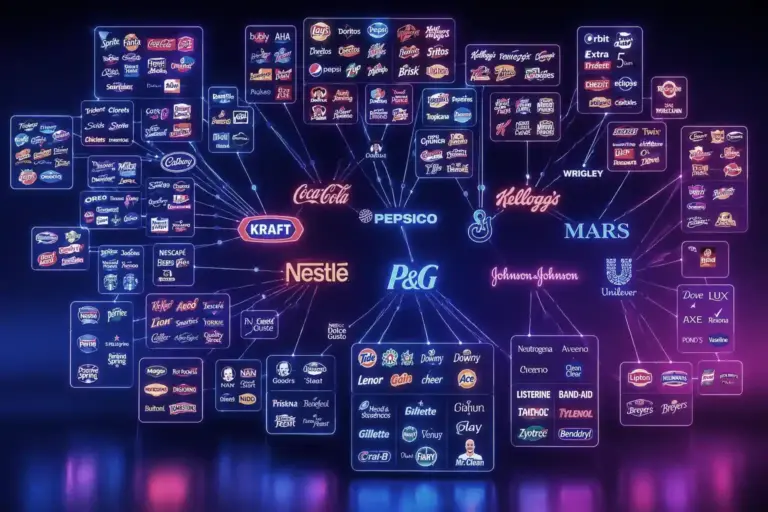
We use a number of branded products in our day-to-day life. But what you may not realize is that many of the commonly used brands—(such as Crest toothpaste, Pantene shampoo, Gillette shaving cream, Pringles chips and Duracell batteries) are in fact products of a single company, such as Proctor & Gamble (P&G). This case is not an exception it’s the norm. There are many more CPG/FMCG giants out there who maintain multi-brand portfolios within their product chain.

In theory, managing multiple brands is a good strategy for a CPG/FMCG/Retail company or any business in the B2C space. A varied product portfolio across different price brackets can reduce investments in overlapping product development and marketing efforts. Having a multi-brand portfolio can prevent competition from attaining a higher market share for the same type of products. This strategy can also increase healthy competition between various brand managers, leading to growth in sales figures.

Companies can also experiment with different brands in the portfolio by killing off weaker or ill-fitting components from the product range, thus freeing marketers to focus resources on stronger brands. Such brands will be positioned strategically compared to competition. This effectively reduces the complexity of marketing effort, and counteracts decreasing efficiency of traditional distribution channels.

The Reality

However in practice, B2C companies today face a tough challenge. Sustaining multiple brands in a demanding market with fragmented customer needs is not easy. Many brand managers today feel the need to cut down on their brand portfolio. This is easier said than done. Most companies and managers who work for them often react to this pressure by expanding rather than pruning their brand portfolios.

Role of Brand Managers

Brand managers play a very crucial role in deciding which brands to cull and which to promote. If a manager kills off an unproductive brand, it would mean the remaining brands in his portfolio must capture the affected brand’s volume in order to break even! The worst fear of businesses therefore, is making the wrong call and losing important market presence. This is apart from the fact that companies can punish brand managers for missing out on an emerging market-opportunity.

Technology Solutions to Portfolio Management

Many B2C giants in the recent past have reversed their traditional cautious approach and used the latest technology solutions for brand portfolio management. For example, Procter & Gamble has rolled out a successful global corporate strategy shift over the past few years that is also combined with digital power. They had a shake-up of their product portfolio, where they consolidated some product portfolios while others were pruned. Several other companies such as PepsiCo, Unilever and Nestlé have achieved rates of revenue growth two to five times greater than historic norms and saved 20% of overall marketing expenditure by managing brand portfolios much more effectively using digital innovation.

As per an article that was published by Huawei recently, customers now have new methods to communicate with companies and agile businesses can take advantage of opportunities to create new engagement platforms and expand the types of services they offer. Procter & Gamble has taken complete advantage of this situation. P&G is one of the largest B2C companies in the world, with annual sales of US$65 billion and operations across the globe. Despite being in business for 180 years, mobile has created one of the largest disruptions the company has experienced. (Read More)

How did these companies accomplish it?

They did it in part by establishing clear roles, relationships, and boundaries for their brands and then, within these guidelines, giving individual brand managers autonomy over not just branding and marketing but also over auxiliary activities such as product quality, packaging and even creating a memorable unboxing experience. Only Portfolio managers responsible for the portfolio as a whole would supervise these brand managers.

In addition to this, since new portfolio strategies frequently prompt reactions from competitors, in order to mitigate any unanticipated consequences, companies have opted for a robust data analytics system that highlight unexpected shifts in real time.

Of late, mobile technology has transformed everything from logistics to marketing. The advantage of mobile technology lies in its capability to expand reach of products among the target market. Moreover, the prevalence of internet makes it easier for the field sales staff to use applications that can collate market data, which can then be used to draw insights.

As per a recent report by BCG, “Demand-centric insights can help companies identify which of their smaller brands, if properly repositioned, enhanced, and extended, have growth headroom. In our experience, many small brands have an avid following that can be expanded by more clearly targeting them at attractive demand spaces. For these, added complexity is worthwhile. Brands lacking demand headroom are candidates for complexity reduction or divestiture.” (Read More)

Solutions that help Brand Managers

FMCG companies often focus on innovating the existing product portfolio while developing new ones. And brand managers have to be updated in real-time with all the vital market data and dashboards 24X7. For brand managers to succeed, they must master the technique of launching new products into the market at the right time.

“Large FMCG businesses are increasingly using data insights to manufacture better products, improve sales and the revenue per customer.”

This entails that brand managers adopt newer methods of data consolidation and visualization to understand, predict and prescribe new products that can sell. Technologies such as BI Analytics can be leveraged to find gaps in the market that will help launch or prune products.

Role of Mobile SFA in Brand Portfolio Management

Technology plays a huge role in successful product portfolio management. All key decisions that are going to be game changers are taken only after careful and in-depth analysis of several months of collated market data, trends, parameters, and demographic data among other metrics.

A major requirement/tool in the hands of the brand manager would be however, a centralized information system (CIS) that can analyze market data from various sources. Any modern Sales Force Automation System (SFA) can be used to collate such important data. Such a system would be a combination of a mobile-based information collection application to be used to collect data from the field, and a web/desktop based system with Business Intelligence capabilities that can analyse the data collected.

Mobile SFAs can act as the windows through which brand managers extract vital data from the field related to brand performance. They can also monitor resource performances from a grass roots level. SFAs feed valuable information such as sales promotion results, customer feedback, dispatch delays/mismatches, and so on to the support team working for the brand. This data can then be analysed with historical sales and production data to make quick decisions/actions. In addition, SFA systems help brand managers monitor demographic data with which they can align regional teams towards overall brand goals.

Conclusion

Many new Mobile SFA solutions providers are adding Business Intelligence, Machine Learning and other such AI-based applications into their product portfolio. It has become easier for managers to collect and analyse data using such advanced solutions that can provide a 360 degree view of all their brands, as well as monitor market performance of each brand real-time. In future, we would be able to use solutions that provide predictive or even prescriptive analysis of data.

Brand Portfolio management is always a rigorous and continuous process for any FMCG/CPG organization. For companies to succeed, setting the right portfolio strategy is absolutely crucial. Adding correct technology aids will help portfolio managers at the right time (the earlier the better) and can pay big dividends into the company’s bottom-line in the medium and long term.

Lastly, it has to be remembered that getting strategy and technology right is only part of the battle; companies must also make organizational changes if they are to adapt their brand portfolios quickly to match shifting trends, competitive responses, mergers, and new-product launches, while also managing the natural lifecycle of their existing brands. Since taking action with one often means doing so with another, companies must look into employing a skilled brand portfolio manager who can lead individual brand teams. This will be a person who can collect, understand, analyse data from different sources and create coherent logical solutions from them.

Experion has been working with world-class businesses in the FMCG/CPG sector to help them grow sales, engage field sales teams, grow market reach and enhance connection with the retailer. To know more about how Experion uses digital technologies to boost FMCG sales, write to us today at sales@experionglobal.com