Expansion of AI and Machine Learning
Predictive analytics and AI-driven insights will play a more significant role in fintech software development. AI and machine learning algorithms will be utilized for advanced fraud detection, personalized financial advice, and risk management, enhancing the overall customer experience and operational efficiency.
Increased Adoption of Open Banking
Open banking initiatives will gain momentum, leading to greater collaboration and integration among financial institutions and third-party developers. This will result in the development of innovative fintech solutions that leverage open APIs to provide seamless and personalized financial services to customers.
Growth of Decentralized Finance (DeFi)
Decentralized finance platforms built on blockchain technology will continue to grow, offering alternatives to traditional financial services. DeFi solutions will enable peer-to-peer lending, automated trading, and decentralized exchanges, disrupting traditional banking and investment sectors.
Focus on Cybersecurity and Data Privacy
As fintech applications become more prevalent, cybersecurity and data privacy will be paramount. Fintech companies will invest heavily in robust security measures, encryption technologies, and compliance frameworks to protect sensitive financial data and maintain customer trust.
Evolution of Digital Payments
Digital payments will continue to evolve, with a shift towards contactless and mobile payment solutions. The rise of cryptocurrencies and stablecoins will further accelerate the adoption of digital payments, offering faster, cheaper, and more secure alternatives to traditional payment methods.
Quantum Computing
The emergence of quantum computing technology has the potential to revolutionize fintech software development. Quantum computers will enable faster and more efficient processing of complex financial algorithms and models, opening up new possibilities for risk management, portfolio optimization, and fraud detection.
Biometric Authentication
Biometric authentication methods, such as fingerprint recognition and facial recognition, will become more prevalent in fintech applications. These technologies offer enhanced security and convenience, reducing reliance on traditional password-based authentication methods.
Internet of Things (IoT)
The integration of IoT devices with fintech applications will create new opportunities for personalized financial services and real-time data analysis. IoT sensors embedded in wearable devices, smart homes, and vehicles will provide valuable insights into customer behavior and preferences, enabling tailored financial solutions.
Regulatory Technology (Regtech)
The rise of regulatory technology solutions will simplify compliance processes for fintech companies, helping them navigate complex regulatory environments more efficiently. Regtech solutions will automate compliance tasks, monitor regulatory changes, and ensure adherence to legal requirements, reducing regulatory risks and operational costs.
Cross-Border Payments
Advancements in blockchain technology and digital currencies will facilitate faster and cheaper cross-border payments. Fintech solutions leveraging blockchain networks will enable real-time settlement and lower transaction fees, disrupting traditional remittance services and international banking.







 Back
Back


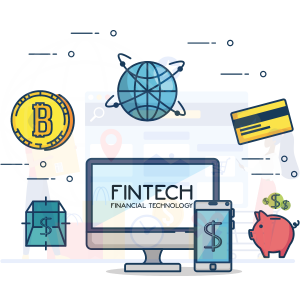 Financial technology, commonly known as fintech, represents the innovative technology designed to enhance and automate the delivery and utilization of banking and financial services. At its core, fintech aims to help companies, business owners, and consumers better manage their financial operations, processes, and lives. This is achieved through the use of specialized software and algorithms deployed on computers and smartphones. The term “fintech” is a blend of the words “financial” and “technology.
 Secure and Transparent Transactions: Blockchain technology provides a decentralized and immutable ledger that records transactions across a network of computers. This ensures that transactions are secure and transparent, making it ideal for cryptocurrencies like Bitcoin and Ethereum, as well as for decentralized finance (DeFi) applications.
 Fraud Detection: AI and ML algorithms can analyze vast amounts of transaction data in real-time to detect patterns indicative of fraudulent activity. By continually learning from new data, these systems can adapt and enhance their detection capabilities over time.
 Interoperability:
  Data Protection: Cybersecurity measures safeguard sensitive financial data, including personal information, account details, and transaction records, from unauthorized access or malicious attacks.
 Scalability: Cloud computing provides on-demand access to scalable computing resources, allowing fintech companies to quickly scale their infrastructure to meet fluctuating demand without investing in costly hardware.
 E-commerce and Mobile Commerce: The proliferation of online shopping and mobile apps has fueled the demand for digital payment solutions. Consumers expect seamless and secure payment experiences across various devices and platforms, driving the adoption of digital wallets, mobile payment apps, and contactless payment methods.
 Compliance Efficiency: Financial institutions are subject to an increasingly complex regulatory environment, requiring robust compliance measures to mitigate risks and ensure regulatory adherence. Regtech solutions leverage technology, such as AI, ML, and blockchain, to automate compliance processes, monitor regulatory changes, and streamline reporting requirements.
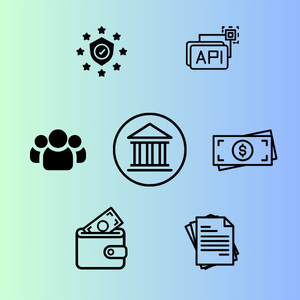 API Integration: Open banking initiatives encourage financial institutions to open their APIs to third-party developers, allowing for the secure exchange of financial data and the development of innovative financial products and services. By enabling data sharing between banks, fintech startups, and other third-party providers, open banking fosters collaboration, competition, and customer-centric innovation.
 Access to Financial Services: Fintech solutions are breaking down barriers to financial access for unbanked and underbanked populations, particularly in developing regions. Mobile banking, digital wallets, and microfinance platforms are providing previously underserved communities with access to essential financial services such as savings accounts, credit, insurance, and remittances.
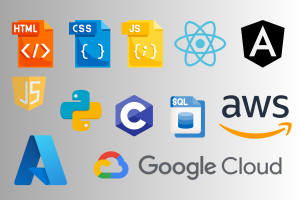 Frontend Development:
 Quick Adaptation: Fintech companies can swiftly respond to market changes, regulatory updates, and emerging technologies, ensuring their solutions remain competitive and compliant.
 Data Encryption: Implementing strong encryption methods (such as SSL/TLS for data in transit and AES for data at rest) to protect sensitive information from unauthorized access.