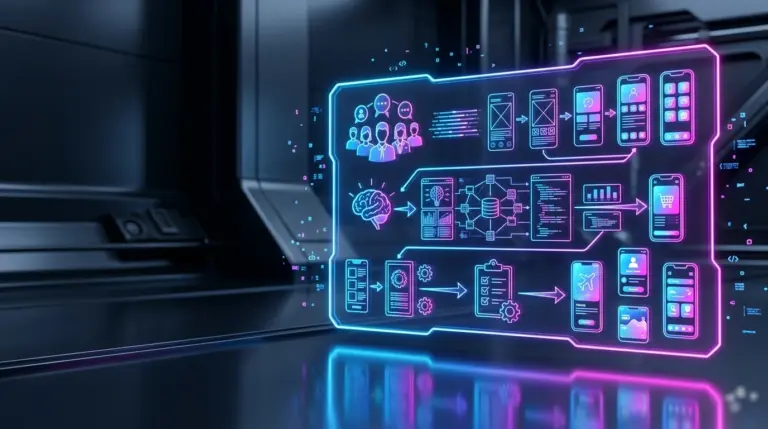


SaaS Application Development

Software as a Service, more commonly known as SaaS, has changed the way businesses build, buy, use, and scale software. Instead of installing applications on individual systems or maintaining expensive on-premise infrastructure, companies can now access powerful software solutions through the cloud, often through a simple subscription-based model.

From customer relationship management platforms and accounting tools to healthcare portals, HR systems, learning platforms, logistics dashboards, and AI-powered business applications, SaaS has become the foundation of modern digital operations.

The growing demand for cloud-based software solutions is not accidental. Businesses today need flexibility, faster deployment, lower infrastructure dependency, and the ability to serve users across locations, devices, and markets. This is where SaaS Application Development becomes a strategic investment.

Whether a startup wants to launch a new SaaS app or an enterprise wants to modernize legacy systems into cloud-based platforms, SaaS application development services help businesses build products that are accessible, scalable, secure, and commercially viable.

In this blog, we explore what SaaS application development means, how it works, the application development process, key features, benefits, challenges, technologies, costs, trends, and how to choose the right SaaS application development company.

SaaS Application Development-og

What is SaaS Application Development?

SaaS Application Development is the process of creating cloud-based software applications that people can use over the internet. This is different from software that you have to install on your computer or company server. With SaaS app development the application is hosted on cloud infrastructure. You can access it through a web browser or mobile app.

In terms SaaS app development lets businesses make software products that people can pay for and use whenever they want. They do not have to worry about installing it or buying hardware or doing updates themselves.

A SaaS application usually has cloud hosting, user management, subscription billing, security controls dashboards integrations analytics and continuous upgrades.

SaaS Application Development can be used by people or small businesses or big companies or specific industries.

The thing that makes SaaS Application Development so useful is that it lets businesses sell software in a way. Of selling it just once they can sell it to people who pay every month or year. This means businesses can make money from their software all the time. It also lets the people who own the software make it better based on what users do and what they say they want.


Build a scalable SaaS product with Experion’s expert application development services


How SaaS Application Development is Different from Software?

Traditional software needs to be installed on your computer. You have to do updates yourself. You might have to download patches and make sure it works with your computer. You might even need to ask your company’s IT team for help.

Saas Application Development is hosted in the cloud. You just log in on the internet. You can use the latest version of the software. The people who make the SaaS App Development take care of updates and security. Making sure it works well.

This makes SaaS Application Development better because it is faster and cheaper and easier to make bigger. Businesses do not have to wait a time to make changes or spend a lot of money on infrastructure before they can sell it to people.

Subscription-Based Delivery Model

The Subscription-Based Delivery Model of Software as a Service is really important. People do not have to buy the software at once they can pay for it every month or every few months or even once a year to use the platform.

This way of doing things is good for the people who use the software and the people who own the software. The users of Software as a Service do not have to pay a lot of money at the beginning. The people who own the Software as a Service get money coming in all the time. The people who own the Software as a Service can also make levels of service based on how much people use it what features they want how many people are using it how much storage they need what kind of support they need or what big companies need.

This is one reason why Software as a Service’s so popular now. It makes sure that the people who use the software are happy all the time.


Turn your SaaS idea into a secure, cloud-ready product built for growth


Why Companies Choose to Make SaaS Apps?

Companies choose to make SaaS app because it is a way to make products that can be made quickly can be made bigger easily and are easy for people to use.

  1. Lower upfront investment – They Do Not Have to Spend a Lot of Money at First
    SaaS apps do not need a lot of money to be spent on hardware. They do not need to be installed on computers in the office. They do not need a complicated setup. Because the apps are on the cloud companies can start with what they need. Add more as they grow. For companies this means they can start without needing a lot of money. For companies it means they do not have to rely so much on the equipment they have in the office and they can make new things faster.
  2. Faster deployment – They Can Be Put Out Quickly. SaaS apps can be put out quickly on the internet. The people making the apps can use ways of working and they can make the apps automatically and they can make sure everything works together. This speed is very important when there is a lot of competition because it can make or break a product.
  3. Easy scalability – They Can Be Made Easily. A SaaS app can be made bigger based on how many people are using it how much traffic it gets how much data it has and what features it has. Whether the app is used by 500 people or 500,000 people it can be made to work well without any problems. Being able to make the app bigger is especially important for SaaS companies that want to sell their apps in places or, to big companies or when they know they will have a lot of people using the app at the same time.
  4. Automatic Updates and Maintenance
    Users do not need to manually install updates. The SaaS provider handles improvements, bug fixes, security patches, and new feature releases in the background. This improves customer experience and ensures all users have access to the latest version of the application.
  5. Accessibility from Anywhere – A SaaS app can be accessed from different devices, browsers, and locations. This supports remote work, distributed teams, mobile users, and global customer bases. In a world where business operations are no longer confined to a physical office, this accessibility is a major advantage.
  6. Better Collaboration Across Teams – SaaS platforms often allow multiple users to work together in real time. Features such as shared dashboards, role-based access, notifications, comments, and workflow automation help teams collaborate more efficiently. This makes SaaS application development solutions useful across industries such as healthcare, finance, retail, education, logistics, real estate, and professional services.


Core Features of a Successful SaaS Application

A successful SaaS application needs more than a good idea. It needs a strong product foundation, reliable infrastructure, and features that support usability, security, scalability, and monetization.

  • Multi-Tenant Architecture
    Multi-tenancy allows multiple customers or organizations to use the same application infrastructure while keeping their data separate and secure. This improves resource efficiency and makes the platform easier to maintain.
  • User Authentication and Role Management
    Secure login, password management, multi-factor authentication, and role-based access control are essential for SaaS platforms. Different users may need different levels of access depending on their role, department, or subscription plan.
  • Subscription Billing Integration
    Subscription billing is at the heart of most SaaS business models. A SaaS app may need recurring billing, invoice generation, tax calculation, payment gateway integration, plan upgrades, downgrades, free trials, coupons, and usage-based pricing.
  • Infrastructure and Cloud Setup
    SaaS cloud application development requires reliable cloud infrastructure. This includes servers, storage, networking, monitoring, databases, backup systems, and deployment environments.
  • Dashboard and Analytics
    Users expect visibility into performance, activity, progress, or outcomes. Dashboards and analytics help users make decisions, track metrics, and understand the value they are getting from the platform.
  • API Integrations
    Modern SaaS products rarely operate in isolation. They often integrate with CRMs, ERPs, payment gateways, marketing tools, data platforms, communication systems, and third-party APIs.
  • Data Backup and Recovery
    Data protection is critical. A SaaS application must include backup, recovery, disaster management, and business continuity planning to reduce the risk of data loss.
  • High Uptime Performance
    Users expect SaaS products to be available whenever they need them. High uptime, performance monitoring, load balancing, and fault-tolerant architecture are essential.
  • Mobile Responsiveness
    A strong SaaS web application development strategy must include responsive design. Users should be able to access core features seamlessly from desktops, tablets, and mobile devices.


SaaS Application Development Process

The SaaS application development process is a structured journey that turns a product idea into a working, scalable, and market-ready platform. While every product is different, most SaaS projects follow a lifecycle that includes research, planning, design, development, testing, deployment, and ongoing improvement.

  1. Market Research and Idea Validation
    Before developing SaaS applications, businesses must validate the idea. This begins with identifying real customer pain points. A SaaS product should solve a problem that users are willing to pay for. Competitor analysis is also important. It helps identify what existing platforms offer, where they fall short, and how your SaaS application can stand out. The final step is defining a unique value proposition. This answers a simple but powerful question: why should customers choose your SaaS app over others?
  2. Planning and Requirement Gathering
    Once the idea is validated, the next stage is planning. This includes defining product goals, user personas, core features, technical requirements, business rules, and success metrics. Feature prioritization is important at this stage. Not every idea needs to be built in the first version. A clear roadmap helps separate must-have features from nice-to-have enhancements. User journey mapping helps teams understand how different users will interact with the product, from onboarding to daily usage and renewal.
  3. UI/UX Design
    A SaaS application must be easy to use. Even the most powerful product can struggle if users find it confusing. UI/UX design focuses on creating a clean and intuitive interface, user-friendly navigation, and frictionless workflows. Designers create wireframes and prototypes to visualize the product before development begins. Good design improves adoption, reduces support requests, and increases customer satisfaction.
  4. MVP Development
    An MVP, or Minimum Viable Product, includes the core features required to test the product in the market. MVP development allows businesses to launch faster, validate demand, and gather real user feedback. For example, a SaaS platform for project management may first launch with task creation, user roles, notifications, and dashboards before adding advanced automation or AI features. MVP development is especially useful for startups that want to develop SaaS application ideas without overspending before product-market fit is established.
  5. Full Product Development
    After the MVP is validated, the product can move into full-scale development. This stage includes advanced feature rollout, performance optimization, workflow enhancements, integrations, and security improvements. At this point, the SaaS application development lifecycle becomes more comprehensive. Teams focus on scalability, maintainability, compliance, user experience, and business growth.
  6. Testing and QA
    Testing is a critical part of SaaS application development services. A SaaS product must work reliably across browsers, devices, user roles, and usage conditions. Functional testing ensures features work as expected. Security testing checks vulnerabilities. Load testing measures how the platform performs under heavy traffic. Cross-browser testing ensures compatibility across different environments. Without strong QA, even a promising SaaS app can lose user trust quickly.
  7. Deployment and Launch
    Deployment involves moving the application to a production environment. This includes cloud hosting setup, CI/CD pipelines, environment configuration, monitoring tools, and release planning. A smooth launch strategy may include beta users, phased rollouts, documentation, customer onboarding, support workflows, and performance monitoring.
  8. Maintenance and Upgrades
    SaaS development does not end at launch. Maintenance is an ongoing part of the product lifecycle. It includes bug fixes, feature updates, security patches, performance improvements, and customer support enhancements. Continuous improvement is one of the biggest advantages of SaaS application development. Product teams can keep refining the platform based on user data and market needs.


Accelerate your SaaS journey with custom development solutions from Experion


Technologies Used in SaaS Application Development

Choosing the right technology stack is essential for building a reliable, scalable, and secure SaaS application. The best stack depends on product complexity, performance requirements, budget, integrations, security needs, and long-term roadmap.

Frontend Technologies

Frontend technologies shape what users see and interact with.

React is widely used for building dynamic, component-based interfaces.

Angular is suitable for large-scale enterprise applications with complex structures.

Vue.js is lightweight, flexible, and useful for building interactive user interfaces quickly.

Backend Technologies

The backend powers business logic, data processing, authentication, APIs, and integrations.

Node.js is popular for scalable, real-time applications.

Python is often used for data-heavy platforms, AI-enabled SaaS products, and rapid development.

Java is known for enterprise-grade reliability and performance.

.NET is commonly used for secure, scalable business applications, especially in Microsoft ecosystems.

Databases

Databases store and manage application data.

PostgreSQL is a powerful relational database known for reliability.

MySQL is widely used for structured data and web applications.

MongoDB is a NoSQL database suitable for flexible and document-based data models.

Cloud Platforms

Cloud platforms are central to SaaS cloud application development.

AWS offers a wide range of cloud services for compute, storage, databases, security, analytics, and AI.

Microsoft Azure is strong for enterprise cloud environments and Microsoft-based ecosystems.

Google Cloud is useful for analytics, AI, machine learning, and scalable infrastructure.

DevOps Tools

DevOps tools help automate deployment, improve reliability, and support continuous delivery.

Docker enables containerization.

Kubernetes helps manage containers at scale.

Jenkins supports continuous integration and delivery pipelines.

At Experion, our engineering teams combine cloud-native architecture, modern DevOps practices, scalable technology stacks, and domain-led product thinking to build SaaS application development solutions that support real business outcomes.


Benefits of SaaS Application Development

SaaS Application Development is really useful for startups and big companies. It helps startups get their products out to people fast. SaaS Application Development also helps big companies do things in a way make their work easier and get more done in less time. SaaS Application Development is very good at making things more efficient, for these companies.

For Startups

  • Faster Go-To-Market – For startups being fast is key. Building a SaaS app helps founders launch quicker try out ideas and make changes based on what real customers think.
  • Recurring Revenue Model – A SaaS product also works well with a model where customers pay regularly which can bring in money and make the startup more attractive to investors.
  • Easier Product Iterations – Startups can make changes easily because they can update their product all the time.
  • Lower Infrastructure Costs – They also save money on infrastructure because they can use cloud resources and only pay for what they need.
  • Global Customer Reach – Importantly SaaS helps startups reach customers all over the world without having to set up offices or stores everywhere. They can focus on making their product and reaching more customers.

For Enterprises

  • Workflow Automation – For companies SaaS application development services can really help make workflows better cut down on manual work and get different departments working together more smoothly.
  • Centralized Data Management–  SaaS products for companies usually help workflows manage data in one place make reports follow rules and work with other tools.
  • Reduced IT Burden – A custom SaaS application can also make things easier, for the IT team by moving the infrastructure updates and support to an environment that is managed by someone else.


Common Challenges in SaaS Application Solution Development

While SaaS offers major advantages, building a successful SaaS application also comes with challenges.

  • Data Security Concerns
    SaaS platforms often manage sensitive user, business, financial, or operational data. Security must be built into the architecture from the beginning. This includes encryption, access control, secure APIs, compliance readiness, vulnerability testing, and monitoring.
  • Managing Scalability
    A SaaS app can start out really small. It can grow really fast. If the SaaS app is not built to handle a lot of users it can become slow. Have problems when a lot of people are using it at the same time. To make sure the SaaS app works well it needs to have an architecture that can handle a lot of users. The SaaS app needs things like cloud resource planning, caching, database optimization and load balancing to work. These things are really important, for the SaaS app.
  • User Retention Issues
    Acquiring users is only the beginning. SaaS businesses need to retain them. Poor onboarding, confusing UX, limited value, weak support, or performance issues can increase churn.
  • Downtime Risks
    Downtime can damage customer trust and revenue. SaaS products must include monitoring, alerting, redundancy, backup, and recovery strategies.
  • Subscription Billing Complexity
    Billing can become complicated when products include multiple plans, user-based pricing, usage-based pricing, discounts, trials, tax rules, renewals, and enterprise contracts.
  • Integration Challenges
    Users often expect SaaS applications to connect with existing tools. Poorly planned integrations can create data inconsistencies, security risks, and maintenance complexity.


Best Practices for SaaS Application Development

Successful SaaS application development requires a balance of product strategy, engineering quality, user experience, and business planning.

  1. Build Customer-First Products
    A SaaS product should be built around real customer problems. Product decisions should be guided by user research, feedback, usage patterns, and measurable outcomes.
  2. Focus on Security from Day One
    Security cannot be added at the end. It must be part of architecture, development, testing, deployment, and maintenance.
  3. Use Scalable Architecture
    Choose architecture that supports future growth. This includes multi-tenancy, modular design, cloud scalability, API-first development, and performance optimization.
  4. Prioritize Performance Optimization
    Slow SaaS platforms frustrate users. Performance should be monitored continuously across page load times, API response times, database queries, and server usage.
  5. Offer Smooth Onboarding
    Onboarding is critical for activation. Tutorials, guided flows, tooltips, documentation, and support can help users experience value quickly.
  6. Continuously Collect Feedback
    User feedback helps product teams identify gaps, prioritize improvements, and reduce churn.
  7. Track Analytics for Improvement
    Product analytics can reveal how users interact with the platform, where they drop off, which features create value, and what improvements are needed.


Cost of SaaS Application Development

The cost of SaaS Application Development depends on several factors. There is no single fixed price because every SaaS product has different requirements, features, integrations, and complexity.

Factors Affecting Cost

  • Feature complexity: A simple SaaS MVP costs less than a full enterprise platform with advanced automation, analytics, and integrations.
  • Team size: The cost depends on the number of developers, designers, testers, architects, DevOps engineers, and project managers involved.
  • Technology stack: Some technologies may require specialized expertise.
  • Design quality: A polished, research-led UI/UX design process may increase cost but improve adoption.
  • Integrations required: Payment gateways, CRMs, ERPs, analytics tools, and third-party APIs can add complexity.
  • Development timeline: Faster timelines may require larger teams.
  • Security compliance needs: Healthcare, finance, and enterprise SaaS products may require additional compliance, testing, and documentation.

Estimated Cost Ranges

A basic MVP SaaS product may cost less because it focuses on core features, simple workflows, and early market validation.

mid-level SaaS platform may include dashboards, integrations, subscriptions, analytics, mobile responsiveness, and stronger admin capabilities.

An enterprise SaaS solution may require complex architecture, custom workflows, advanced security, compliance, multi-region deployment, AI features, and large-scale integrations.

For an accurate estimate, businesses should consult a SaaS application development services company that can evaluate product goals, technical requirements, and long-term roadmap.


Key SaaS Metrics to Track

Building a SaaS application is only one part of the journey. To grow sustainably, businesses must track the right metrics.

  1. MRR, ARR, and Expansion Revenue
    Monthly Recurring Revenue and Annual Recurring Revenue show the predictable revenue generated from subscriptions. Expansion revenue tracks growth from existing customers through upgrades, add-ons, or increased usage.
  2. Churn Rate: Logo vs. Revenue Churn
    Logo churn measures how many customers leave. Revenue churn measures how much recurring revenue is lost. A SaaS business may lose a few small customers but still grow if larger customers expand their subscriptions.
  3. CAC, LTV, and LTV:CAC Ratio
    Customer Acquisition Cost shows how much it costs to acquire a new customer. Lifetime Value shows the total revenue expected from a customer over time. The LTV:CAC ratio helps measure whether the business model is sustainable.
  4. NPS, CSAT, and Product Engagement Scores
    Net Promoter Score, Customer Satisfaction Score, and product engagement metrics help evaluate user happiness, loyalty, and product value.


How to Choose the Right SaaS Application Development Company?

When you are trying to find the right SaaS application development company it is a big deal. The right company can help you avoid making mistakes and build a product that is good with technology easy for users and ready for business. You should look for a company that has experience in your industry. A team that knows your domain can make decisions about your product and workflow.

They need to know what they are doing with technology. The company should be good at cloud architecture, security, scalability, APIs, DevOps, frontend development, backend development and database design.

It is also important that they can make a product that’s easy to use. A SaaS product needs to be simple for users not work well technically. You should know how much things cost. A good company will explain the costs clearly so you do not get surprised. It is good if the company can adapt to changes quickly. SaaS products often change based on what users say.

What happens after the product is launched is important too. SaaS applications need to be updated monitored and maintained all the time.

Finally you should check out the companys work, case studies, how they approach engineering and if they can be a good partner for your product, for a long time.


Partner with Experion to create SaaS applications that scale, perform, and deliver value


Future Trends in SaaS Application Development

The SaaS market is changing fast. Companies that are investing in SaaS application development need to pay attention to trends that can affect how competitive they are in the future.

  • AI-Powered SaaS Platforms
    AI is becoming a part of modern SaaS products. AI can do things like make recommendations and use chatbots. It can also do analytics and automation. This makes SaaS platforms more intelligent and personalized for the SaaS market. The SaaS market is getting smarter with AI.
  • Low-Code and No-Code SaaS Tools
    Low-code and no-code platforms are making it easier for companies to build workflows and applications quickly. For complex and big SaaS products companies still need to do custom engineering that is strong. The SaaS market has a lot of options.
  • Vertical SaaS Solutions
    Vertical SaaS focuses on industries like healthcare or insurance. It also includes logistics, fintech, real estate and education. These solutions have workflows and are more relevant to the industry than generic tools. The SaaS market has a lot of SaaS solutions.
  • Advanced Cybersecurity Measures
    As more companies use SaaS they will expect it to be more secure. This includes managing identities using zero-trust architecture encrypting data automating compliance and detecting threats. The SaaS market needs to be secure.
  • Hyper-Personalized User Experiences
    Users want SaaS products to fit their needs and preferences. They want the SaaS market to adapt to their roles and behavior. When SaaS products are personalized users are more engaged and happy. The SaaS market is, about the users.
  • Predictive Analytics Integration
    Predictive analytics can help users forecast what will happen in the future. It can help them identify risks and make decisions. The SaaS market uses analytics to optimize operations.
  • Sustainability and Green Hosting
    Companies are starting to think about sustainability when they make technology decisions. They want to use hosting and energy-efficient infrastructure. They want to use the cloud in a way. This may affect how SaaS products are developed in the future. The SaaS market is changing.


Why Custom SaaS Development Beats Off-the-Shelf Software?

Off-the-shelf software can be useful for standard needs, but it often becomes limiting as businesses grow. Custom SaaS development gives companies greater control, flexibility, and differentiation.

With custom SaaS application development, workflows can be tailored to specific business processes instead of forcing teams to adapt to rigid software.

Custom platforms also scale better because they can be designed around future growth, user volume, integrations, and business expansion.

Businesses also gain ownership of features. They can decide what to build, improve, automate, or remove based on their own strategy.

Branding is another advantage. A custom SaaS app can reflect the company’s identity, customer experience goals, and market positioning.

Most importantly, custom SaaS development creates competitive differentiation. When your software is built around your unique value proposition, it becomes harder for competitors to copy your operating model.


How Experion Can Help With SaaS Application Development Services?

Experion Technologies works with businesses to create custom SaaS products that’re secure, scalable, easy to use and designed to make a real impact on their business. They help with every step of building a SaaS product from coming up with an idea and planning the product to designing the user experience building the architecture developing the product deploying it to the cloud testing it and supporting it after its launched.

Experion brings together experts who understand industries know how to build great products can develop cloud-based solutions work with data and use modern technology practices. This helps businesses create SaaS platforms that really work in the world. They have experience working in industries, including healthcare, insurance, retail, logistics, financial services, education and enterprise technology.

They help organizations build platforms that make them more efficient improve the customer experience and give them better visibility into their operations.

Some of their success stories include:

  1. Building platforms that run in the cloud
  2. Updating systems
  3. Creating enterprise applications that can grow with the business
  4. Automating workflows
  5. Connecting business systems
  6. Supporting the long-term growth of products

If you’re a startup building a SaaS app a big company updating internal systems or a business looking for help with SaaS application development to speed up digital transformation Experion can guide you from idea to a product thats ready, for the market with confidence.


Conclusion

SaaS is reshaping how businesses operate, deliver value, and scale software products. It offers the flexibility of cloud delivery, the commercial advantage of recurring revenue, and the user convenience of anytime-anywhere access.

However, successful SaaS Application Development requires more than coding. It needs the right product strategy, scalable architecture, secure engineering, thoughtful design, strong testing, continuous improvement, and a reliable development partner.

Businesses that invest in SaaS application development today are not just building software. They are creating digital products that can evolve with customers, markets, and technology.

Whether you are planning to build a new SaaS application, modernize an existing platform, or explore custom SaaS application development solutions, choosing the right strategy and the right partner can make all the difference.

With the right approach, SaaS can become a powerful engine for growth, innovation, and long-term business value.

Web Application Development

In simple terms, web application development is the process of building software applications that run on web browsers instead of being installed on individual devices. Unlike static websites that only display information, web apps allow users to interact, perform actions, process data, and complete transactions in real time.

Businesses today are investing heavily in web app development because traditional websites are no longer enough. Customers expect personalized dashboards, seamless transactions, real-time updates, and integrated services. Whether it is a CRM system, SaaS platform, customer portal, or enterprise workflow tool, web applications development has become central to digital transformation strategies.

Web applications improve scalability because they can be hosted on cloud infrastructure, accessed globally, and updated centrally without requiring user-side installations. For organizations pursuing digital transformation, enterprise web application development provides agility, operational efficiency, and faster innovation cycles.


Launch faster with secure, enterprise-ready web app development.


Key Takeaways

  • Web application development enables dynamic, interactive digital platforms.
  • Web apps are more scalable and flexible than traditional websites.
  • Custom web application development supports automation and innovation.
  • Enterprise web application development drives digital transformation.
  • Partnering with a professional web application development company ensures long-term success.


What is Web Application Development?

Web Application Development

Web Application Development refers to the development of web based application systems that operate through browsers using internet connectivity. These applications process data, support user authentication, integrate databases, and provide interactive interfaces.

Unlike static web pages, web applications development involves both frontend and backend engineering, database architecture, security layers, and hosting environments.

A web application development firm typically handles everything from UI design to backend architecture, API integration, and cloud deployment.

Web Application vs Website – What’s the Difference?

Web Application Development

Understanding the distinction between a website and a web application is critical.

Static vs Dynamic
Websites are typically static and informational. Web applications are dynamic and interactive.

User Interaction
Web apps allow user login, transactions, dashboards, and data manipulation. Websites mainly provide content.

Database Connectivity
Web applications connect to databases to store and retrieve user data.

Examples

  • CRM platforms
  • SaaS tools
  • Customer portals
  • Enterprise dashboards

When businesses need automation and functionality, they turn to web application development services instead of traditional website design.


Turn your idea into a high-performance web application.


Types of Web Applications

Web Application Development encompasses a wide range of application types, each designed to serve specific business needs, user experiences, and scalability requirements. Choosing the right type of web app depends on your industry, audience, functionality requirements, and long-term growth strategy.

Below is a deeper look at the major categories of web applications.

Static Web Apps

Static web applications are simple platforms that primarily display fixed content. They have minimal interactivity and typically do not rely heavily on databases or complex backend processing.

Characteristics include:

  • Basic informational interfaces
  • Limited user interaction
  • Faster development timelines
  • Lower infrastructure complexity

These are often used for landing pages, product showcases, or informational portals. While static apps are not suitable for complex workflows, they can be a starting point for businesses testing new ideas before investing in full-scale custom web application development.

Dynamic Web Apps

Dynamic web apps are data-driven platforms that adapt content based on user input and backend processing. These applications connect to databases, manage user authentication, and support real-time updates.

Examples include:

  • Customer dashboards
  • Online booking systems
  • Membership portals
  • CRM platforms

Dynamic applications are central to enterprise web application development because they support high levels of user engagement and operational functionality. Most modern web app development projects fall into this category.

Single-Page Applications (SPAs)

Single-Page Applications load a single HTML page and dynamically update content without refreshing the entire page. Frameworks like React, Angular, Vue, and Svelte are commonly used to build SPAs.

Benefits of SPAs include:

  • Faster user experience
  • Reduced server load
  • Seamless navigation
  • App-like interaction within browsers

SPAs are popular in SaaS platforms and enterprise dashboards where smooth performance is critical.

Multi-Page Applications (MPAs)

Multi-Page Applications load new pages from the server for each user action. This traditional model is still relevant for complex systems that require multiple distinct views.

MPAs are often used for:

  • Large enterprise systems
  • Content-heavy portals
  • Government or institutional platforms

They can offer better SEO performance and structured navigation for large-scale platforms.

E-commerce Applications

E-commerce web applications allow users to browse products, add items to carts, complete payments, and track orders. These applications integrate payment gateways, inventory systems, and CRM platforms.

Key components include:

  • Product catalog management
  • Secure checkout systems
  • Order tracking dashboards
  • Customer account management

Custom web application development services often build tailored eCommerce platforms for retail businesses seeking unique branding and scalability.

SaaS Applications

Software as a Service platforms are subscription-based web applications hosted on the cloud. Users access them through browsers without installing software.

Examples include:

  • Project management tools
  • Accounting platforms
  • HR management systems
  • Marketing automation tools

SaaS platforms are a core focus of many web application development companies because they offer recurring revenue models and scalable growth.

Micro-services Based Apps

Micro-services architecture divides applications into independent modules that communicate through APIs. Each module handles a specific function, such as authentication, billing, or analytics.

Advantages include:

  • Improved scalability
  • Faster feature deployment
  • Easier maintenance
  • Fault isolation

Enterprise web application development increasingly relies on micro-services for large, distributed systems.

Progressive Web Apps (PWAs)

Progressive Web Apps combine the reach of web apps with the functionality of mobile applications. They can work offline, send push notifications, and be installed on user devices.

Benefits include:

  • Mobile-like experience
  • Offline functionality
  • Lower development cost compared to native apps
  • Cross-platform compatibility

Many web application development service providers recommend PWAs for businesses seeking mobile accessibility without separate native app development.

Enterprise Web Applications

Enterprise web applications are large-scale systems designed to support complex corporate operations. These may include:

  • Supply chain management systems
  • Financial reporting platforms
  • Enterprise resource planning dashboards
  • Internal collaboration tools

Enterprise web application development requires robust architecture, high security standards, and integration with multiple internal systems.

Cloud Based Web Applications

Cloud based web applications are hosted on cloud infrastructure such as AWS, Azure, or Google Cloud. These platforms offer scalability, redundancy, and global accessibility.

Advantages include:

  • Elastic scaling
  • Automatic backups
  • Global content delivery
  • High availability

A modern web and application development company typically prioritizes cloud-native architecture to ensure resilience and performance.


Why is Web App Development Important for Businesses?

Web application development is no longer optional in a digitally competitive market. Businesses rely on web apps to automate processes, enhance customer engagement, and scale operations efficiently.

Scalability

Enterprise web application development enables systems to handle increasing user loads, transactions, and data volumes. Cloud-based architectures allow businesses to expand without rebuilding infrastructure.

Scalable web app development ensures:

  • Smooth performance during traffic spikes
  • Easy addition of new features
  • Expansion across geographies

Cost Efficiency

Unlike traditional desktop applications that require installation and updates on each device, web applications are updated centrally. This reduces IT maintenance costs and minimizes downtime.

Custom web application development also eliminates the need for licensing multiple software tools by consolidating features into a unified platform.

Cross-Platform Accessibility

Web applications run on browsers, making them accessible across desktops, tablets, and smartphones. This eliminates compatibility issues across operating systems.

Web and application development company solutions ensure consistent user experience across devices.

Centralized Updates

Updates in web applications are deployed server-side. Users automatically access the latest version without downloading patches or reinstalling software.

This ensures:

  • Faster feature rollouts
  • Reduced security vulnerabilities
  • Seamless user experience

Cloud Integration

Cloud integration allows web applications to connect with third-party services, APIs, analytics tools, and storage systems.

Benefits include:

  • Real-time data synchronization
  • Global access
  • Disaster recovery capabilities
  • Integration with AI and analytics platforms

Cloud-native web application development services empower businesses with flexibility and global reach.

In summary, web application development forms the backbone of digital transformation. From static apps to enterprise web applications and cloud based web applications, each type serves a specific strategic purpose. Investing in the right web app development approach ensures scalability, cost control, operational efficiency, and long-term competitive advantage.


Industry Use Cases of Web Application Development

Web and application development is used across industries:

  • Healthcare patient portals
  • Fintech dashboards
  • Retail eCommerce systems
  • Logistics tracking platforms
  • Education learning management systems

Custom web applications development allows organizations to address industry-specific challenges effectively.


How Does Web App Development Work (Programming Languages and Frameworks)?

Front-end Development

The frontend defines the user interface and experience. Frameworks include:

  • React
  • Angular
  • Vue
  • Svelte

These frameworks enable responsive UI/UX design.

Back-end Development

Backend systems handle:

  • Server-side logic
  • APIs
  • Database connectivity

Languages often used include Java, Python, .NET, and Node.js.

Database Management

SQL databases like MySQL or PostgreSQL are structured.
NoSQL databases like MongoDB handle flexible data models.

Deployment and Hosting

Cloud platforms like AWS, Azure, and Google Cloud enable application deployment. DevOps pipelines automate builds and updates.

At Experion Technologies, we combine robust backend engineering and intuitive frontend design to deliver high-performance web application development services tailored to enterprise needs.


Step-by-Step Enterprise Web Application Development Process

Web Application DevelopmentStep 1: Requirement Analysis

Stakeholder interviews and market research define scope and objectives.

Step 2: Planning and Architecture Design

Wireframes and technology stack selection are finalized.

Step 3: UI and UX Design

User-centric design ensures seamless experiences.

Step 4: Development

Frontend and backend coding take place simultaneously.

Step 5: Testing and QA

Step 6: Deployment

Application is hosted and launched.

Step 7: Maintenance and Optimization

Continuous monitoring and feature updates ensure scalability.


Build a scalable web app that grows with your business.


How to Implement Web Application Development for Your Business?

Implementing Web Application Development successfully requires more than just hiring developers and starting to code. It demands strategic clarity, technical alignment, financial planning, and the right execution model. Whether you are building an internal enterprise platform or launching a customer-facing SaaS product, a structured approach ensures long-term scalability and ROI.

Below is a detailed roadmap to guide your implementation journey.

Define Business Goals

Before initiating web app development, clearly define what you want the application to achieve. Every successful web application development service engagement starts with business clarity.

Ask key questions:

  • Is the goal to generate new revenue streams?
  • Are you aiming to improve operational efficiency?
  • Do you want to automate manual workflows?
  • Are you enhancing customer engagement?
  • Is digital transformation a strategic priority?

For example:

  • A logistics company may focus on operational automation and real-time tracking.
  • A retail brand may prioritize revenue growth through eCommerce web applications development.
  • A financial institution may emphasize compliance and secure transaction processing.

Clear goals help shape feature requirements, technical architecture, and scalability plans. In enterprise web application development, aligning business KPIs with technical milestones is critical for measurable success.

Choose the Right Technology Stack

Selecting the right technology stack directly impacts performance, scalability, security, and long-term maintainability.

Common stacks include:

MERN (MongoDB, Express, React, Node.js): Ideal for dynamic single-page applications and SaaS platforms.

MEAN (MongoDB, Express, Angular, Node.js): Suitable for structured enterprise-grade applications.

.NET: Widely used for enterprise web application development in corporate environments.

Java: Recognized for stability and scalability in handling complex backend systems.

Python: Popular for AI-powered web apps and rapid development cycles.

Your choice should depend on:

  • Project complexity
  • Expected user load
  • Security requirements
  • Integration needs
  • In-house expertise

A professional web application development company can help evaluate your technical requirements and recommend the most appropriate stack. The right technology foundation ensures smooth development of web based application systems that scale with your business.

Decide Between In-House vs Outsourcing

One of the most strategic decisions in web and application development is choosing between building an internal team or partnering with a custom web application development company.

In-House Development
Advantages include direct control, long-term team ownership, and internal knowledge retention. However, it requires recruitment, training, and infrastructure investment.

Outsourcing to a Web Application Development Firm
Partnering with experienced web application development companies can accelerate timelines and reduce hiring overhead. It provides access to specialized expertise, structured project management, and proven development methodologies.

Outsourcing is often cost-effective for startups and mid-sized enterprises that need enterprise web application development but lack internal technical resources.

A hybrid model is also common, where strategic oversight remains in-house while technical execution is handled by custom web application development services providers.

Budget Planning

Financial planning is a critical component of successful web app development.

A realistic budget should account for:

Design Costs: UI/UX research, wireframing, prototyping, and visual design.

Development Costs: Frontend, backend, API integration, database setup, and security implementation.

Infrastructure Costs: Cloud hosting, DevOps pipelines, monitoring tools, and backup systems.

Testing and Quality Assurance: Functional testingperformance testing, and security audits.

Maintenance and Optimization: Bug fixes, feature updates, scaling improvements, and ongoing support.

For enterprise web application development, budgeting must also consider compliance requirements, data security frameworks, and integration complexity.

It is important to think beyond initial launch costs. Long-term sustainability depends on ongoing optimization and support. A reliable web and application development company will provide transparent cost estimates and phased investment planning.

Additional Implementation Considerations

While the four steps above form the foundation, successful web applications development also requires:

  • Clear project governance
  • Agile or DevOps methodology adoption
  • Continuous stakeholder communication
  • Scalable cloud deployment strategy
  • Security-first architecture

Implementing custom web applications development is not just a technical project. It is a strategic business initiative that impacts workflows, customer experience, and competitive positioning.

Final Thought

Implementing Web Application Development for your business requires alignment between strategy, technology, and execution. By defining clear goals, choosing the right technology stack, selecting the appropriate development model, and planning your budget carefully, you create a strong foundation for digital success.

Partnering with an experienced web application development services provider ensures that your web and application development journey delivers measurable impact, scalability, and long-term value.


How Much Does Web Application Development Cost?

Regional Breakdown

  • USA and UK tend to have higher development costs.
  • India offers cost-effective web application development services.
  • Middle East and Australia fall in mid-to-high ranges.

Cost Factors

  • Complexity
  • Features
  • Security requirements
  • Integration needs

Estimated Cost Ranges

  • Basic web app: 20,000 to 50,000 USD
  • Mid-level SaaS: 50,000 to 120,000 USD
  • Enterprise application: 120,000 USD and above


Latest Trends in Web Application Development

Web Application Development

  • AI-powered web apps
  • Low-code integration
  • Cloud-native development
  • Serverless architecture
  • Cybersecurity-first development
  • Voice and gesture navigation
  • Sustainable web development practices


Common Challenges in Web Application Development

Even with a well-defined roadmap, Web Application Development comes with technical and operational challenges. Whether handled in-house or by a web application development company, understanding these risks early helps businesses design scalable and resilient systems.

Scalability Issues

One of the most frequent problems in web app development is underestimating growth. Applications may perform well during initial launch but struggle as user traffic increases.

Scalability challenges often arise due to:

  • Poor database design
  • Monolithic architecture
  • Limited server capacity
  • Inefficient API calls

In enterprise web application development, scalability must be built into the architecture from the beginning. Cloud based web applications and micro-services models help manage high user loads and expanding feature sets without system breakdowns.

If scalability is ignored, businesses face downtime, degraded performance, and poor customer experience.

Security Vulnerabilities

Security is a critical concern in development of web based application platforms. Web apps often handle sensitive user data, financial transactions, or enterprise information.

Common security vulnerabilities include:

  • SQL injection attacks
  • Cross-site scripting
  • Weak authentication mechanisms
  • Insecure API endpoints
  • Poor data encryption practices

Custom web application development services must implement secure coding standards, encryption protocols, multi-factor authentication, and regular penetration testing. Enterprise web applications especially require compliance with regulations such as GDPR and HIPAA.

A professional web application development firm prioritizes security from the architecture stage rather than treating it as an afterthought.

Performance Bottlenecks

Slow-loading applications frustrate users and increase bounce rates. Performance bottlenecks may stem from:

  • Heavy frontend scripts
  • Inefficient backend queries
  • Unoptimized images or assets
  • Lack of caching mechanisms

In web applications development, performance optimization includes database indexing, content delivery networks, code refactoring, and load balancing.

Performance is directly linked to user satisfaction and revenue, particularly in SaaS and eCommerce web app development.

Poor UI and UX

Even technically robust applications can fail if the user interface is confusing or unintuitive. Poor navigation, inconsistent design, and lack of accessibility reduce engagement.

Successful web and application development prioritizes user research, wireframing, usability testing, and accessibility compliance. Custom web applications development must align design with user behavior and business goals.

A user-centric design approach improves adoption rates and customer retention.

Integration Failures

Modern web applications rarely operate in isolation. They must integrate with:

  • CRM systems
  • ERP platforms
  • Payment gateways
  • Third-party APIs
  • Analytics tools

Integration failures occur when systems use incompatible formats, outdated APIs, or poor documentation.

Enterprise web application development demands API-first design and standardized data exchange protocols. Without proper integration planning, businesses face data silos and operational inefficiencies.


Best Practices for Successful Web Applications Development

Overcoming these challenges requires disciplined execution and adherence to industry best practices. A structured approach ensures long-term performance, scalability, and security.

Mobile-First Design

With the majority of users accessing digital platforms via mobile devices, web app development must prioritize responsive and mobile-friendly interfaces.

Mobile-first design ensures:

  • Seamless user experience across devices
  • Faster load times
  • Improved search engine visibility
  • Higher user engagement

Whether building SaaS platforms or enterprise web application development projects, responsive design is no longer optional.

API-First Architecture

An API-first approach means designing application interfaces before building frontend or backend components. This ensures modularity and seamless integration.

Benefits include:

  • Easier third-party integration
  • Faster feature expansion
  • Better support for micro-services architecture
  • Scalability across platforms

API-first design is particularly important for custom web application development projects that require integrations with multiple enterprise systems.

DevOps Adoption

DevOps practices integrate development and operations teams to streamline deployment cycles.

Key DevOps practices include:

  • Continuous integration and continuous deployment
  • Automated testing
  • Infrastructure as code
  • Monitoring and logging systems

Adopting DevOps reduces deployment errors, accelerates release cycles, and enhances collaboration in web application development services projects.

Continuous Testing

Testing should not be limited to the final phase of development. Continuous testing throughout the lifecycle helps detect bugs early and reduce costly fixes later.

Testing includes:

Enterprise web application development relies heavily on automated testing tools to maintain quality at scale.

Performance Optimization

Optimizing performance involves:

  • Code refactoring
  • Efficient database queries
  • Load balancing
  • Caching strategies
  • Content delivery networks

Cloud based web applications benefit from auto-scaling and distributed infrastructure to maintain consistent performance under high traffic.

Security Compliance such as GDPR and HIPAA

Compliance is essential for businesses operating in regulated industries. Web application development services must incorporate:

  • Data encryption at rest and in transit
  • Role-based access controls
  • Audit logs
  • Secure authentication protocols

Enterprise web applications handling healthcare or financial data must align with GDPR, HIPAA, or other regional regulations.

Final Perspective

Web Application Development is a strategic investment, but it comes with technical complexity. Scalability challenges, security risks, performance bottlenecks, poor user experience, and integration issues can derail even promising projects.

By following best practices such as mobile-first design, API-first architecture, DevOps adoption, continuous testing, performance optimization, and strict security compliance, businesses can ensure that their web applications development initiatives deliver sustainable value.

Partnering with an experienced web and application development company further strengthens execution, reduces risk, and accelerates time to market.


How Custom Web Application Development Differs from Traditional Web App Development?

Custom web application development focuses on tailored solutions built around specific business needs. Unlike generic templates, custom web application development services provide flexibility, scalability, and unique competitive advantages.

A custom web application development company builds platforms aligned with workflow, compliance requirements, and industry-specific use cases.


Why Partner with a Professional Web Application Development Services Company?

  • Technical expertise
  • Faster time to market
  • Cost efficiency
  • Post-launch support
  • Dedicated project management

Partnering with an experienced web application development firm ensures reliability and long-term performance.


Transform your digital vision into a scalable web application today.


How Experion Can Help in the Development of Web Based Application?

As a web and application development company with global expertise, Experion delivers custom web application development services across industries.

Case Study

A leading logistics enterprise partnered with Experion to develop web based application solutions that streamlined shipment tracking and automated reporting. The result was improved operational efficiency and reduced processing time.


Conclusion

Web Application Development is no longer optional for businesses seeking digital transformation. From enterprise web application development to custom web applications development for startups, web apps enable automation, scalability, and innovation.

Investing in web application development services positions businesses for long-term success in an increasingly competitive digital environment.

At Experion Technologies, we combine strategic thinking and advanced engineering to deliver enterprise-grade web application development that drives measurable business growth.

Enterprise Application Integration

Modern enterprises rely on an ecosystem of applications such as ERP, CRM, finance, HR, analytics, and cloud platforms. Each of these were introduced to solve a specific operational need. Over time, however, these systems begin to operate in isolation. This created fragmented systems and inconsistent data across departments.

Enterprise Application Integration provides a structured way to connect all these applications, enabling  coordinated processes and a technology foundation that can scale with business growth.

Key Takeaways

  • Enterprise Application Integration connects business systems into a coordinated operational environment rather than leaving them as isolated tools.
  • A structured enterprise application integration architecture prevents application complexity from increasing.
  • An effective enterprise application integration strategy enables automation and real-time visibility.
  • Modern enterprise application integration platforms support both cloud and legacy environments simultaneously.
  • The advantages of enterprise application integration extend beyond IT — improving customer experience, operational speed, and decision-making accuracy.


What Is Enterprise Application Integration?

Enterprise Application Integration

Enterprises don’t struggle from a lack of applications – They struggle from having too many that operate in isolation.

Enterprise IT comprises a multitude of applications. Ranging from ERP systems, CRMs, customer service tools, and finance systems, each supporting a different function. As organisations expand , these applications will increase multi-fold. However, managing all these applications , often from multiple vendors, requires a lot of time and effort.

Enterprise Application Integration is the one solution to counter this challenge. In simple terms, it refers to the use of software and architectural principles to connect a discrete set of enterprise applications so they can operate as a coordinated system rather than isolated tools.

The Business Problem – Data Silos

Many Departments operate on different systems, each implemented at different times for different needs. It was observed that the same information appears on multiple platforms, resulting in duplicate data.

One needed to manually reconcile records, often using Excel, just for everyday routine tasks. Hours spent on validating reports that could be done in just a few minutes. Data is siloed across systems. The bottom line being: a lag in decision-making and, even worse, taking the wrong decisions.

The Role of Enterprise App Integration Services

In the real world, most applications in a business are introduced haphazardly. By different vendors, at different times, and for different business goals. At the end, we end up with a bunch of disconnected systems that cannot grow as the organisation expands.

Enterprise application integration services don’t simply connect two systems through basic API’s. Instead, it can design an enterprise application integration architecture that aligns with the long-term business strategy.

They typically:

  • Analyze the current enterprise application integration system.
  • Identify redundant point-to-point integrations.
  • Design scalable enterprise application integration solutions.
  • Implement enterprise application integration middleware to manage routing and transformation.
  • Establishing a system for monitoring and error-handling frameworks

These services shift integration from reactive troubleshooting to a planned enterprise application integration strategy.

Primary Goal of Integrating Enterprise Applications

The first goal is to establish a unified data flow. Suppose the staff updates a customer detail in the CRM; it should automatically update billing and support platforms within the enterprise application integration system.

The second goal is process automation. Employees would no longer need to move information between platforms. Instead, within an enterprise application integration platform, the following should take place: An order should trigger invoicing. Once completed, the payments would update financial records, and service tickets should be able to access transaction history without any human intervention.

The third goal is organization-wide visibility. Leadership no longer depends on stitched reports from multiple tools. With a well-designed enterprise application integration solution, reporting and analytics operate on synchronized data.


Why Modern Businesses Need an Enterprise Application Integration Strategy?

The Fragmentation Reality

Hundreds of SaaS and on-premise tools hold their own data. This creates a fragmented workflow. Without a clear enterprise application integration strategy, teams rely on manual updates and spreadsheets to keep systems aligned. As more applications are added, complexity continues to grow. A structured Enterprise Application Integration approach prevents this by allowing new systems to connect without increasing operational chaos.


Ready to unify your applications and automate workflows?
Connect with our team to start building a scalable enterprise application integration strategy.


Key Drivers Behind Enterprise Application Integration Solutions

  • Digital Transformation: As part of this, enterprises are modernizing customer experiences and internal operations. But these efforts fail when newly implemented platforms cannot exchange data with the existing systems. Thus, integration is needed to make new technology usable.
  • The shift from on-premises software to SaaS applications: Applications are increasingly being migrated to the cloud. Most often, they would work independently, unless connected through an enterprise app integration approach that synchronizes information across environments.
  • Real-time visibility: Leaders are increasingly relying on dashboards and analytics for decision-making. Rather than periodic manual updates, this requires an enterprise integration platform to enable continuous data flow.

From Ad-hoc Integrations to a Scalable Strategy

To solve an immediate problem, teams develop custom scripts or establish direct API connections. These ad-hoc integrations work temporarily, but over time, they multiply into a fragile network that is difficult to maintain. A small application change can break multiple workflows because there is no structured enterprise application integration architecture behind them. Shifting to one can help replace isolated connectors with a governed approach. New applications can be introduced without rebuilding existing connections.

Real-World Scenario

BEFORE ENTERPRISE APPLICATION INTEGRATION:

A customer places an order online on an ecommerce platform. The order is captured by the system, but the inventory data lies in the ERP system. Invoicing is handled in a separate finance application.

Because the systems are not connected via Enterprise Application Integration, the operations team exports orders from the eCommerce platform. It is then uploaded into the ERP. Finance continues to manually generate invoices, and customer support cannot see shipment status unless they contact the warehouse team.

RESULT? This creates delays and inventory mismatches. The customer support would also be inconsistent.

AFTER :  With a proper enterprise application integration solution, the moment an order is placed, it automatically flows through the enterprise application integration system. Inventory updates in the ERP. The invoice gets generated in the finance platform, and the shipment tracking becomes visible to support. Moreover, the analytics dashboards update in real time.

The business moves from manual coordination to automated operations.


Enterprise Application Integration Architecture

Point-to-Point Integration

Point-to-point integration is usually the first approach organizations take when integrating enterprise applications. Two applications are usually directly connected to each other through custom code or APIs. This works well initially, but as the business grows, every new application would require multiple new connections, and the number of integrations increases rapidly.

Point-to-point connections are useful for quick fixes, but they cannot serve as a long-term enterprise application integration solution.

Hub-and-Spoke Model

As point-to-point integrations become unmanageable, organizations often move to a Hub-and-Spoke model. In this enterprise application integration architecture, a central hub acts as the communication layer between all applications. Instead of every system connecting directly to every other system, each application connects only to the hub. The hub would handle all data routing and protocol conversion.

If a new application needs to be added, simply add a new connection to the hub. While the Hub-and-Spoke approach introduces better control, it also requires a reliable enterprise application integration middleware layer to prevent the hub from becoming a bottleneck. When designed correctly, it forms the foundation for scalable enterprise app integration across growing enterprises.

Enterprise application integration middleware Architecture

When integration grows beyond simple routing, organizations introduce a dedicated enterprise application integration middleware layer. The middleware can act as a centralised communication backbone of the enterprise application integration system.

It can receive data from one application, transform it into the required format, apply business rules, and then route it to the required destination. For example, customer data from a CRM can be validated, enriched, and distributed simultaneously to ERP, billing, and analytics platforms. Rather than each system handling its own communication logic, the middleware provides a consistent integration layer — forming a scalable enterprise application integration solution capable of supporting automation and real-time operations.


Need help selecting the right enterprise application integration platform?
Talk to our experts to identify the approach best suited to your business and technology landscape.


API-Led and Microservices Integration

Integrating Enterprise Applications can also be achieved through API-led connectivity and microservices. The integrations are organized into layers:

  • System APIs connect core systems like ERP, HRMS, and legacy platforms.
  • Process APIs orchestrate business workflows across multiple applications.
  • Experience APIs deliver tailored data to web portals, mobile apps, or partner platforms.

This layered approach allows applications to evolve independently. For example, a company can replace its CRM without rewriting every integration – only the system API changes, while business workflows remain intact within the enterprise application integration platform.

Microservices further enhance this model by breaking large applications into smaller services that communicate through APIs or events. The result is a modular enterprise application integration solution.

Hybrid Integration Architecture

Organizations operate in a mixed environment, with some systems remaining on-premises while newer applications run in the cloud. A Hybrid Integration Architecture addresses this reality by enabling both environments to operate within a single Enterprise Application Integration ecosystem.

For instance, Legacy ERP systems might be working within internal infrastructure, while SaaS platforms such as CRM and analytics run in the cloud. An enterprise application integration platform connects these environments through secure gateways and an enterprise application integration middleware layer that manages communication across networks.

This type of architecture allows systems to modernise gradually rather than overhaul everything at once. Existing investments remain usable while new capabilities are added through a scalable enterprise application integration solution.


Advantages of Enterprise Application Integration

Enterprise Application IntegrationThe benefits of implementing an Enterprise Application Integration system are numerous. But beyond simply connecting systems,  it primarily reshapes how information moves across the organisation.

Enhanced Data Transparency

An effective enterprise application integration system synchronizes data across platforms, leading to a reliable single source of truth. Leadership gains access to consistent reporting, and decision-making becomes data-driven.

Process Automation

Following a structured enterprise app integration approach allows processes to move automatically between systems. Each workflow is consistently applied across all departments without manual intervention.

Operational Efficiency

When systems communicate via an enterprise application integration platform, cycle times are significantly reduced. Staff can spend less time reconciling data and more time executing core business functions.

Cost Optimization

A centralized enterprise application integration solution reduces maintenance complexity and lowers the risk of costly system failures. Firms also reduce technical debt by replacing outdated point-to-point connections with a governed architecture.

Improved Customer Experience

Customers expect consistent communication across sales, support, and billing. With Enterprise Application Integration in place, every department can access synchronized customer data. The result is a unified customer experience – a direct business-level benefit of a well-implemented enterprise application integration strategy.


Choosing Enterprise Application Integration Software and Platforms

Selecting the right enterprise application integration software determines how scalable and maintainable the integration initiative will be. The goal is to adopt an enterprise application integration platform that fits both current operations and future growth.

Integration Platform as a Service (iPaaS)

A cloud native enterprise application integration solution designed just for SaaS-heavy environments. They offer prebuilt connectors, rapid deployment, and centralized management through web-based interfaces.

Infrastructure is managed by the provider. Hence, teams can focus on workflows rather than servers. This makes iPaaS suitable for organizations rapidly expanding digital channels or integrating multiple cloud applications within their enterprise application integration system.

Middleware-Based Integration Systems

Organizations with significant legacy infrastructure often rely on middleware-centric approaches. Here, an internal enterprise application integration middleware layer manages routing and transformation between systems.

This approach provides strong control and customization, making it appropriate for regulated industries where core systems cannot be easily replaced. Middleware becomes the stable backbone of the enterprise app integration environment.

Key Features to Look For in Enterprise Application Integration Software

These are the features organisations need to look for when evaluating platforms:

  • Pre-built connectors for common enterprise applications
  • Low-code or no-code workflow configuration
  • Built-in monitoring and error handling
  • Security and encryption support
  • Scalability and high availability capabilities

Choosing a platform with these capabilities ensures the enterprise application integration architecture remains operational.


From legacy modernization to cloud adoption, Experion delivers enterprise application integration solutions tailored to evolving business needs.


Enterprise Application Integration Strategy: How to Approach It Correctly?

If you fail to plan, then plan to fail. Organisations that start connecting systems without a plan set themselves up for failure. A successful Enterprise Application Integration initiative begins with business alignment, not technology selection. A structured enterprise application integration strategy is the way to go.

Step 1: Identify Business Processes  

Focus on individual applications like Order-to-cash, Procure-to-pay, and Customer lifecycle. Defining processes first helps determine where data must move inside the enterprise application integration system and prevents unnecessary integrations.

Step 2: Define System of Record

Each kind of data should have a clear owner. For example, customer master data may belong to CRM, whereas financial data belongs to ERP.

Tagging ownership prevents conflicts and ensures the enterprise application integration solution organizes trusted information across applications.

Step 3: Choose Integration Style

Select the correct approach to improve the performance of the enterprise application integration architecture. Not all processes require the same communication style:

  • For Periodic updates, choose Batch integration.
  • For operational processes, choose Real-time integration.
  • For responsive systems, incorporate Event-driven integration.

Step 4: Establish Governance

Just like how core infrastructure is managed, integrations would need to be managed- Version control for interfaces, monitoring and alerting, Structured error handling, etc.

As more applications are added, Governance is what keeps the enterprise app integration environment maintainable.

Step 5: Plan for Future Change

A well-designed enterprise application integration platform separates systems. This is so that changes do not disrupt business workflows.


Enterprise Application Integration Best Practices

Enterprise Application Integration requires more than the selection of the right tools.

Stability comes only by following disciplined operational practices that keep the enterprise application integration system manageable as it grows.

Design for Change

Eventually, all applications will need to be upgraded or replaced. A flexible enterprise application integration architecture avoids tightly coupling systems. This prevents changes in one application from disrupting others. Using reusable interfaces and standardized data models allows organizations to swap or upgrade software without rebuilding the entire enterprise application integration solution.

Security-First Integration

Cybersecurity should not simply be an afterthought. Integrations tend to expose business-critical data. So it needs to be added to the enterprise app integration layer rather than added later. Some of these measures are:

  • OAuth-based authentication
  • Role-based access control
  • Zero-Trust communication principles
  • Secure API communication across networks

These protocols can protect information as it moves through enterprise application integration middleware.

Data Governance

Incorrect data should not spread across systems. The organisation needs to establish validation rules and ownership policies. Strong governance helps meet regulatory requirements while maintaining consistency across the enterprise application integration platform.

Monitoring and Error Handling

A complete enterprise application integration system includes:

  • Real-time monitoring dashboards
  • Automated alerts
  • Retry and recovery mechanisms

Proactive monitoring ensures business processes continue even when individual applications encounter issues.


If your systems are creating operational gaps, our integration specialists can help you assess your current architecture and define a practical integration roadmap.


Enterprise Application Integration Examples

To truly understand the practical application of Enterprise Application Integration here are some notable examples across different industries

eCommerce Integration

A primary example is the integration between Shopify and NetSuite.

In an eCommerce environment, the storefront, payment gateway, warehouse, and ERP typically operate as separate systems. Without Enterprise Application Integration, inventory levels in the online store do not reflect warehouse stock levels in real time. This often leads to stockouts.

Through an enterprise application integration solution, the eCommerce platform integrates directly with the inventory and ERP systems. For example, when a customer places an order on the storefront, the integration automatically updates stock levels in the warehouse and ERP. The change is reflected on the website in real time, so customers only see accurate availability.

Healthcare Systems

Healthcare organizations operate multiple applications. They handle patient management systems, laboratory platforms, billing applications, and insurance portals simultaneously. An enterprise application integration system enables data, such as patient records, diagnostic results, and billing information, to flow securely across all systems.

Financial Services

The banking industry maintains multiple legacy core systems. But alongside, they have seen rapid strides in the evolution of modern mobile apps and net banking as well. Using enterprise application integration middleware, transactions initiated in mobile banking update core ledgers, fraud detection systems, and notification services simultaneously.

HR and Workforce Management

HR platforms, payroll systems, and access control tools must remain synchronized. With an enterprise application integration platform, onboarding a new employee automatically provisions accounts and updates payroll records. No need to manually coordinate among different systems.


Challenges in Enterprise Application Integration

While it is true that Enterprise Application Integration delivers value. Its implementation is rarely straightforward. Organizations encounter technical and organizational barriers when trying to transform themselves into an enterprise application integration system.

Legacy System Constraints

Many core systems designed in the early years cannot communicate with modern applications. It is observed that certain mainframes and proprietary protocols limit connectivity. These applications require custom adapters within the enterprise application integration middleware.

Scalability Challenges

If the enterprise application integration architecture is poorly designed, it can lead to performance bottlenecks, especially during spikes in data exchange.

APIs evolve with time, and usage increases. Organizations need to implement a governance model that tracks version changes. Without this, integrations break or performance declines.

Skill Gaps

Many organizations lack internal resources experienced in enterprise application integration services.  Address these skill gaps to sustain a reliable enterprise app integration environment.


Security in Enterprise Application Integration Systems

Enterprise Application Integration connects critical business systems. It is a primary pathway through which sensitive data flows.  Securing the Enterprise application integration system is thus mandatory, not optional.

Authentication and Authorization

Every application interacting within the enterprise app integration environment must verify identity before exchanging data. The solution? Role-based access controls. These controls make sure that systems and users access only the information they are permitted to view.

Encryption in Transit

Data is not static, but moves between applications. Data on financial records, customers, and operations should always be encrypted. Secure communication protocols protect information as it travels through enterprise application integration middleware.

API Throttling

Integrations exposed through APIs must handle traffic safely. Rate limiting prevents overload and protects backend systems within the enterprise application integration architecture from sudden spikes or malicious requests.

Audit Logging

Ensure that your enterprise application integration platform has an audit logging feature. This records every transaction and system interaction. Audit logs help diagnose issues and provide accountability for operational activities.

Compliance Requirements

A governed enterprise application integration solution enforces consistent security policies across all connected applications, meeting standards such as GDPR or HIPAA.


The Future of Enterprise Application Integration

Enterprise Application Integration is now a strategic business capability more than a backend IT function.  An enterprise application integration platform serves as the foundation that enables groundbreaking initiatives such as Automation and AI to operate reliably.

AI-Driven Integrations

Modern tools are beginning to automate parts of the integration lifecycle. AI-assisted mapping can identify relationships between datasets and recommend transformations. This reduces manual configuration within the enterprise application integration solution.

With time, integrations will also detect failures and reroute processes automatically, creating self-healing workflows inside the enterprise application integration system.

Low-Code Integration Platforms

Low-code tools are making enterprise app integration accessible beyond specialized development teams. Business analysts and operations teams can configure workflows using visual interfaces while governance remains centralized within the enterprise application integration architecture.

Event-Driven Enterprises

Be it orders placed, invoices generated, payments completed, or accounts updated, Systems react instantly to business events – With the help of messaging and streaming technologies managed through enterprise application integration middleware.

EAI as a Business Capability

An enterprise application integration strategy positions integration as an organizational capability supporting analytics and digital ecosystems. The integration layer becomes the digital backbone supporting every operational process.


How Experion Can Offer Support Your Integration Journey?

At Experion, we help organizations design and implement enterprise application integration solutions for their unique technology landscape. From defining an enterprise application integration strategy to selecting the right platform and deploying secure middleware, our team ensures systems communicate seamlessly across cloud and on-premise environments.


Conclusion

Enterprise Application Integration is no longer just an IT initiative – it is a business enabler. As organizations expand their digital footprint, disconnected systems create operational friction,  and delayed decision-making. A well-designed enterprise application integration architecture can work in your favour. It can eliminate silos, automate workflows, and establish a reliable foundation for analytics, cloud adoption, and future innovation.

Custom Mobile App Development

In today’s rapidly evolving digital landscape, having an online presence alone is no longer enough for businesses. They need tailored solutions that align with their goals, serve their users effectively, and support their workflows. Custom mobile app development addresses this need by delivering mobile solutions built specifically around business objectives, processes, and user expectations- resulting in stronger performance, enhanced security, and better long-term ROI compared to generic alternatives.

Whether you’re exploring custom mobile app development for the first time or looking to scale an existing product, this blog will walk you through everything you need to know.


What is Custom Mobile App Development?

Custom Mobile App Development

Custom mobile app development is the process of designing, building, and launching mobile applications tailored specifically to a business’s unique requirements – rather than adapting pre-built, off-the-shelf software. Every feature, workflow, and design element is created to reflect the company’s brand identity and target user audience.

The key difference from generic mobile app development is ownership and customization. A generic app serves the broadest possible audience, forcing businesses to compromise features and workflows.

Custom mobile app development, on the other hand, prioritizes your demands and produces an application that functions precisely as your company requires. It scales with your expansion while integrating with your current systems and adhering to industry laws.

Real-world use cases cover every possible industry- from healthcare and logistics to retail and finance. For example:

  • A hospital that uses a HIPAA-compliant telemedicine app integrated with its EHR system.
  • A logistics company that builds a real-time fleet tracking and route optimization platform.
  • A retailer creating a mobile application that provides an AR-powered shopping experience connected to live inventory data.

In each of these cases, off-the-shelf applications simply wouldn’t be able to replicate the required functionality.


Why Businesses Need Custom Mobile App Development Today?

Modern businesses operate in highly competitive digital ecosystems. Therefore, a tailored mobile application is no longer optional – it is a strategic infrastructure. Here are the primary reasons companies are choosing to invest:

  • Personalized user experience: A custom app delivers personalized user experiences that reflect brand identity and customer behavior. Custom apps allow sophisticated personalization that generic solutions cannot match.
  • Scalability and flexibility: Custom mobile application development services are designed to grow with your business, accommodating new users, markets, and features without requiring a rebuild.
  • Enhanced security: Custom apps implement security measures designed for your specific compliance requirements – HIPAA, PCI-DSS, GDPR – rather than generic data protections that may leave gaps.
  • Integration with business systems: Custom mobile apps seamlessly connect with CRMs, ERPs, payment platforms, and proprietary databases, eliminating data silos and manual synchronization.
  • Competitive advantage: When competitors use the same generic tools, differentiation is impossible. Custom mobile apps incorporate your unique processes and innovations into a product that competitors cannot easily replicate.


Key Benefits of Custom Mobile Application Development

Custom Mobile App DevelopmentThrough Custom Mobile Apps, businesses can deliver unique customer experiences. In other words, it can help provide a much-needed competitor advantage in the cut-throat market.

Tailored functionality

Every feature in a custom app serves a defined business purpose. You’re not paying for unused functionality or working around limitations. Custom mobile apps development ensures your application reflects your exact operational workflows, giving users precisely what they need and nothing they don’t.

Better performance

Off-the-shelf apps are built to serve many, which often results in bloated codebases. Custom mobile application development services enable optimization specifically for your use cases. This results in faster load times, lower battery consumption, and a smoother experience even under heavy usage.

Improved data security

Custom development lets you implement encryption standards, access controls, and authentication mechanisms tailored to your data sensitivity and regulatory environment. Unlike widely used generic software, which is a common target for attackers, your custom app’s unique architecture adds an additional layer of protection.

Seamless integrations

Custom apps are designed to fit your technology stack. This eliminates the workarounds and middleware hacks required to make generic apps communicate with enterprise systems.

Brand alignment

From color palettes and fonts to user interactions and voice, every element of a custom mobile app can be crafted to reflect your brand. Consistent, on-brand mobile experiences build recognition and trust – converting users into loyal advocates.


Custom Mobile App Development vs Traditional Mobile App Development

Traditional mobile app development using off-the-shelf platforms offers lower upfront costs but often accumulates expenses through per-user licensing, tier upgrades, and the cost of features the platform doesn’t support. Though custom mobile application development requires a higher initial investment, the total cost of ownership over three to five years frequently favors custom mobile app development – particularly for organizations with specific requirements or high-growth trajectories.

On the maintenance side, generic solutions are updated based on the vendor’s schedule, which may introduce unwanted changes or break integrations. Custom apps update based on your terms. On scalability, generic platforms impose hard limits on users, transactions, or data that force expensive tier changes. Custom architectures scale precisely as your business demands, without constraints.

With generic software, you license an asset owned by someone else. Custom mobile apps development gives you full ownership of your code, algorithms, and intellectual property – a strategic asset that grows in value over time.


Industries Leveraging Custom Mobile Application Development Services

Custom mobile application development has become essential across virtually every sector:

  • Healthcare: HIPAA-compliant telemedicine platforms, patient monitoring apps, and clinical decision support tools that integrate with hospital information systems.
  • Fintech: Mobile banking, investment platforms, and fraud detection systems built with proprietary risk algorithms and real-time transaction processing.
  • Retail & eCommerce: AR-powered shopping, personalized loyalty programs, and omnichannel experiences driven by live inventory and CRM data.
  • Logistics: Fleet management, route optimization, and real-time delivery tracking that connect GPS, traffic data, and customer communication in one platform.
  • Education: Adaptive learning management systems, virtual classrooms, and student information platforms tailored to specific curricula and institutional workflows.
  • Startups: Custom mobile app development for startups enables rapid implementation of innovative business models and differentiated experiences-the foundation of market disruption.


Custom Mobile App Development Process Explained

A structured development lifecycle is central to every successful custom mobile application development company. The process typically follows these phases:

Requirement Discovery

Deep-dive stakeholder interviews, user research, and business process mapping to surface both explicit requirements and hidden needs that define the app’s success.

UX/UI Design

User personas, wireframes, and high-fidelity prototypes validated with real users before a line of code is written – ensuring the design solves the right problems.

Architecture Planning

Technology selection, database design, API architecture, and scalability planning that future-proofs the application.

Development

Agile sprints delivering working functionality incrementally, with regular stakeholder reviews ensuring alignment throughout.

Testing & QA

Functional, performance, security, and compatibility testing across target devices and OS versions to ensure dependable real-world performance.

Deployment

App store submission, infrastructure configuration, monitoring setup, and phased rollouts to manage launch risk.

Maintenance & Scaling

Once the mobile application is functional, it is important to ensure it remains so. At this stage, maintenance is of utmost importance. Ongoing security updates, performance optimization, feature enhancements, and infrastructure scaling keep the app competitive long after launch.


Technologies Used in Custom Mobile Apps Development

To build a successful mobile application, you would need to select the right combination of technologies across every layer of the stack. The following 5 technology pillars form the foundation of custom mobile app development:

  • Native development – Native Apps are built for specific OSes. If an app is developed for iOS, then it will run only on an iOS device. On the other hand, Android apps can run only on Android devices. It is expensive to develop, since it requires engineers with OS-specific language skills, such as Objective-C or Swift for iOS and Kotlin for Android. Especially for applications requiring maximum performance, deep platform integration, or complex device-specific capabilities.
  • Cross-platform frameworks– Cross-platform frameworks are used to create software applications compatible with multiple operating systems. React Native and Flutter enable shared codebases across iOS and Android – reducing time and cost while maintaining near-native performance for most use cases.
  • Backend technologies– Backend technologies such as Node.js, Python, Java, and .NET run the app’s backend logic. They are built to handle growth and are often organized into small, independent services or cloud functions, so each part can scale smoothly as demand increases.
  • APIs & integrations– APIs and integrations, such as RESTful APIs and GraphQL, connect the mobile frontend to backend systems and third-party services, enabling data to be sent securely and efficiently.
  • Cloud infrastructure Cloud platforms such as AWS, Google Cloud, and Azure provide flexible cloud infrastructure that scales with demand – removing the need for upfront hardware investments while ensuring consistent performance.

Experion utilizes modern frameworks, secure architectures, and scalable cloud ecosystems to deliver future-ready mobile platforms.


Choosing the Right Custom Mobile App Development Company

Selecting the right partner from the many custom mobile app development companies available is one of the most important decisions you’ll make. The gap between a top custom mobile app development company and an average provider shows not just in code quality, but in business outcomes, project timelines, and long-term value.

You would need to evaluate potential partners across six dimensions:

  • Industry expertise and domain knowledge relevant to your sector.
  • A portfolio of comparable projects with measurable outcomes.
  • A technology stack that matches your requirements rather than just the vendor’s preferences.
  • Transparent communication practices and project management methodologies.
  • Robust security standards and compliance expertise.
  • End-to-end post-launch technical support offering

Ask for detailed case studies, speak with past clients, and assess whether the custom mobile application development company genuinely understands your business context – not just your technical requirements. The best custom mobile app development companies combine deep technical expertise with strategic thinking.


Custom Mobile App Development Services You Should Expect

Comprehensive custom mobile app development services go far beyond writing code. When evaluating a provider for custom mobile application development services, ensure the following are included:

  • Consultation & strategy: Translating business objectives into a mobile roadmap with clear feature prioritization and success metrics.
  • UI/UX design: User research, information architecture, wireframing, and testing high-fidelity designs that drive adoption.
  • Full-cycle development: End-to-end custom mobile app development service covering frontend, backend, database, and infrastructure.
  • Integration services: Connecting your app with existing CRM, ERP, payment, and analytics systems for real-time data flow.
  • Support & upgrades: Ongoing maintenance, security patching, OS compatibility updates, and feature enhancements post-launch.


Custom Mobile App Development for Startups

Startups have distinct needs that make custom mobile app development for startups a uniquely valuable investment. Unlike enterprises, startups need to validate assumptions fast, conserve capital, and pivot when necessary – all while building something competitors can’t easily copy.

MVP-focused development concentrates initial effort on the core features that prove your value proposition, enabling market entry faster and at lower cost. Cloud-native, modular architectures support budget-friendly scaling – growing from hundreds to hundreds of thousands of users without requiring architectural rewrites. Rapid prototyping and built-in analytics enable data-driven iteration, helping startups find product-market fit before resources run dry.

The combination of unique functionality, speed to market, and strategic scalability makes custom mobile app development for startups a smarter choice than building platforms designed for generic use cases that don’t reflect your business model.


Cost Factors in Custom Mobile Application Development

Custom mobile application development costs vary widely based on five primary factors:

  • Application complexity (the most significant driver – sophisticated logic, algorithms, and data processing multiply development effort);
  • Platform choice (native iOS and Android development costs more than cross-platform, but may deliver superior results for demanding use cases);
  • Feature requirements (advanced capabilities like AR, machine learning, or real-time synchronization add significant effort);
  • Development timeline (compressed schedules require larger teams and carry premium costs);
  • Ongoing maintenance (budget for regular security updates, OS compatibility, and feature evolution).

Simple applications may range from $50,000 to $100,000, whereas complex enterprise-grade platforms can exceed $500,000.

Most businesses compare only initial development costs against generic software licensing fees.  However, make sure to evaluate investment against the total cost of ownership – including the value of features that generate revenue, reduce costs, or protect competitive position.


Common Challenges in Custom Mobile App Development

Understanding common challenges helps organizations prepare for them.

  • Scope creep refers to continuous requirement expansion without corresponding timeline and budget adjustments and is the most prevalent challenge. It can be addressed through clear initial requirements, formal change management, and regular prioritization reviews.
  • Security concerns demand a proactive architecture rather than post-launch patching and the integration of security into every development phase. Platform compatibility requires systematic testing across representative device portfolios rather than assuming uniform behavior.
  • Performance optimization is critical given mobile devices’ resource constraints; Software providers need to build performance benchmarking into the QA process from the start.
  • Finally, user adoption requires investment in onboarding, engagement strategy, and continuous improvement based on real feedback – technical excellence alone doesn’t guarantee adoption.


Best Practices for Successful Custom Mobile App Development

Five practices consistently differentiate successful custom mobile apps development engagements:

  • Firstly, define clear, measurable goals before any design or development begins.
  • Apply agile methodology to deliver working software incrementally and incorporate feedback continuously.
  • Prioritize user-centered design by testing prototypes with real users rather than relying on internal assumptions.
  • Implement continuous testing throughout development rather than treating QA as a final gate.
  • Architect for scalability from day one, building modular, cloud-native foundations that grow with demand rather than retrofitting scale when problems emerge.


Future Trends in Mobile App Development

Custom Mobile App Development

The mobile app development landscape is evolving faster than ever. These are the five trends that are shaping the next generation of custom applications:

  • AI-powered apps: Machine learning is enabling intelligent features such as personalized recommendations, predictive analytics and natural language interfaces. These are accessible to businesses of all sizes through cloud AI services.
  • IoT integration: Mobile apps are becoming control hubs for connected device ecosystems, demanding expertise in real-time data processing and edge computing architectures.
  • 5G experiences: Ultra-low latency and high bandwidth unlock AR, cloud processing offload, and real-time collaboration experiences previously impossible on mobile.
  • Super apps: Comprehensive platforms integrating multiple services in one application are gaining priority globally – requiring modular architectures that support ongoing capability expansion.
  • Hyper-personalization: Dynamic experiences that adapt in real-time to individual user behavior, context, and preferences are becoming the baseline expectation rather than a premium differentiator.


How to Measure Success of Your Custom Mobile App?

Success metrics of a mobile app should connect directly to business objectives.

You can track engagement through daily and monthly active users, session length, and feature adoption rates.

Monitor performance via load times, crash rates, and API response benchmarks – poor performance will drive abandonment regardless of feature quality.

For revenue-generating apps, measure ARPU, conversion rates, and customer lifetime value.

Most importantly, track retention: day-1, day-7, and day-30 retention rates reveal whether the app creates genuine, lasting value or merely initial curiosity.

Establish baselines at launch and review trends regularly to guide ongoing investment.


The Experion Advantage: Custom Mobile App Development Built Around Your Business

The right custom mobile app development company doesn’t just build what you ask for – it challenges assumptions, identifies opportunities, and delivers solutions that perform better than the original brief.

Providing proper support ensures your application evolves with changing requirements rather than becoming a legacy liability. Deep industry expertise means faster onboarding, fewer mistakes, and more relevant innovation. Proven delivery methodologies reduce risk and compress time to market. And genuine innovation capability – staying current with AI, 5G, IoT, and emerging design paradigms – ensures your custom app leads rather than follows.

These qualities are what separates a true strategic partner from a vendor. When your mobile strategy is central to competitive positioning, the quality of this partnership has outsized impact on outcomes.


Conclusion

Custom mobile app development has shifted from a competitive differentiator to a strategic necessity. Organizations across healthcare, fintech, retail, logistics, education, and beyond are discovering that generic solutions cannot deliver the tailored functionality, security, and user experiences required to lead their markets. The investment in custom mobile application development services yields superior long-term ROI through full code ownership, unlimited scalability, and the ability to implement features that directly drive revenue and operational efficiency.

More than just selecting custom versus generic; a successful mobile app also calls for user-centered design, a clear goal, the appropriate technology stack, and collaboration with seasoned custom mobile app development firms that are aware of the business and technical aspects of mobile strategy. The principles are the same whether you require a full-scale business platform or a startup MVP: grow purposefully, test often, and develop with a purpose.

Key Takeaways

  • Custom mobile app development delivers tailored solutions whereas off the shelf alternatives lead to compromises on functionality, security, and user experience.
  • Key benefits of custom mobile app development are plenty – personalization, security, integration, scalability, brand alignment. This delivers stronger long-term ROI than off-the-shelf licensing.
  • Custom mobile application development services are being used by a variety of industries, including healthcare and logistics, to revolutionize client engagement and operations.
  • Custom mobile app development for startups enables MVP-focused, scalable builds that accelerate market validation without over-engineering.
  • Emerging trends like AI, IoT, 5G and hyper-personalization make custom mobile apps development increasingly critical for evolving businesses.
  • Expertise, portfolio, communication, security standards, and long-term support commitment are all important factors to consider when selecting a top mobile app development company.