
AI Governance Consulting

The rapid enterprise adoption of AI across operations, decision-making, and customer engagement is shifting AI from proofofconcepts to production systems that touch revenue, risk, and reputation. That shift amplifies value, and exposure. CEOs, boards, and regulators now expect AI Governance Consulting to hardwire ethics, security, and compliance into every phase of the AI lifecycle while keeping innovation velocity high.


What is AI Governance?

AI Governance Consulting

AI governance is the management system that defines how an organization identifies, designs, acquires, builds, deploys, and monitors AI responsibly. It is equal parts policy, process, and platform, a reusable structure that translates values (fairness, accountability, transparency), legal duties (privacy, safety, consumer protection), and business goals (growth, efficiency, experience) into auditable practices. Practically, it establishes:

  • Decision rights and accountability – who can greenlight a use case, approve a model, or stop an AI release.
  • Standards and controls – bias and robustness testing, explainability thresholds, privacy and security requirements, human‑in‑the‑loop (HITL) checkpoints.
  • Lifecycle integration – controls embedded into MLOps/DevSecOps so compliant AI becomes the default path, not an afterthought.
  • Evidence capture – model cards, data lineage, approvals, testing results, and runtime logs that make assurance measurable and repeatable.

In turn, the governance layer accelerates scale by eliminating rework, clarifying ownership, and giving leaders line of sight into which models make which decisions, and why.

Difference between AI governance, data governance, and IT governance

  • AI governance focuses on model‑centric risk and ethics across the AI lifecycle, use case selection, training data curation, model development, evaluation, deployment, monitoring, and retirement. It defines ai governance responsibilities, ensures ai governance and risk compliance, and operationalizes human oversight for high-impact decisions.
  • Data governance ensures the lawful, high‑quality, and controlled use of data: provenance, consent/notice, minimization, retention, access, and residency. AI relies on strong ai data governance consulting to manage training corpora, fine‑tuning datasets, and RAG (retrieval‑augmented generation) knowledge sources, especially when data crosses borders and systems.
  • IT governance sets broader decision rights for technology investment, architecture, and service levels. It underpins reliability and performance but typically lacks model‑specific controls (bias audits, explainability, adversarial robustness, HITL). AI governance augments IT governance with AI‑specific risk and assurance.

AI Governance Services

A mature portfolio of ai governance consulting services normally spans:

  • Maturity & inventory: centralized catalog of AI systems, datasets, prompts, RAG indices, agents, and vendors; impact/risk classification; gap analysis.
  • Framework & operating model: clear, concise policies and standards with defined RACI; risk-based stage gates; exception management; and board-level reporting.
  • Controls & toolingai governance solutions for documentation, bias/robustness testing, explainability, adversarial testing (e.g., prompt injection), red‑teaming, and runtime monitoring.
  • Compliance & assurance: mappings to global regulations and standards; audit packs; certification pathways; ai governance and compliance playbooks.
  • People & change: role‑based training for product, data science, security, legal, and operations; enablement for reviewers in HITL workflows.
  • Continuous improvement: telemetry‑driven KPIs, post‑incident reviews, control tuning, and ai governance improvement cycles.


The Core Pillars of a Robust AI Governance Strategy

  • Ethical Alignment:  Move beyond principle statements to testable criteria. Define fairness metrics (e.g., demographic parity difference, equalized odds gap) that suit each context (credit, hiring, pricing, clinical support). Establish minimum explainability levels, global summaries for executives, local feature attributions for reviewers, and plain‑language reasons for affected users. Codify accountability with named owners for each use case and model; ensure they have authority and obligations (override, rollback, and disclosure). Require model cards that state intended use, limitations, known risks, and monitoring plans; fail models that cannot justify their decisions for the intended impact level.
  • Data Sovereignty & Privacy:Treat data like a regulated asset. Create a Data Bill of Materials (BoM): what was used, where it came from, lawful bases, consent/notice, sensitivity class, residency, and retention. For RAG, implement document‑level authorization (index‑time and query‑time), redact sensitive attributes before embedding, and guard long‑term caches. Enforce purpose limitation and minimization for training and augmentation; make data subject rights (access/deletion) operational across raw stores, embeddings, and vector DBs. Introduce privacy‑enhancing techniques (pseudonymization, selective hashing, differential privacy where appropriate), and audit third‑party datasets and foundation models for provenance assurances.
  • Technical Robustness:  Adopt defense‑in‑depth for LLM/ML threats: prompt injection (direct, indirect), model inversion (training data extraction), and adversarial examples (misclassification, output hijacking). Combine input filtering, context isolation, instruction hierarchy enforcement, tool/use allow‑lists, content safety classifiers, and output validation. Rate‑limit sensitive tool calls, add uncertainty gating and least‑privilege connectors, and log model/tool interactions with tamper‑evident trails. Validate vendor and OSS dependencies; pin model versions; and red‑team regularly. Execute pre‑release adversarial tests and runtime anomaly detection (e.g., sudden spikes in jailbreak patterns or hallucination markers in safety‑critical flows).
  • Human‑in‑the‑Loop (HITL): Calibrate levels of autonomy to decision impact. For high‑risk decisions, mandate review, override, and appeals. Equip reviewers with succinct rationales (salient features, counterfactuals), highlighted uncertainty, and alternative options. Measure oversight effectiveness (override rate, causes, outcome deltas) and feed insights into retraining and policy updates. Where frontline agents use copilots, design “safety rails” (blocked actions without confirmation, hard stops on certain prompts) and record user‑copilot interactions for audit.


Why AI Governance is Critical for Modern Enterprises?

AI Governance Consulting

Increasing regulatory scrutiny across global markets

Regulation has moved from debate to deployment. Enterprises face risk‑based obligations, transparency requirements, human oversight expectations, and post‑market monitoring. Jurisdictions differ in timing and specifics, but the direction is consistent: if AI affects safety or fundamental rights, or is used at scale, prove it is safe, fair, explainable, secure, and auditable. A robust ai enterprise governance layer standardizes how you satisfy today’s rules and adapt to tomorrow’s, avoiding stop‑start innovation and reducing audit fatigue.

AI‑driven decisions impacting customers, employees, and financial outcomes

AI already sets prices, prioritizes maintenance, routes claims, qualifies leads, assists clinicians, and supports hiring. Each decision pathway carries revenue upside and downside exposure. Without explainability, controls, and feedback, models can drift into bias, over‑optimize short‑term metrics, or propagate errors. With governance, CFOs and COOs can trust the telemetry, Boards can exercise oversight, and product teams can scale use cases without creating hidden, compounding risk.

Reputational, legal, and operational risks of ungoverned AI systems

The new risk surface is model‑centric: jailbreak prompts that trigger unsafe tool use; inversion attacks that leak sensitive training data; RAG hallucinations turning into misadvice; “AI‑washing” claims that invite enforcement. Incidents quickly become brand events. Governance reduces incident likelihood (prevent‑detect‑respond playbooks), narrows blast radius (segmentation, rate limiting), and improves response (root‑causeable telemetry, rollback plans, disclosures) while keeping innovation flowing.


Key Challenges Organizations Face Without AI Governance

  • Lack of visibility into AI models and decision logic
    Many enterprises cannot answer basic questions: Which models are in production? Where are they embedded? Who owns them? What data, prompts, and tools do they use? When did they last pass a bias or robustness test? Without an inventory and model cards, leadership flies blind.
  • Bias and fairness issues in machine learning models
    Bias enters via sampling, labeling, features, or distribution shifts; it persists without consistent tests and thresholds. Ad hoc checks miss edge cases and affected subgroups, exposing organizations to complaints, attrition, and enforcement.
  • Data privacy, security, and consent violations
    Training sets and RAG corpora often mix first‑party, third‑party, and open data. If privacy/security controls don’t travel with data through pipelines, organizations risk unlawful processing, over‑retention, and cross‑border leakage.
  • Inconsistent AI policies across departments
    Siloed standards and toolchains lead to duplicated effort, contradictory approvals, and uneven risk posture. The same class of model may ship with different documentation, tests, and guardrails across teams.
  • Difficulty auditing or explaining AI‑driven outcomes
    Without consistent explainability, lineage, and logs, teams struggle to reconstruct decisions, resolve customer grievances, or satisfy regulators, delaying deployments and eroding trust.


The Role of AI Governance Consulting

How AI governance consultants assess organizational AI maturity

A senior ai governance consultant starts with discovery: executive interviews, process walk‑throughs, artifact reviews, and tool audits. They benchmark policy, people, process, platform, and culture against a practical target state. Typical maturity lenses:

  • AI inventory, risk classification, and ownership
  • Data governance across training, fine‑tuning, and RAG
  • Model documentation, bias/robustness testing, and explainability
  • Security posture (prompt security, model inversion defenses)
  • HITL design, incident response, and post‑market surveillance
  • Evidence capture and audit readiness

The outcome is a prioritized roadmap quantifying value, risk reduction, and time‑to‑impact.

Designing governance frameworks aligned with business goals

Governance must serve strategy. If the goal is faster product cycles, bake policy‑as‑code into CI/CD to automate gates and approvals. If the goal is regulatory expansion, emphasize risk classification, HITL, and continuous evidence capture. Consultants translate risk appetite into control thresholds, define OKRs (e.g., % of models with current bias tests; mean time to sign‑off), and ensure governance accelerates rather than blocks releases.

Bridging gaps between technology teams, legal, risk, and leadership

AI spans product, data science, engineering, security, legal/privacy, compliance, risk, and line‑of‑business owners. Consultants provide a common vocabulary and convene decision forums where trade‑offs are made once and shared widely. They clarify escalation paths (e.g., who resolves a fairness vs. performance tension) and codify them into playbooks that teams can execute.

Supporting both strategic planning and technical implementation

Great artificial intelligence governance consulting is “policy that ships.” Consultants implement registries, documentation workflows, bias/robustness pipelines, explainability tooling, prompt security guards, monitoring, alerting, and incident playbooks, then prove the system works through pilots, red‑team exercises, and board‑level reporting.


Core Components of an AI Governance Framework

  1. AI Policy & Standards Definition
    A concise Responsible AI policy sets the non‑negotiables: acceptable use, risk classification, documentation requirements, fairness/robustness thresholds, explainability levels, security hardening, HITL criteria, and exception handling. Standards translate policy into control statements and testable checks. A governance charter and RACI codify ai governance responsibilities and escalation.
  2. Data Governance & Model Transparency
    Catalog data and models; map lawful bases; enforce minimization, retention, and residency; track lineage. Require model cards and data statements. For RAG, keep provenance at ingestion, embedding, and retrieval; separate index permissions from application permissions; and block sensitive content categories unless justified.
  3. Risk Management & Bias Mitigation
    Maintain an AI risk register. Define pre‑production tests for fairness, robustness, safety, and security; mandate adversarial evaluations (prompt injection, jailbreaks, inversion probes). Approve models against thresholds tied to impact level. Post‑deployment, monitor drift, bias, hallucination rates, tool‑use anomalies, and HITL overrides; trigger retraining or rollback on threshold breaches.
  4. Compliance & Regulatory Alignment
    Map controls to current obligations and future ones; build evidence‑by‑default (automated artifacts) so audit packs generate from the pipeline. Prepare for external assurance and, where relevant, certification, turning compliance into a trust signal for customers and partners.
  5. Monitoring, Reporting & Continuous Improvement
    Instrument telemetry and dashboards for executives and the board: model health, fairness KPIs, incident rates, mean time to mitigation, and compliance posture. Conduct post‑incident reviews and quarterly control effectiveness assessments. Operate a Plan–Do–Check–Act loop to evolve controls as models, data, and regulations change.


AI Governance Consulting Across Industries

  • Financial Services: Priorities: model risk management, explainability for decisions affecting credit or pricing, fairness thresholds with adverse‑action logic, robust identity and fraud defenses, third‑party model assurance, and immutable logs. Embed challenger models and stress tests; keep HITL for edge cases; integrate ai governance solution artifacts with audit workflows.
  • Healthcare: Priorities: safety and human oversight; privacy‑by‑design for PHI across training and RAG; clinically relevant evaluation (sensitivity/specificity trade‑offs); clear model limitations; and incident escalation to clinical governance. Require clinician‑in‑the‑loop for critical recommendations; ensure explainability meets clinician expectations.
  • Retail & E‑commerce:  Priorities: non‑discriminatory pricing/targeting; provenance from catalog to conversation; transparent, truthful AI claims in customer communications; and controls on first‑party data. Design copilots for associates with action constraints (e.g., refunds, credits) and auditable trails. Utilize explainability to tune experiences without violating privacy or fairness policies.
  • Manufacturing: Priorities: safety, reliability, and supply‑chain assurance. Pin model versions; implement edge resilience; isolate OT/IT; limit agent autonomy with tool allow‑lists and preconditions; measure cost‑of‑failure and set stricter thresholds for line‑stopping decisions. Guard against “excessive agency” by enforcing human confirmation for physical actions.
  • Public Sector: Priorities: explainability by design, notices for automated decisioning, accessible recourse paths, and stringent vendor criteria. Publish plain‑language summaries of model purpose and limitations; run civic red‑team sessions to surface harms early; ensure language accessibility and inclusion.

Experion augments domain depth with AI native engineering to deliver measurable outcomes while embedding governance into day to day workflows, across BFSI, healthcare, logistics, retail, public sector, and more.


Regulatory Landscape Driving AI Governance Adoption

The regulatory pattern is clear: risk‑based, principles‑grounded, and evidence‑seeking. Enterprises should converge internal policies on internationally recognized principles and frameworks; then maintain control libraries mapped to jurisdiction‑specific obligations. This alignment provides a common spine for multi‑country operations and accelerates attestations during audits, tenders, and due diligence.

Industry‑specific compliance expectations

  • Finance: explainability for adverse actions, fairness controls in credit and pricing, robust model risk management, and reproducible decision logs.
  • Healthcare: patient privacy and safety, clinician oversight, clinically interpretable outputs, and rigorous incident handling.
  • Retail/Consumer: truthful AI marketing claims, responsible personalization, opt‑outs where mandated, and robust content provenance for customer‑facing generative systems.
  • Industrial/Automotive: safety case evidence for autonomy, red‑teaming for edge scenarios, and supply‑chain attestations for models and components.
  • Government: transparency, accessibility, impact assessments, and procurement clauses that bind vendors to governance standards.

How AI governance consulting helps future‑proof compliance efforts

Consultants craft a backbone that survives regulatory change: core principles, policies, and processes; policy‑as‑code controls embedded into CI/CD; and automatic evidence capture (model cards, tests, approvals, logs). As obligations evolve, organizations adjust mappings, not their entire operating model. Certification or assurance options can further enhance trust and reduce procurement friction.


Ethical AI and Responsible Innovation

  • Embedding ethics into AI design and deployment
    Bake ethics into problem framing (stakeholder mapping, harm modeling) and data strategy (representation, consent, context). Use structured ethical impact assessments for high‑impact use cases. Set “red lines” (e.g., no facial recognition in specific contexts) and “yellow lines” that require extra approvals and mitigations.
  • Human‑in‑the‑loop decision frameworks
    Classify decisions by impact; define which require review and appeals; quantify oversight performance; and continuously improve. Provide interpretable artifacts tuned to each role: executives (outcome risk), reviewers (local reasons and alternatives), and end‑users (plain‑language explanations).
  • Building stakeholder trust through responsible AI practices
    Communicate candidly about model scope, uncertainty, and guardrails. Align external claims with internal evidence to avoid “AI‑washing.” Offer user controls where appropriate (opt‑outs, feedback channels) and implement transparent remediation when incidents occur.


AI Governance Consulting Implementation Approach

Step 1: AI Inventory & Risk Assessment

  • Identifying existing AI systems and use cases
    Build the single source of truth: models, datasets, prompts, embeddings, vector stores, agents, tools, and vendors. Tag each with business process, user population, autonomy level, data sensitivity, and potential rights impacts. Classify risk; assess control gaps; and prioritize remediation and scale.

Step 2: Governance Strategy & Roadmap

  • Defining priorities, roles, and ownership
    Establish an AI governance board with executive sponsorship. Define risk appetite, decision rights, approval gates, and escalation paths. Sequence initiatives in quarterly waves with OKRs (e.g., % models with current bias tests; % use cases with HITL; mean time to approve an AI release) tied to business outcomes (conversion, cost, SLA, CSAT).

Step 3: Framework Design & Tool Selection

  • Policies, processes, and governance platforms
    Draft concise policy and standards, then implement tool‑assisted compliance: model registry, data catalog/lineage, bias/robustness pipelines, explainability, prompt security, monitoring/alerting, incident workflows, and evidence repositories. Integrate into MLOps/DevSecOps so controls run automatically and block releases when critical checks fail. Vet third‑party ai governance solutions for feature coverage and interoperability.

Step 4: Deployment & Organizational Enablement

  • Training teams and integrating governance into workflows
    Deliver role‑based enablement: executives (risk metrics & board reporting), product (use case scoping & approvals), data science (testing & documentation), engineering (policy‑as‑code), security (adversarial ML), legal/privacy (lawful bases & DPIAs), risk/compliance (control assessments), and operations (incident management). Operationalize HITL with intuitive reviewer UX and clear playbooks.

Step 5: Ongoing Governance & Optimization

  • Continuous monitoring and regulatory alignment
    Monitor model health (quality, drift), fairness metrics, safety signals (hallucination, tool misuse), security anomalies (jailbreak patterns), and runtime privacy signals (PII leakage). Track HITL overrides and outcomes. Run periodic red‑teams and control effectiveness reviews. Update control mappings as regulations evolve. Report quarterly to leadership and the board; maintain a backlog for ai governance improvement.


Business Benefits of AI Governance Consulting

AI Governance Consulting

  • Reduced regulatory and legal risk
    A codified, evidence‑rich control system lowers the probability and impact of enforcement, litigation, and breach costs. It also reduces the internal drag of ad hoc audits.
  • Improved AI transparency and explainability
    Standardized model cards and decision logs raise confidence for executives, frontline reviewers, and customers, enabling adoption in sensitive or high‑impact domains.
  • Faster, safer AI adoption at scale
    Policy‑as‑code, automated checks, reusable templates, and consistent tooling reduce cycle time from concept to compliant launch, so teams ship more, with fewer debates.
  • Increased customer, partner, and stakeholder trust
    Demonstrable responsible AI, optionally validated by external assurance, becomes a market differentiator. It smooths procurement, supports premium positioning, and strengthens brand equity.
  • Better alignment between AI initiatives and business objectives
    By tying controls and KPIs to outcomes, investments shift from scattered pilots to platformized AI delivering measurable productivity, revenue, and experience gains within a defined risk envelope.


Choosing the Right AI Governance Consulting Services Partner

  1. Experience with enterprise AI systems
    Favor partners who have built and operated production AI (ML and GenAI) at scale, who can show telemetry, control packs, and business outcomes, not just slideware.
  2. Cross‑functional expertise (AI, legal, risk, compliance)
    Your partner must be fluent in model diagnostics and regulatory language, bridging product, data, security, legal/privacy, compliance, risk, and operations.
  3. Proven governance frameworks and methodologies
    Look for a documented control library, policy templates, policy‑as‑code patterns, and sample audit packs. Ask how they measure adoption (e.g., % of models with current artifacts; gate pass/fail rates).
  4. Ability to adapt governance models to industry needs
    Demand verticalized accelerators, use‑case taxonomies, testing bundles, evidence templates, reflecting your sector’s risks, norms, and success metrics.


Future Trends in AI Governance

AI governance automation and compliance checks

Policy‑as‑code will enforce documentation, testing, lineage, approvals, and release gating directly in CI/CD and platform engineering, making audit artifacts a byproduct of normal work and shrinking manual toil.

Real‑time AI risk monitoring

Continuous, telemetry‑driven monitoring will expand from performance to security, privacy, and ethics: prompt injection detection, model inversion probes, hallucination classifiers, PII leakage scanners, fairness drift alerts, and agent tool‑use constraints, all feeding risk dashboards.

Generative AI governance and autonomous systems

As organizations adopt agentic systems and tool‑using LLMs, guardrails will evolve from prompt templates to capability controls, allowed tools, rate limits, function preconditions, context isolation, and mandatory HITL for high‑impact actions.

AI Supply Chain Governance

Models, datasets, embeddings, plug‑ins, and third‑party APIs will require SBOM‑like attestations (model bill of materials), provenance proofs, evaluation/robustness disclosures, and contractual commitments on data use and security, core to scalable ai governance solutions.

Evolving Regulatory Landscape

Risk‑based regimes will continue to phase in. Enterprises will respond with unified control libraries, certification options, and proactive engagement with standards, so regulation becomes clarity, not chaos.

Increased board‑level involvement in AI oversight

Boards will formalize AI risk appetite, set trust KPIs, and require regular assurance. Governance will be recognized not as a speed bump but as the traction that keeps AI in the fast lane, safely.


Conclusion

Sustainable AI doesn’t happen by accident, it requires structure. AI governance provides that foundation by embedding ethics, transparency, and security into every stage of the AI lifecycle. When principles are translated into repeatable processes and measurable controls, organizations unlock innovation without compromising trust, safety, or compliance.

Companies that govern early move faster later. Proactive governance reduces rework, lowers regulatory exposure, and builds confidence among customers, partners, and regulators. Instead of slowing innovation, governance becomes an accelerator, removing ambiguity, standardizing decisions, and enabling teams to scale AI safely and consistently across the enterprise.

AI Governance Consulting brings expertise, structure, and real‑world implementation know‑how. It helps organizations build the right policies, select the right tools, and operationalize the right workflows, ensuring every AI system is explainable, auditable, secure, and aligned with business goals. With the right consulting support, enterprises can deploy AI at scale with clarity, predictability, and complete confidence.


Key Takeaways

  • AI governance transforms AI from isolated initiatives into scalable enterprise capability.
  • It strengthens trust, reduces risk, and ensures consistent, responsible decision-making.
  • Proactive governance unlocks faster time‑to‑market and minimizes costly compliance surprises.
  • Consulting support accelerates maturity, turning principles into working systems and repeatable processes.
  • Organizations that invest today gain a long‑term strategic advantage in an AI‑driven economy.

Custom Fintech Software Development

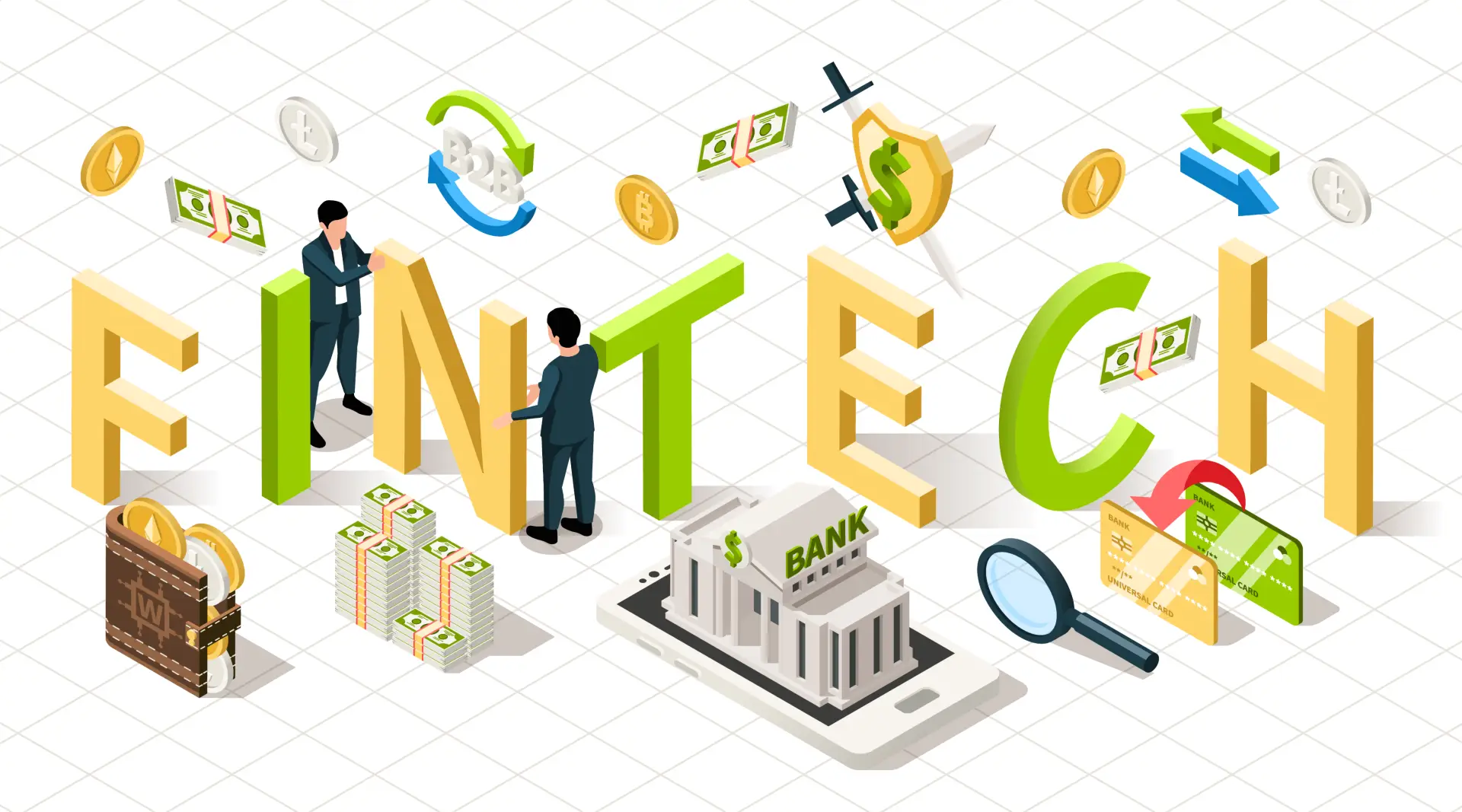
Packaged platforms can get you live quickly, but they struggle to keep pace with real‑time payments, open banking, and AI‑driven fraud—areas where the industry is moving fastest. 2025–2026 payments research shows the battle shifting from raw scale to trust, intelligence, and real‑time infrastructure, with new rails (instant payments, tokenized deposits/stablecoins) moving from pilots to strategy. These shifts require architectures that adapt policy, risk models, and identity controls continuously—something one‑size‑fits‑all products seldom do without costly customization or lock‑ins.

Open banking (PSD2/SCA) is normalizing consented data access and API‑first payments in Europe, while global networks forecast agentic commerce—AI agents transacting on behalf of users—driving tighter identity, consent, and fraud controls in 2026. At the same time, stablecoin regulation and real‑time rails are opening programmable settlement paths. Together, these trends make custom fintech software the pragmatic route to encode proprietary risk, UX, and partner ecosystems with audit‑ready controls.

What is Custom Fintech Software Development?

Custom Fintech Software Development

In simple terms, Custom Fintech Software Development means building financial applications around your business model—not molding your model to a vendor’s template. It lets you encode proprietary underwriting, pricing and fees, onboarding/KYC, advice/portfolio logic, and treasury/settlement flows while meeting region‑specific regulations such as PCI DSS, SOC 2, and GDPR with the evidence and audit trails you (and regulators) need.

Difference between custom fintech solutions and ready‑made platforms

  • Fit vs. friction: Custom platforms mirror your processes and data model; ready‑made tools force workarounds that dilute UX and complicate audits.
  • Roadmap control: You own the backlog and release cadence—critical when PCI DSS revisions, SOC 2 criteria, or local privacy laws change.
  • Security posture: Privacy‑by‑design (GDPR) and card‑data protection (PCI DSS) can be enforced end‑to‑end, including automated evidence capture in CI/CD.

How Custom Fintech Software Works?

Architecture overview (front‑end, back‑end, APIs, cloud infrastructure).
A modern fintech stack uses micro‑frontends for modular UIs, domain‑driven microservices for accounts, payments, risk, and servicing, and API‑first integration with banks, PSPs, bureaus, card networks, and KYC providers. Identity and delegated access rely on OAuth 2.0 and OpenID Connect; infrastructure runs on multi‑region Kubernetes with GitOps, service mesh, observability, and policy‑as‑code for repeatable, auditable releases.

Role of microservices and cloud‑native development.
Microservices reduce blast radius and enable independent scaling of hot paths (e.g., fraud checks). Cloud‑native services (managed databases, serverless workers) plus confidential computing (hardware TEEs) protect data in use, not just at rest or in transit—useful for sensitive KYC matching, encryption key operations, or regulated analytics.

Who Needs Custom Fintech Software?

  • Banks and credit unions: Open‑banking enablement, channel modernization, and consented data sharing under PSD2/SCA.
  • Fintech startups and neobanks: Differentiated UX, explainable risk models, and fast iteration with verifiable controls for audits and scale.
  • Insurance and wealth management firms: Personalization at scale, claims/risk automation, and compliant portfolio tooling.
  • Payment service providers and lenders: Real‑time fraud, scalable ledgers, and dispute/chargeback workflows as volumes and rails diversify; industry data shows rising AI spend for fraud and real‑time infrastructure.

Key Benefits of Custom Fintech Software

Custom Fintech Software DevelopmentScalability and Future‑Readiness
Design for multi‑region orchestration, event streaming, and new rails (instant payments, tokenized money) without re-platforming. Market outlooks emphasize a turning point where architecture choices now will determine who leads by 2029.

Enhanced Security and Compliance
Implement PCI DSS 4.0/4.0.1 controls, align to SOC 2 Trust Services Criteria, and embed GDPR privacy by design (DPIAs, breach reporting) with automated evidence pipelines and continuous testing.

Tailored User Experience
Mobile‑first, accessible journeys with progressive disclosure for KYC and credit terms—optimized for conversion while upholding SCA/consent and regional expectations.

Competitive Advantage in Fintech Markets
Your risk signals, partnerships, and UX become proprietary IP—not generic vendor features—at a time when the market is pivoting to trust and intelligence as differentiators.

Types of Fintech Software Solutions

Custom Banking Software

  • Core banking systems: Product engines, real‑time ledgers, fees and interest calculators, and robust entitlements—all API‑exposed to channels.
  • Digital and mobile banking platforms: Biometrics, device trust, OIDC SSO, and transparent consent dashboards—backed by audit‑ready logging.

Neo-Banking, Digital Wallets, Payment and Transaction Processing Software

  • Digital wallets and payment gateways: Tokenization, 3‑D Secure/SCA, and PCI scope minimization; observability for authorization/settlement health.
  • Cross‑border payment systems: Orchestrate corridors across A2A/SWIFT and, where regulated, programmable settlement pilots using stablecoins/tokenized deposits.

Lending and Loan Management Systems

  • Loan origination and servicing platforms: Workflow orchestration, bureau and income‑verification APIs, and e‑sign with full audit trails.
  • Credit scoring and underwriting automation: Real‑time models with explainability; behavioral signals like velocity and device fingerprinting for fraud.

RegTech Systems

  • Automated AML/KYC flows and real‑time fraud detection: End‑to‑end case management, graph analytics, and SCA‑aligned flows; incident reporting aligned to PSD2 and local rules.

WealthTech, Robo‑Advisors and Investment Platforms

  • Robo‑advisors and portfolio management tools: Suitability + goals‑based planning with tax‑aware rebalancing and auditability.
  • Algorithmic trading software: Low‑latency execution with market surveillance hooks and granular entitlements.

Insurance and Insurtech Solutions

  • Policy administration systems: Product configuration, endorsements, billing, and partner APIs.
  • Claims processing and risk assessment software: ML‑assisted FNOL, document intelligence, fraud scoring, and explainable decisions.

Technologies Used in Custom Fintech Software Development

  1. Cloud Computing and Infrastructure:
    AWS, Azure, and Google Cloud provide global scale, managed security, and compliance toolchains; confidential computing extends protection to data‑in‑use via TEEs and attestation, complementing encryption at rest and in transit.
  2. Artificial Intelligence and Machine Learning :
    Fraud detection and risk analysis: Financial institutions are expanding AI/ML for fraud, real‑time risk, and anomaly detection.
    AI‑powered financial insights and personalization: AI agents and proactive nudges are rising, demanding robust identity and guardrails
  3. Blockchain and Distributed Ledger Technology
    Secure transactions and smart contracts: Programmable settlement and escrow in defined use cases.
    DeFi and tokenization use cases: Stablecoin/tokenized liquidity moving from experiment to strategy in cross‑border and treasury contexts.
  4. APIs and Open Banking Frameworks
    PSD2 and Open Banking integrations: Consent, SCA, and standardized APIs for AISP/PISP roles.
    Secure third‑party ecosystem connectivity: OAuth 2.0/OIDC underpin delegated authorization and identity federation.
  5. Data Analytics and Big Data
    Real‑time financial analytics: Streaming telemetry for operations and risk decisions.
    Predictive modeling for financial decisions: Vector‑database‑backed RAG enables compliant financial copilots and knowledge retrieval.

The 2026 Tech Stack for Fintech

Backend Excellence

  1. Golang & Rust: Ideal for high‑concurrency, memory‑safe transaction processing and risk engines.
  2. Java (Spring Boot): Reliable enterprise backbone for banking integrations and transactional guarantees.

Frontend & Mobile

  1. React Native & Flutter: Cross‑platform dominance for rapid, secure mobile deployment with native biometrics and secure storage.
  2. Micro‑frontends: Independent updates for complex dashboards (ops, risk, servicing) without monolith releases.

Data & AI Infrastructure

  1. Confidential Computing: TEEs to protect data‑in‑use (e.g., KYC matching, cryptographic operations), adding a third pillar to end‑to‑end encryption.
  2. Vector Databases: Power LLMs for financial advice, knowledge retrieval, and customer support via semantic search and retrieval‑augmented generation.

Infrastructure

  1. Cloud‑native (AWS/Azure/Google) with Kubernetes: Multi‑region orchestration, service mesh, GitOps, and policy‑as‑code for compliant, repeatable operations.

Regulatory Compliance in Custom Fintech Software Development

Global Fintech Regulations Overview

  • PCI DSS, GDPR, SOC 2, ISO standards: PCI DSS 4.0/4.0.1 updates authentication and patching rules; SOC 2’s Trust Services Criteria remain the enterprise bar; GDPR continues to define privacy‑by‑design and breach requirements worldwide.
  • AML, KYC, and data privacy requirements: PSD2 technical standards emphasize SCA and secure communications; AML/KYC obligations shape onboarding/monitoring controls.

Region‑Specific Compliance Considerations

  • North America (USA, Canada): SOC 2 is a common procurement gate; PCI DSS timelines and evolving state privacy laws influence architecture and vendor selection.
  • Europe (UK, Germany, EU): PSD2/SCA and GDPR drive API security, consent UX, and data governance.
  • Middle East and Asia‑Pacific: National digital ID, real‑time payments, and data localization necessitate configurable compliance.
  • India and emerging fintech markets: Rapid adoption of real‑time payments and digital onboarding requires low‑latency systems and evolving data‑residency controls.

Security Considerations in Custom Fintech Software Development Services

  1. Data Protection Standards
  • GDPR, CCPA, and privacy frameworks: Data minimization, DSR flows, retention, and cross‑border rules.
  • Data encryption at rest and in transit: TLS 1.2+, HSM/KMS, envelope encryption—extended with confidential computing for data‑in‑use.
  • Secure data storage practices: Tokenization/vaulting and segregation aligned to PCI DSS scope reduction.
  1. Authentication and Authorization
  • OAuth 2.0 and OpenID Connect for delegated access and identity federation; MFA/SCA for risky flows; short‑lived tokens with refresh hygiene.
  • RBAC/ABAC to enforce least privilege and auditability.
  • Session management with revocation, device binding, and anomaly‑based step‑up.
  1. Fraud Prevention
  • Real‑time detection using behavioral analytics, device fingerprinting, and transaction velocity checks—use cases where banks are rapidly expanding AI investment.
  1. Penetration Testing and Vulnerability Assessment
  • Regular security audits (SAST/DAST/IAST), third‑party assessments, and bug bounty programs; align cadence and evidence with PCI/SOC 2 obligations.
  1. Incident Response Planning
  • IR protocols, breach notification (e.g., GDPR 72‑hour rules), and business continuity with tested RTO/RPO.

At Experion, DevSecOps, ISO 27001 certification, and SOC 2 Type II compliance underpin our delivery for BFSI clients—so security and compliance are baked‑in, not bolted on.

Custom Fintech Software Development by Region

Custom Fintech Software Development in the USA

  • Demand: Banks, enterprises, and fintechs prioritize SOC 2‑backed vendors, zero‑trust architectures, and AI‑native fraud controls.
  • Compliance and innovation trends: PCI DSS 4.x timelines guide roadmaps; stablecoin clarity and real‑time payments influence cross‑border strategies.

Custom Fintech Software Development in Europe

  • Open banking and regulatory‑driven innovation: PSD2 APIs, SCA, and consent UX enable A2A payments and new business models under GDPR.
  • UK, Germany, and Nordic hubs: Strong open‑banking ecosystems evolve toward agentic commerce and identity‑centric controls.

Custom Fintech Software Development in the Middle East

  • Digital banking and smart finance initiatives: National programs advance digital ID, instant payments, and AI‑enabled security; designs must adapt to varying standards.
  • UAE and Saudi growth: Emphasis on trust frameworks and interoperability to support ecosystem scale.

Custom Fintech Software Development in India

  • Rapid fintech adoption and digital payments: Real‑time rails and digital onboarding demand low‑latency, mobile‑first stacks and precise consent/identity flows.
  • Startup ecosystem and regulatory landscape: Dynamic policies require configurable compliance, observability, and data‑residency options.

Custom Fintech Software Development Process

  1. Requirement Analysis and Business Discovery
    Quantify KPIs (conversion, loss rates, cost‑to‑serve), map regulatory scope (PCI/GDPR/PSD2), identify integrations (core banking, PSPs, bureaus, identity), and define evidence needs for audits.
  2. UX/UI Design for Fintech Applications
    Mobile‑first, accessible, progressive disclosure for complex flows (KYC, loan terms), and friction‑right SCA for local rules.
  3. Development and Integration
    Domain‑driven microservices, event‑driven patterns, and secure API contracts; OAuth 2.0/OIDC for partner connectivity; secure secrets and policy‑as‑code.
  4. Testing and Quality Assurance
    SAST/DAST, contract testing for third‑party APIs, performance/failover drills, red‑team exercises, and automated PCI/SOC 2 evidence capture.
  5. Deployment and Ongoing Support
    Blue‑green/canary releases, SRE practices, SLIs/SLOs, and observability; regular posture reviews for PCI/GDPR/SOC 2 continuity.

Best Practices for Successful Fintech Development

Custom Fintech Software Development

User‑Centric Design Principles

  1. Mobile‑first approach
  2. Accessibility standards (WCAG)
  3. Intuitive navigation with contextual help
  4. Progressive disclosure of information for KYC, consent, fees

Agile Development Methodology

  1. Sprint planning and execution with risk and compliance in Definition of Done
  2. CI/CD with security gates and artifacted evidence
  3. Regular stakeholder feedback (product, legal, risk)
  4. Iterative improvement using feature flags and A/B testing

Documentation and Knowledge Transfer

  1. Technical documentation (architecture, threat models)
  2. API documentation with versioning and SLAs
  3. User manuals and training materials for ops/support
  4. Code documentation standards for auditability

Performance Optimization

  1. Load time optimization via code‑splitting and prefetch
  2. Database query optimization with indexing and pooling
  3. Caching strategies (read‑through/write‑behind, idempotency keys)
  4. CDN implementation and selective edge compute

Scalability Planning

  1. Horizontal vs. vertical scaling with autoscaling policies
  2. Microservices architecture to isolate domains
  3. Load balancing and circuit breakers
  4. Database sharding and event sourcing for high‑throughput ledgers

Cost of Custom Fintech Software Development

Factors Affecting Development Cost
Use‑case scope (banking vs. payments vs. lending), number/complexity of integrations, regulatory breadth (PCI DSS, SOC 2, GDPR), markets served (localization, data residency), target SLAs/SLOs, and the depth of fraud/AI capabilities.

Estimated Cost Ranges
Budgets vary widely—from MVPs with a single region/limited integrations to multi‑region, PCI‑assessable platforms with real‑time fraud and analytics. Costs increase with compliant cryptography, evidence pipelines, and regulated data handling—but those investments reduce audit friction and enterprise sales cycle risk.

How to Optimize Fintech Development Costs
Prioritize differentiators (risk, UX, ecosystems), leverage managed cloud judiciously, automate compliance evidence, and use confidential computing strategically to satisfy data‑in‑use protection without bespoke crypto stacks.

Challenges in Custom Fintech Software Development

  • Managing security risks: Expanding API ecosystems and agentic experiences require strong identity, consent, and continuous testing to limit blast radius.
  • Navigating regulatory complexity: PCI DSS 4.x, PSD2/SCA, GDPR, and regional privacy rules evolve—externalize policy and collect provable control evidence.
  • Integrating legacy systems: Use strangler patterns and event‑driven adapters for risk‑controlled modernization.
  • Ensuring performance at scale: Real‑time rails demand capacity planning, back‑pressure, and graceful degradation.

Choosing the Right Custom Fintech Software Development Company

1) Key Evaluation Criteria

  • Fintech domain expertise with references across payments, lending, banking, wealth, and insurance.
  • Security and compliance experience: PCI‑aware design, ISO 27001, SOC 2 Type II, and audit support.

2) Questions to Ask a Fintech Development Partner

  • Technology stack and scalability approach: Microservices, K8s, observability, and confidential computing for sensitive workloads.
  • Post‑launch support and maintenance: SRE coverage, SLAs, IR playbooks, and evidence retention.

3) In‑House vs Outsourced Fintech Development

  • In‑house: Control/IP depth but slower talent ramp for specialized domains.
  • Outsourced: Faster time‑to‑value with reusable accelerators—ensure governance, IP protection, and transparent delivery metrics.

How Experion Can Offer Support in Developing Custom FinTech Software Solutions?

Recognized by analyst firms and certified for ISO 27001 and SOC 2 Type II, at Experion, we blend consulting insight with AI‑native engineering to embed intelligence into every layer—risk, operations, and experience. We’ve supported BFSI transformations spanning banking, lending, payments, capital markets, and insurance—delivering measurable outcomes (e.g., zero unplanned downtime for critical lending platforms, accelerated lead‑to‑close, and differentiated equity‑finance capabilities), all underpinned by secure‑by‑design delivery.

Future Trends in Custom Fintech Software Development

AI‑driven finance and hyper‑automation

Agentic commerce becomes mainstream in 2026, but success hinges on trustworthy identity, SCA‑reinforced consent, and risk‑based authentication with real‑time anomaly detection.

Embedded finance and fintech‑as‑a‑service

API ecosystems and BaaS will expand; operator trust will hinge on SOC 2 rigor, privacy governance, and transparent SLAs.

Real‑time payments and open ecosystems

Competing rails and programmable liquidity will force architectural choices (sync vs. async orchestration; ledgering patterns) that define margins and CX through 2029.

Sustainability and green fintech solutions

Expect increased integration of carbon tracking, green financing, and ESG analytics into retail and corporate finance workflows, with transparent disclosures and auditability.

Conclusion: Why Custom Fintech Software Development Is a Long‑Term Investment?

Recap of business, technical, and strategic benefits.
Custom platforms align security & compliance (PCI DSS, SOC 2, GDPR) with growth KPIs (conversion, loss rates, cost‑to‑serve), codify your proprietary risk and UX, and keep you future‑ready for changing rails, fraud tactics, and regulations.

Why tailored fintech solutions outperform generic platforms.
Because differentiation in finance lives in your onboarding, your risk, your partnerships, and your experience—not in a vendor’s roadmap.

Key Takeaways From AWS Summit Hamburg 2025

Cloud Innovation Across Europe’s Tech Landscape

AWS Summit Hamburg 2025 brought together cloud practitioners, developers, IT leaders, and innovators at Hamburg Messe to explore how cutting-edge cloud technologies are powering digital transformation. From digital sovereignty to generative AI, networking, and practical deep dives, the summit offered a cross-section of strategic insights and hands-on learning opportunities.

  1. A Strong Focus on Digital Sovereignty and Europe-Centric Cloud Strategy

A standout theme at AWS Summit Hamburg was digital sovereignty, helping European organizations control their data, adhere to local regulations, and modernize workloads with confidence. Discussions included the forthcoming AWS European Sovereign Cloud, designed to provide data residency, governance, and compliance tailored for the EU market.

  1. Innovation Showcases and Expo Demos

The Summit’s expo floor offered interactive demos and live showcases across a range of AWS technologies. Participants could explore generative AI hubs, sustainability solutions, serverless computing demos, and tools spanning data, analytics, and ML, cementing AWS’s role as a platform for practical cloud innovation.

  1. Hands-On Learning With Training and Certification

AWS Summit Hamburg emphasized skills building through training and certification sessions. Attendees had opportunities to grow cloud expertise at all levels, from foundational to advanced, via Skill Builder labs, breakout sessions, and networking with AWS experts.

  1. Community Engagement and Networking

A vibrant AWS Community Lounge and breakout stages helped attendees connect with cloud builders, developer groups, AWS Heroes, and partner organizations. These interactions encouraged knowledge sharing, collaboration, and community-driven learning, one of the Summit’s core values.

  1. Practical Insights From Breakout Sessions and Case Studies

The agenda featured sessions across industries and technical domains, including cloud migrations, modernization success stories, GenAI best practices, and cost optimization strategies. Real-world examples brought theory to life and provided a playbook for cloud adoption at scale.

  1. Startup Loft and Emerging Innovators

AWS Summit Hamburg’s Startup Loft highlighted emerging startups and early-stage innovators gaining traction on AWS. With hands-on demos and access to AWS startup resources, founders received practical guidance on scaling cloud infrastructure, building differentiated products, and engaging with technical communities.

  1. Tech Talent Area, Bridging Skills and Opportunity

A dedicated Tech Talent Area catered to students and early career professionals, offering insights into career paths in cloud computing, networking with potential employers, and sessions focused on career development in a cloud-first world.

Experion’s Perspective: Turning Insights Into Action

AWS Summit Hamburg highlighted a broad spectrum of cloud innovation, from sovereign data strategies and hands-on workshops to real-world use cases and community-driven learning. For enterprises navigating complex digital transformation journeys, this breadth underscores the need for holistic cloud strategies that combine governance, data integrity, AI readiness, and scalable architecture.

At Experion, we help organizations operationalize these trends through deep expertise in cloud modernization, secure and compliant AWS architectures, GenAI integration, and data-driven application development. By aligning strategy with practical implementations, from serverless frameworks to distributed data ecosystems and AI-enabled solutions, Experion enables businesses to accelerate transformation, reduce risk, and realize cloud value at scale.

As the global cloud and AI conversation continues, events like AWS Summit Hamburg 2026 will further extend these discussions, offering enterprises another opportunity to explore how accelerated computing, cloud-native architectures, and GenAI are converging at scale.

AI Innovations in Ecommerce – Part 2

At the recently concluded NRF 2026, one message came through clearly:
The future of ecommerce is agent-driven.

Retail is entering a phase where AI agents don’t just assist shoppers, they orchestrate entire commerce journeys. Speaking at NRF, Sundar Pichai, CEO of Google and Alphabet, highlighted why the retail industry urgently needs a universal, scalable approach to AI-powered commerce, one that understands the nuances of complex ecommerce workflows.


Universal Commerce Protocol: A New Foundation for AI in Ecommerce

One of the most significant announcements was the introduction of Universal Commerce Protocol (UCP), an open, platform-agnostic standard designed to create a common language between AI agents and ecommerce services.

Developed in collaboration with partners like Walmart, Target, and Shopify, UCP enables seamless ecommerce experiences from product discovery to checkout, while allowing retailers to retain ownership of their customer relationships.

This is a major step toward interoperable, agent-powered ecommerce solutions at global scale.

Know more at https://developers.googleblog.com/under-the-hood-universal-commerce-protocol-ucp/


From Keyword Search to Agentic Retail Experiences

Retail is rapidly shifting from keyword-based search to natural, goal-driven conversations.

Instead of typing queries, customers can now express intent:
“Plan breakfast for five kids”, and AI agents handle the rest.

Powered by agentic AI in retail, these agents understand context, preferences, and constraints to deliver personalized shopping journeys across platforms like Google Gemini, fundamentally changing ecommerce customer experience.


Google’s Full-Stack AI Strategy for Retail

Pichai also emphasized Google’s full-stack AI approach, spanning:

  • Custom TPUs and high-performance infrastructure
  • Advanced models like Gemini
  • Developer-friendly AI APIs

This strategy is enabling massive scale. Retailers processed 8.3 trillion tokens using Google AI APIs in 2024, and are now processing over 90 trillion tokens, an 11x year-over-year increase. This growth highlights how deeply AI-driven workflow automation for ecommerce is being adopted across the industry.


Drone Delivery Moves Closer to Mainstream

Another notable innovation discussed was the expansion of Wing, Alphabet’s drone delivery service. Through an extended partnership with Walmart, Wing is now scaling to 270 locations across the U.S., enabling ultra-fast, last-mile delivery for millions of customers.

Drone delivery is no longer experimental, it’s becoming a practical component of modern ecommerce solutions.


Responsible, Collaborative AI Innovation

Beyond technology, Pichai stressed the importance of being bold and responsible with AI. Google’s approach focuses on embedding safety controls, watermarking, and governance, while ensuring retailers remain the merchant of record and the primary owners of customer trust.

The message was clear: AI should enhance retailer–customer relationships, not replace them.

AI in ecommerce is no longer about incremental upgrades.
It’s about rebuilding commerce around intelligence, intent, and agents.

References:

https://nrf.com/

https://developers.google.com/merchant/ucp

AI Innovations in Ecommerce – Part 1

AI in retail is no longer just about automation. It’s about creating smarter, more personalized, and seamlessly connected shopping experiences, ones that fundamentally redefine how customers discover, decide, and buy.

As Doug Herrington, CEO of Worldwide Amazon Stores, aptly puts it:

“AI is becoming transformative for our business, and we really haven’t had a technology revolution as large as this since the start of the internet.”


From Features to Intelligence-Led Commerce

Ecommerce technology has evolved rapidly. We’ve moved from early innovations like chatbots, AR/VR trials, and Wi-Fi–powered devices such as Amazon Dash buttons, to a far more sophisticated era, one driven by artificial intelligence in ecommerce.

Today’s online stores are powered by AI agentsdrone delivery serviceshyper-personalizationcashier-less retail, and data-driven insights that influence real-time decision-making. The modern ecommerce landscape is no longer defined by isolated features, but by AI-first, intelligence-led experiences.


How Retail Leaders Are Using AI in Ecommerce

Top retailers like Walmart and Amazon have already embedded AI assistants directly into their ecommerce websites and apps, Sparky and Rufus, respectively. In October 2025, Walmart further reinforced its AI strategy by partnering with OpenAI, signaling a clear shift toward more intelligent, conversational shopping experiences.

This evolution isn’t limited to retail giants alone.

AI is now a core layer across popular COTS ecommerce platforms. IBM was an early pioneer, integrating Watson with IBM WebSphere Commerce as early as 2015. Since then, the ecosystem has expanded rapidly with platform-native AI solutions such as:

  • Einstein (Salesforce)
  • Sensei (Adobe)
  • Loomi (Bloomreach)
  • Joule (SAP)

These platforms embed AI deeply into search, personalization, merchandising, ecommerce virtual assistants, and AI-driven workflow automation for ecommerce.


The Rise of Agentic AI in Retail

Over the past year, Agentic AI in retail has fundamentally changed how online shopping works, for both customers and retailers.

For shoppers, AI agents can:

  • Compare prices across sites
  • Apply the best available coupons
  • Automatically purchase recurring needs, such as a weekly grocery list

For retailers, AI agents enable:

  • Dynamic pricing based on demand and competition
  • Smart restocking driven by trend analysis
  • Instant resolution of customer support tickets

Customer journeys are also shifting, from keywords to natural conversations.

Instead of searching for “Milk” or “Diapers”, shoppers now express goals like:
“I’m hosting a themed birthday party for my 7-year-old this Saturday. I have a $100 budget. Can you handle decorations and goody bags and deliver by Friday?”

The shift is clear: from browsing lists of products to expecting solutions, recipes, bundles, carts, and instructions, built by AI agents for ecommerce, rather than manually clicking “Add to Cart.”


Google’s Open Standard for Agent-Powered Commerce

Google recently announced a community-driven open standard, Universal Control Protocol (UCP), designed to integrate retailer checkouts directly with Google Gemini.

With UCP:

  • AI agents can guide customers across any brand’s ecommerce website
  • The entire ecommerce flow, from product discovery to cart management and checkout, becomes agent-assisted
  • Shopping shifts from navigation-heavy journeys to conversational, intent-led ecommerce experiences

More on UCP, along with key AI innovations in ecommerce unveiled at the recently concluded NRF (National Retail Federation) event, coming up in Part 2.

IoT Device Management Platform

IoT adoption is accelerating across industries, but many enterprises discover the real challenge only after deployment. Managing thousands of distributed devices is very different from connecting a few prototypes. Without centralized control, operations become reactive, security risks increase, and firmware sprawl makes reliability difficult to maintain. This is why enterprises are investing in an IoT Device Management Platform as a foundational layer for any scalable IoT ecosystem.

An enterprise-grade platform brings together provisioning, monitoring, remote actions, updates, and governance into a single system. Instead of relying on disconnected scripts and tools, organizations use iot device management software to manage the entire device lifecycle with visibility and control.

Why enterprises struggle without centralized IoT device management

IoT environments break quickly when management is fragmented. Typical challenges include:

  • Devices deployed across multiple sites with inconsistent configuration
  • Limited ability to troubleshoot issues remotely
  • Firmware versions drifting across device fleets
  • Network variability causing visibility gaps and delayed telemetry
  • Security vulnerabilities from weak authentication and unmanaged credentials
  • High operational cost from manual maintenance and field visits
  • Difficulty scaling from hundreds to thousands of devices

This is where enterprise iot device management becomes essential. Without an organized system, even high-performing devices become hard to operate at scale.

Growth of IoT ecosystems across industries and regions

IoT ecosystems are expanding rapidly across manufacturing, healthcare, smart cities, energy, logistics, retail, and agriculture. As deployments grow, the need for standardization increases. Businesses are moving from isolated IoT applications to connected fleets spanning multiple locations, teams, and operational models.

At this scale, an iot device management platform is not optional. It becomes the control plane for everything from onboarding to updates, from security to lifecycle retirement.

How businesses in North America, Europe, Middle East, and Asia-Pacific are adopting device management platforms

Adoption patterns vary, but priorities are similar:

  • North America: focus on large-scale fleet operations, cloud integration, and reliability across distributed deployments
  • Europe: strong emphasis on security, compliance, and data governance along with sustainability reporting
  • Middle East: rapid smart infrastructure growth, smart city programs, and multi-region deployments with centralized oversight
  • Asia-Pacific: high-volume IoT rollouts, cost optimization, and mobile-first operations across wide geographies

Across regions, organizations need iot device management solutions that support device diversity, secure operations, and scalability without adding technical debt.


What is an IoT Device Management Platform and Why do Business Need it?

An IoT device management platform is software that helps businesses onboard, monitor, configure, update, secure, and retire IoT devices across their lifecycle. It acts as the operational backbone of any IoT deployment by providing centralized visibility and remote control over distributed device fleets.

In simple terms, it is the system that ensures connected devices remain usable, secure, and up to date after deployment.

An iot device management platform is a centralized system that manages:

  • device provisioning and registration
  • authentication and identity management
  • real-time monitoring and diagnostics
  • remote commands and configuration updates
  • firmware and software updates, including OTA updates
  • alerts, event tracking, and operational logs
  • decommissioning and lifecycle retirement

Many businesses implement an iot device management application or iot device management app as the operational interface for teams to manage devices efficiently across locations and time zones.


Secure, monitor, and manage IoT devices from a single platform. Connect with us.


What does an IoT device management platform do?

At its core, an IoT device management platform ensures devices can be managed remotely and reliably at scale. It helps organizations:

  • reduce downtime through proactive monitoring
  • maintain security through authentication and access control
  • prevent firmware version chaos through controlled OTA updates
  • reduce field maintenance costs through remote diagnostics
  • keep devices compliant through audit trails and governance

This is why iot device management platforms are now a core requirement for industrial IoT, connected healthcare devices, smart infrastructure, and enterprise fleet environments.

Core purpose and business value

The business value of iot device management software solutions is measurable:

  • centralized control of distributed devices
  • reduced support cost and fewer site visits
  • improved uptime through faster diagnosis and resolution
  • enhanced security posture and reduced risk exposure
  • faster scaling when onboarding new device fleets
  • better visibility into performance, telemetry, and operational health

In other words, it shifts IoT operations from reactive troubleshooting to controlled, scalable management.

Difference between IoT platforms and IoT device management platforms

Many teams confuse a full IoT platform with a device management platform. They overlap, but they are not the same.

  • An IoT platform often includes data ingestion, analytics, application enablement, dashboards, and integration with business systems.
  • An IoT device management platform focuses specifically on managing devices across onboarding, monitoring, updates, security, and lifecycle processes.

A full IoT platform may include device management features, but enterprises often need specialized iot device management tools when their fleets are large, security requirements are strict, or hardware diversity is high.

Role in end-to-end IoT lifecycle management

Device management serves as the control layer throughout the IoT lifecycle :

  • before deployment: provisioning, identity setup, configuration templates
  • during operation: monitoring, diagnostics, remote actions, alerts
  • during evolution: firmware updates, feature enablement, policy enforcement
  • end of life: secure decommissioning and retirement tracking

This lifecycle focus is why enterprises look for the best remote iot device management platform and remote iot device management software that can operate consistently across regions and networks.

How much does it cost to build an effective IoT device management platform?

The cost to build an IoT device management platform depends on scope and complexity. Key cost drivers include:

  • number of device types and protocols supported
  • scale targets, such as thousands vs millions of devices
  • security requirements, such as certificate-based authentication and key management
  • OTA update complexity, rollback mechanisms, and firmware pipelines
  • integration needs with cloud, ERP, analytics, and ticketing systems
  • compliance needs across regions and industries
  • whether you are building a web platform, an iot device management app, or both

Many enterprises evaluate build vs buy. Off-the-shelf iot device management software can accelerate deployment, while custom development allows deeper control, stronger integration, and differentiation. The right approach depends on device landscape, compliance requirements, and long-term roadmap.

IoT Device Management Platform

As IoT deployments move from pilot projects to business-critical infrastructure, the role of device management becomes more strategic. Enterprises are no longer managing a few connected devices. They are operating fleets that span factories, cities, hospitals, supply chains, and regions. This shift explains why IoT device management platforms matter today.


Why IoT Device Management Platforms Matter Today?

IoT ecosystems have reached a level of complexity where manual oversight and fragmented tools no longer work. Devices are expected to operate continuously, securely, and reliably across unpredictable networks and environments. Without a centralized platform, teams struggle to maintain visibility and control.

IoT device management platforms matter because they:

  • provide a single control plane for distributed devices
  • reduce downtime through proactive monitoring
  • enable secure, remote operations at scale
  • support consistent firmware and configuration management
  • make IoT deployments operationally sustainable

As IoT becomes embedded into core business processes, enterprises increasingly rely on iot device management software as mission-critical infrastructure.


Connect with us to reduce IoT operational costs through smarter device management.


How many devices can an IoT device management platform handle?

Modern iot device management platforms are designed to scale from hundreds to millions of devices. Scalability depends on:

  • underlying cloud or hybrid architecture
  • message throughput and telemetry handling capability
  • device grouping and bulk operation support
  • efficient storage and indexing of logs and metrics
  • ability to parallelize OTA updates and commands

Enterprise-grade platforms support horizontal scaling, load balancing, and multi-region deployments. This makes them suitable for global fleets across manufacturing, utilities, logistics, and smart infrastructure.

When evaluating the best remote iot device management software, enterprises should assess proven scalability benchmarks and real-world deployment references.

Can IoT device management platforms support custom hardware?

Yes. Most enterprise deployments involve custom or semi-custom hardware, not off-the-shelf devices. A strong enterprise iot device management platform supports:

  • multiple communication protocols such as MQTT, HTTP, CoAP, and AMQP
  • device SDKs or agent-based integration for custom firmware
  • flexible device models and metadata structures
  • extensible authentication and provisioning flows
  • support for constrained devices and edge gateways

This flexibility is essential when building an iot device management application that must support diverse hardware across different operational environments.


How an IoT Device Management App Works?

An IoT device management app provides the operational interface through which teams manage device fleets. While implementations vary, the core workflow follows a predictable lifecycle.

Device onboarding and provisioning

Provisioning is the first step in device management. The platform registers devices, assigns identities, and applies initial configuration. This may include:

  • device certificates or credentials
  • association with a customer, site, or asset
  • assignment to groups or templates
  • initial firmware and configuration settings

Automated provisioning is critical for large-scale rollouts.

Secure device authentication and identity management

Security begins with identity. IoT device management software enforces authentication using methods such as:

  • certificate-based authentication
  • hardware-backed keys and secure elements
  • token-based or mutual authentication flows

Strong identity management prevents unauthorized devices from connecting and protects against impersonation attacks.

Real-time device monitoring and telemetry collection

Once deployed, devices continuously send telemetry such as health status, performance metrics, and environmental readings. The platform collects and normalizes this data to provide:

  • real-time visibility into device health
  • historical performance tracking
  • early detection of anomalies or failures

This monitoring capability is a core function of iot device management software solutions.

Remote configuration and command execution

Remote control reduces the need for physical intervention. Through an iot device management app, operators can:

  • change configuration parameters
  • execute commands such as reboot or reset
  • enable or disable features remotely
  • apply policies across device groups

Bulk operations are especially important for managing large fleets efficiently.

Firmware and OTA (Over-the-Air) updates

OTA updates are one of the most valuable and risky operations in IoT. A modern platform supports:

  • staged and phased rollouts
  • version tracking and compatibility checks
  • rollback mechanisms in case of failure
  • update scheduling to minimize downtime

This capability is essential when managing devices across regions with varying network reliability.

Decommissioning and lifecycle retirement

At end of life, devices must be securely decommissioned. This includes:

  • revoking credentials and access
  • wiping sensitive data
  • updating inventory and audit records

Lifecycle retirement ensures security and compliance even after devices are no longer active.


Key Features of a Modern IoT Device Management Software

A modern iot device management platform combines operational control, security, and insight. Key features include:

  • Device Provisioning and Registration for fast, secure onboarding
  • Remote Monitoring and Diagnostics for proactive issue resolution
  • Firmware and Software Updates (OTA) with rollback support
  • Security and Access Control using strong identity management
  • Device Grouping and Tagging for scalable operations
  • Alerts, Logs, and Event Management for visibility and compliance
  • Analytics and Performance Insights to optimize operations
  • Integration with Cloud, ERP, and Analytics Systems for end-to-end workflows

These features are what differentiate basic connectivity solutions from enterprise-ready iot device management platforms.


What are the Benefits of an IoT Device Management Platform for Enterprises?

An enterprise-grade IoT device management platform provides far more than device visibility. It becomes the operational backbone that keeps distributed IoT environments stable, secure, and scalable.

Centralized control of distributed IoT devices
Enterprises can manage thousands of devices across locations, regions, and time zones from a single console. Centralized control eliminates fragmented tooling and manual intervention.

Reduced operational and maintenance costs
Remote diagnostics, configuration changes, and OTA updates significantly reduce on-site visits. This makes remote iot device management software a key cost-saving lever.

Improved device uptime and reliability
Real-time monitoring and proactive alerting help identify issues early. Predictive insights reduce unplanned downtime and improve service continuity.

Enhanced security and compliance
Strong identity management, controlled updates, and audit trails help meet regulatory requirements and reduce security risk across the device fleet.

Faster scalability across regions and locations
With automated provisioning and device grouping, enterprises can onboard new devices rapidly without increasing operational complexity.

Better data accuracy and real-time visibility
Centralized telemetry collection ensures consistent data quality, enabling faster decisions and more reliable analytics.

These benefits explain why enterprises increasingly invest in enterprise iot device management solutions as part of their digital infrastructure.


Connect with us to build a scalable and secure IoT device management platform.


Challenges in IoT Device Management Platform and How Platforms Solve Them?

IoT environments introduce unique challenges that traditional IT management tools cannot handle effectively. Modern IoT device management platforms are built specifically to address these issues.

Device heterogeneity
IoT fleets often include different hardware models, firmware versions, and protocols. Platforms solve this through flexible device models, SDKs, and abstraction layers that normalize device interactions.

Network instability
Devices may operate in environments with intermittent connectivity. Platforms support buffering, retries, offline modes, and delayed command execution to maintain stability.

Security vulnerabilities
Weak identity management exposes devices to impersonation and attacks. IoT device management software uses certificate-based authentication, key rotation, and access policies to strengthen security.

Scaling across regions
Managing devices globally introduces latency and availability concerns. Cloud-based and hybrid platforms support multi-region deployments with localized control planes.

Managing firmware versions
Firmware sprawl creates operational risk. OTA pipelines with version control, staged rollouts, and rollback mechanisms help maintain consistency.

Data overload
High-frequency telemetry can overwhelm systems. Platforms apply filtering, aggregation, and rule-based alerts to focus attention on actionable signals.


Industries Using IoT Device Management Solutions

IoT device management platforms are used wherever connected devices must operate reliably at scale.

Manufacturing and Industrial IoT
Factories use IoT device management tools to monitor machines, manage sensors, and support predictive maintenance across production lines.

Healthcare and Medical Devices
Hospitals and device manufacturers rely on secure iot device management software to manage connected medical devices while meeting compliance standards.

Smart Cities and Infrastructure
Municipalities use platforms to manage lighting, traffic systems, parking sensors, and environmental monitoring across cities.

Energy and Utilities
Utilities manage smart meters, substations, and grid sensors using centralized platforms to ensure uptime and regulatory compliance.

Transportation and Logistics
Fleet operators use remote iot device management software for vehicle tracking, diagnostics, and real-time monitoring.

Retail and Connected Stores
Retailers manage connected POS systems, digital signage, and in-store sensors through scalable device management platforms.

Agriculture and Smart Farming
Agribusinesses monitor irrigation systems, soil sensors, and equipment remotely to improve yield and reduce resource usage.


Use Cases of IoT Device Management Platforms

Across industries, common enterprise use cases include:

  • managing thousands of sensors across multiple locations
  • predictive maintenance using device health data
  • remote diagnostics for field devices
  • real-time fleet monitoring and tracking
  • compliance monitoring for regulated industries

These use cases highlight why enterprises look for the best iot device management app or platform that can support operational scale without complexity.


Security in an IoT Device Management Platform

Security is one of the most critical requirements for any IoT deployment. As connected devices expand the attack surface, enterprises must prioritize security at every layer.

Why IoT security is a top concern globally
IoT devices often operate unattended and connect over public networks. A single compromised device can expose an entire system if security is weak.

Device identity and certificate-based authentication
Strong identity ensures only trusted devices can connect. Certificate-based authentication and hardware-backed keys are widely used in enterprise platforms.

Secure firmware updates and rollback mechanisms
OTA updates must be signed, verified, and recoverable. Rollback support prevents devices from becoming unusable after failed updates.

Data encryption at rest and in transit
Encryption protects telemetry and commands as they move between devices, gateways, and cloud services.

Compliance with regional standards
Enterprise platforms support compliance with regulations such as GDPR, HIPAA, ISO standards, and region-specific data protection laws.


At Experion Technologies, we design IoT device management platforms with security-by-design principles, ensuring identity, data protection, and compliance are built into every stage of the device lifecycle.


Cloud-Based vs On-Premise IoT Device Management Platforms

Choosing between cloud-based and on-premise IoT device management platforms depends on security needs, scalability goals, and regional compliance requirements.

Key differences

Cloud-based platforms are hosted on public or private cloud infrastructure and are designed for rapid scalability and global access. On-premise platforms are deployed within an organization’s own data centers, offering tighter control over data and infrastructure.

Pros and cons of cloud-based platforms

Advantages

  • faster deployment and lower upfront infrastructure cost
  • elastic scaling to handle large device fleets
  • built-in redundancy and high availability
  • easier integration with analytics, AI, and enterprise systems
  • simplified updates and maintenance

Limitations

  • dependency on internet connectivity
  • potential data residency concerns in regulated regions

Cloud platforms are well suited for organizations operating across multiple geographies and looking for the best remote iot device management platform to manage distributed fleets.

When on-premise or hybrid models make sense

On-premise or hybrid IoT device management software solutions are preferred when:

  • strict data residency or sovereignty rules apply
  • latency requirements demand local processing
  • environments are highly regulated or isolated
  • organizations require complete control over infrastructure

Hybrid models combine centralized cloud control with regional edge or on-premise components, balancing scalability with compliance.


How to Select the Most Suitable IoT Device Management Platform?

Selecting the right platform requires aligning technical capabilities with business needs and long-term goals.

Scalability requirements
The platform should support future device growth without redesign. This includes handling millions of connections, messages, and OTA operations reliably.

Device types and protocol support
Ensure compatibility with existing and planned hardware, including support for common protocols and custom integrations.

Integration with existing systems
Enterprise iot device management platforms must integrate with ERP, CRM, analytics, ticketing, and cloud services to enable end-to-end workflows.

Security and compliance needs
Look for strong identity management, encryption, audit trails, and compliance support aligned with regional regulations.

Ease of use and customization
Operational teams need intuitive dashboards, automation tools, and APIs that allow customization without complexity.

Vendor support and long-term roadmap
Evaluate the provider’s experience, support model, and commitment to evolving features such as AI and automation.


Future-proof your IoT deployments with scalable device management tools. Connect with us.


IoT Device Management Platform Architecture Explained

A scalable architecture ensures reliability and performance as device fleets grow.

Device layer
Physical devices and sensors running firmware that supports secure communication and remote management.

Connectivity layer
Networks and protocols that transport data between devices and the platform, including gateways where required.

Management and control layer
The core of the iot device management platform, responsible for provisioning, monitoring, commands, and OTA updates.

Data processing and analytics layer
Processes telemetry, logs, and events, enabling alerts, dashboards, and insights.

Application and integration layer
Connects device management data to enterprise applications, analytics systems, and user-facing apps.


Role of AI and Automation in IoT Device Management Platforms

AI and automation are increasingly embedded into modern iot device management software to reduce manual effort and improve reliability.

Predictive device health monitoring

AI models analyze telemetry and historical data to predict failures before they occur, enabling proactive maintenance.

Automated issue detection and resolution

Automation can trigger remediation actions such as restarts or configuration adjustments without human intervention.

Intelligent alerting and anomaly detection

AI reduces alert noise by identifying patterns and surfacing only critical events that require attention.

AI-driven optimization of device performance

Continuous analysis helps optimize configuration, energy usage, and performance across device fleets.


IoT Device Management App for Global Enterprises

Global enterprises face additional complexity when managing devices across borders.

Managing devices across multiple countries
Platforms must support multi-region deployments and centralized oversight.

Supporting regional compliance and regulations
Compliance requirements vary by region. The platform must support configurable data handling and audit controls.

Localization and multi-language support
Operational interfaces should support multiple languages and regional formats.

Managing time zones and regional operations
Scheduling, alerts, and updates must account for time zone differences to avoid disruption.


IoT Device Management Platform vs MDM vs IoT Hub

Understanding the difference between device management tools helps organizations choose correctly.

  • MDM (Mobile Device Management) focuses on phones and laptops, not constrained IoT devices.
  • IoT Hubs provide connectivity and message routing but limited lifecycle management.
  • IoT device management platforms offer full lifecycle control, security, and operational tooling designed for IoT.

This is why IoT-specific platforms outperform traditional MDM tools for connected device fleets.


Future Trends in IoT Device Management Platforms

The evolution of IoT device management platforms is driven by scale, intelligence, and autonomy.

Edge computing integration

More processing will happen closer to devices, reducing latency and bandwidth usage.

5G-enabled device management

5G networks will enable higher throughput, lower latency, and more reliable remote operations.

AI-first IoT platforms

AI will be embedded by default, driving predictive maintenance and autonomous operations.

Digital twins for devices

Virtual representations of devices will enable simulation, testing, and optimization.

Autonomous device operations

Future platforms will manage devices with minimal human intervention through closed-loop automation.


Why Businesses Are Investing in IoT Device Management Platforms Now?

Enterprises invest now because:

  • IoT is becoming core to operations and revenue
  • unmanaged devices increase security and operational risk
  • centralized management reduces cost and downtime
  • real-time insights create competitive advantage
  • regulatory and security pressures are increasing


How an IoT Device Management Platform Supports Long-Term Scalability?

A strong platform supports growth by:

  • enabling seamless onboarding of new devices
  • managing firmware and software evolution
  • providing data-driven insights for decisions
  • reducing technical debt through standardized workflows


How Experion Can Help in Supporting IoT Device Management Platform?

Experion helps enterprises design, build, and scale IoT device management platforms tailored to their hardware, security, and operational needs. Our expertise spans architecture design, custom development, integration, security, and global deployment support.


Conclusion: Is an IoT Device Management Platform Right for Your Business?

If your organization operates connected devices at scale or plans to, an IoT device management platform is essential. It provides control, security, and scalability while reducing operational cost and risk.

To get started, organizations should assess device scale, security requirements, and integration needs, then engage with experienced partners to design a future-ready solution.

Key Takeaways

  • IoT device management platforms enable centralized, secure control of device fleets
  • Enterprise-grade platforms reduce operational cost and improve uptime
  • Security and compliance are core design requirements
  • Cloud, hybrid, and on-premise models support different business needs
  • AI and automation are shaping the future of device management

What to Watch at NVIDIA GTC 2026

NVIDIA GTC 2026, scheduled for March 16–19, 2026 in San Jose, is shaping up to be one of the most closely watched technology events of the year. Known for setting the direction of AI, accelerated computing, and GPU-driven innovation, GTC consistently offers an early view into where enterprise and industrial AI are headed next.

As the industry moves beyond experimentation toward large-scale AI deployment, this year’s conference is expected to focus less on “what’s possible” and more on what’s scalable, operational, and real.

Here are the key themes and trends expected to define NVIDIA GTC 2026.


Agentic AI Moves From Research to Real Systems

GTC 2026 is expected to go deeper into agentic AI, systems that can reason, plan, and execute multi-step actions autonomously. Expect discussions around orchestration frameworks, tool-using models, and real-world enterprise use cases where AI agents go beyond chat to drive workflows and decisions.


Accelerated Computing as the Default, Not the Exception

NVIDIA’s roadmap around next-generation GPUs and accelerated platforms will likely reinforce a central idea: AI workloads demand fundamentally different computing architectures. From training massive models to low-latency inference, accelerated computing is becoming the baseline for modern systems.


Physical AI, Robotics, and Simulation Take a Bigger Role

Robotics and simulation are expected to be a major focus, with sessions exploring how AI models interact with the physical world. From digital twins and industrial simulations to autonomous systems, GTC continues to blur the line between software intelligence and real-world execution.


AI Infrastructure, Platforms, and Full-Stack Thinking

Rather than isolated models, GTC 2026 is likely to emphasize end-to-end AI platforms, spanning infrastructure, frameworks, deployment pipelines, monitoring, and optimization. The conversation is shifting toward how organizations build AI systems that are reliable, observable, and cost-efficient at scale.


Developers at the Core of the AI Ecosystem

GTC has always been a developer-first conference, and 2026 will be no different. Expect deep dives into CUDA, CUDA-X, AI SDKs, optimization techniques, and hands-on labs designed to help teams translate theory into high-performance applications.


Cross-Industry AI Adoption Accelerates

Healthcare, manufacturing, automotive, telecom, finance, and research communities will converge at GTC to showcase how AI and accelerated computing are transforming industry-specific challenges, reinforcing GTC’s role as a cross-sector innovation hub, not just a chip announcement stage.


Learning, Upskilling, and AI Readiness

With training tracks, workshops, and certifications, GTC 2026 will continue to position itself as a platform for building AI capability, not just showcasing technology, helping teams move faster from learning to implementation.


Where Experion Fits In

The themes expected at NVIDIA GTC 2026, agentic AI, accelerated computing, physical AI, and full-stack AI platforms, mirror the challenges enterprises face as AI systems move into production. Experion works with organizations to translate these advancements into scalable, secure, and business-ready AI solutions, combining expertise in AI engineeringcloud-native platforms, data systems, and intelligent automation. Our focus is on turning cutting-edge technology into solutions that perform reliably in the real world.

Top Tech Trends from CES 2026

Where Innovation Shows What’s Coming Next

CES 2026, held in Las Vegas from January 6 to 9, brought excitement back to the world’s biggest technology trade show. This year’s event showcased innovations spanning artificial intelligence, robotics, displays, consumer devices, automotive tech, and more, all pointing toward how tech will shape everyday life and enterprise strategy in the coming years.

  1. AI Goes Beyond Assistance, It’s Becomes Infrastructure

Artificial intelligence dominated CES 2026, not as a marketing buzzword, but as built-in intelligence across devices and systems. From smart appliances to robots and advanced computing hardware, AI is increasingly embedded at the core of modern products, signaling that AI is becoming fundamental infrastructure, not just a feature.

  1. Robots With Real-World Purpose

Robots at CES weren’t just tabletop curiosities. Many showcased practical automation for home and professional use, from autonomous stair-climbing vacuums to household assistants and interactive AI companions. These developments suggest a shift toward robotics that can meaningfully support everyday life and work.

  1. Immersive Display and Visual Technology Takes Center Stage

Display technology saw major leaps with innovations like Samsung’s 130-inch micro RGB TV and next-generation screens pushing brightness, color, and immersion. These advances signal how entertainment, visualization tools, and next-gen workplaces will increasingly rely on high-performance displays.

  1. Computing Power and AI Hardware Race

CES was a launchpad for new computing architectures, notably next-generation laptops, AI-optimized processors, and edge-AI platforms that bring powerful intelligence closer to users and devices. This reflects a broader industry shift where hardware finally catches up with software demand, enabling local, efficient AI execution.

  1. Connected Health and Smart Well-Being Devices

Wearables and health tech were elevated with smart sensing and AI-powered biometrics, bringing insights from fitness tracking to preventive health monitoring. These devices demonstrated how consumer tech is increasingly crossing over into meaningful health and wellness applications.

  1. Electric Mobility and Connected Transportation

CES continued to highlight mobility and automotive tech, from prototype EVs and intelligent vehicle platforms to AI-enhanced transportation systems. These innovations show that mobility is evolving into a software-defined, connected experience.

  1. Practical Tech That Bridges Novelty and Usefulness

Beyond futuristic demos, CES 2026 also featured devices with immediate practical impact, from advanced smart home routers and integrated gaming hardware to AI-enhanced appliances and everyday gadgets that deliver real utility. This blend indicates a shift from spectacle to applied innovation.


CES’s Broader Message: Innovation That’s Ready Now

CES 2026 reinforced that cutting-edge technology isn’t just about what’s possible in the future, it’s about what’s practical today. From AI-first computing to robotics, health tech, immersive platforms, and mobility systems, the innovations on display reflect a world where intelligent, connected systems are quickly becoming part of everyday life and enterprise strategy.


Where Experion Fits In

The trends emerging from CES 2026, particularly AI becoming infrastructure, robotics with real utility, intelligent devices, and connected experiences, mirror the transformation priorities facing modern enterprises. At Experion, we bring deep expertise in AI integrationcloud-native systems, edge computing, IoT solutions, and distributed digital experiences. By bridging innovative technology with enterprise outcomes, we help organizations build scalable, secure, and future-ready solutions that deliver measurable value, from connected products and automated workflows to immersive user experiences and intelligent platforms.

AI Accounting Software

Financial teams today are working under pressure like never before. The growing complexity of financial operations is not just about higher transaction volumes. It is about managing multi-entity accounting, supporting global compliance, handling real-time reporting demands, and responding instantly to shifting market conditions. Add to that the explosion of digital payments, subscription revenue models, cross-border taxation, and increasingly strict audit expectations, and accounting becomes far more than a back-office function.
This is why businesses are rapidly rethinking how they manage accounting systems. Traditional accounting software, while familiar and dependable, often struggles to keep up with the speed, scale, and intelligence modern enterprises require. That is where AI accounting software is reshaping the landscape.

The Growing Complexity of Financial Operations

Accounting used to be structured around predictable inputs and periodic outputs. But modern finance environments are dynamic. Businesses must handle:

  • Constant inflow of transactional data from multiple sources
  • New revenue recognition models and subscription billing
  • High-frequency reconciliations and matching across accounts
  • Real-time compliance across evolving regulations
  • Increasing exposure to fraud, duplicate entries, and anomalous behavior
  • Pressure to close books faster while maintaining high accuracy

For many organizations, the finance team is drowning in manual tasks, spreadsheets, and workaround processes. Even companies using cloud accounting software often experience limitations when automation is basic and data becomes too large or too unstructured to process efficiently.

Limitations of Traditional Accounting Software

Traditional accounting software solutions are built primarily for transaction logging and reporting. They can support bookkeeping, invoicing, and summaries. But they depend heavily on rules-based configuration and manual review.

Common challenges include:

  • Manual data entry and human errors
  • Limited ability to interpret unstructured documents like invoices and receipts
  • Minimal forecasting and no proactive alerts
  • Static dashboards and delayed insights
  • Lack of intelligence for anomaly detection and fraud prevention
  • Heavy dependency on accountants for classification and reconciliation
  • Slow month-end closure due to repetitive tasks and approvals

Even when businesses adopt automation features, most traditional platforms use rigid workflows. That means they can automate only what is already predictable. But finance operations are rarely predictable.

This is why businesses are moving toward AI-powered accounting software, where the system does not just record information but learns from it.


How AI Is Redefining Accuracy, Speed, and Compliance?

AI is enabling a new generation of ai based accounting software that does much more than automate. It learns transaction patterns, understands documents, improves data consistency, and delivers predictive insights. Instead of relying on fixed rules, AI systems adapt and improve continuously.

With ai in accounting software, businesses can:

  • Automatically categorize expenses and match invoices to purchase orders
  • Identify duplicate entries, unusual vendor behavior, or suspicious payments
  • Reduce errors in journal entries and general ledger posting
  • Enable faster and smarter reconciliation
  • Ensure stronger audit readiness with automated documentation trails
  • Forecast cash flow with better accuracy using predictive models

Modern accounting software with AI helps finance teams shift from reactive reporting to proactive decision-making.

And that shift has real business value. Faster closure cycles, fewer compliance surprises, lower operational costs, and stronger governance.

What Businesses Expect from Modern Accounting Systems

Today, businesses are no longer satisfied with basic accounting tools. They want intelligent systems that act like financial copilots. The expectation is clear:

Real-time access to financial health

Finance leaders want instant visibility into cash positions, liabilities, aging receivables, and spending patterns. They want dashboards that update continuously and answer questions quickly.

Accuracy without heavy manual oversight

Businesses expect systems to reduce errors automatically instead of requiring constant human review.

Smarter automation, not just faster workflows

Businesses want automation that understands exceptions, adapts to change, and improves performance over time.

Built-in compliance readiness

From tax calculation to audit trails, businesses expect compliance to be embedded into the system, not managed as a separate effort.

Strong integrations

The best ai accounting solutions must integrate seamlessly with ERP, payroll, banking, CRM, and tax systems. For many businesses, the ability to connect data sources makes or breaks adoption.

Scalability for growth

Accounting systems must grow with transaction volumes, business units, new geographies, and evolving compliance.

This is why the demand is rising not just for automation tools, but for the best AI accounting software that supports full operational transformation.


What Is AI Accounting Software?

AI accounting software is a modern category of accounting ai software that uses artificial intelligence to automate and optimize accounting processes. Unlike traditional accounting platforms, it applies machine learning, natural language processing, and predictive analytics to improve accuracy, reduce manual effort, and deliver real-time insights.

At its core, ai software for accounting is designed to perform accounting work intelligently, not just automatically.

Instead of simply recording financial events, AI systems can interpret documents, learn from historical data, detect anomalies, and predict future outcomes.

AI accounting software is an accounting platform that combines traditional finance functions with AI-driven capabilities such as:

  • Intelligent categorization and classification
  • Automated reconciliation and matching
  • Real-time reporting and anomaly alerts
  • Predictive forecasting and risk analysis
  • AI-powered workflow recommendations
  • Smart invoice and expense processing

In other words, it is not just software. It is a learning system designed to continuously improve accounting operations.

Difference Between AI-powered Accounting and Traditional Automation

Traditional automation in accounting is rule-based. You define if-then rules, create templates, and automate a narrow task. But it often breaks when exceptions occur.

AI-powered accounting is different because it learns patterns and handles complexity.

Traditional Automation AI-powered Accounting
Rule-based workflows Pattern-based intelligence
Struggles with exceptions Learns from exceptions
Requires constant manual tuning Improves continuously
Static outputs Predictive insights
Limited document understanding Can interpret invoices, receipts, and contracts

This is why ai powered accounting software is becoming essential for businesses scaling rapidly.


Role of Machine Learning, NLP, and Predictive Analytics

AI accounting platforms rely on three core technologies:

Machine Learning (ML)

ML models learn from transaction history to recognize patterns, flag inconsistencies, and recommend coding for entries.

Natural Language Processing (NLP)

NLP helps the system understand and classify invoice text, payment details, or vendor notes. It also enables conversational queries, so users can ask questions like “What were our top expense categories this quarter?”

Predictive Analytics

Predictive models forecast cash flow, detect potential financial risks, and help finance teams plan ahead with higher confidence.

Examples of Tasks Handled by AI Accounting Platforms

AI accounting platforms can support tasks such as:

  • Smart invoice processing and expense categorization
  • Automated journal entry suggestions
  • Reconciliation across accounts and bank statements
  • Fraud detection and anomaly identification
  • Real-time dashboards and financial reporting
  • Advanced forecasting and scenario planning
  • Compliance checks and audit preparation

Some solutions also extend into AI accounts payable software, helping businesses automate invoice approvals, vendor management, and payment processing.


How AI-Powered Accounting Software Works?

AI powered accounting software works by collecting financial data from multiple sources, processing it using intelligent models, learning patterns continuously, and then delivering automation plus predictive insights. Unlike basic accounting software solutions that rely on pre-built rules and manual triggers, ai based accounting software learns from historical behavior, adapts to new patterns, and improves accuracy over time.

At a high level, most ai powered accounting software operates through four core layers:

  1. Data ingestion and integration
  2. Machine learning models in accounting
  3. Natural language processing (NLP)
  4. Predictive and prescriptive analytics

Together, these layers transform accounting into a proactive and intelligence-driven system.

Data Ingestion and Integration

AI accounting platforms must first collect data. This is one of the most critical foundations of ai accounting solutions, because accounting data is rarely located in a single system.

Connecting ERP, CRM, payroll, banking, and tax systems

Modern accounting teams deal with financial activity spread across systems:

  • ERP systems for purchasing and inventory
  • CRM platforms for invoices, orders, and customer payments
  • Payroll systems for salaries, reimbursements, benefits
  • Banking systems for real-time payment and reconciliation data
  • Tax systems for filing rules and compliance requirements

The best ai accounting software integrates across all these environments via APIs, connectors, and data pipelines, ensuring that every transaction is captured without manual transfer or re-entry.

This is exactly where cloud-based accounting software plays a critical role. Cloud infrastructure allows AI systems to integrate faster, scale on demand, and support real-time visibility across all financial workflows.

Handling structured and unstructured financial data

Accounting data comes in multiple formats:

  • Structured data: journal entries, general ledger records, payroll transactions
  • Semi-structured data: CSV exports, spreadsheet-based reconciliations
  • Unstructured data: invoices, purchase orders, receipts, contracts, emails

AI in accounting software is particularly valuable because it can process unstructured data through OCR, NLP, and computer vision, turning documents into usable accounting records without manual input.

Machine Learning Models in Accounting

Machine learning is the engine that powers accounting ai software. It learns from historical transaction patterns, identifies anomalies, and makes intelligent recommendations.

Pattern recognition for transactions

AI based accounting software can identify patterns such as:

  • Recurring vendor payments
  • Typical expense category distributions
  • Regular monthly charges and subscription payments
  • Common approval flows for different spend types
  • Normal transaction volume ranges per department

When new transactions arrive, AI automatically matches them with known patterns and suggests categorizations, codes, or reconciliations.

This reduces time spent on repetitive tasks and improves consistency, making ai software for accounting highly effective for growing businesses.

Continuous learning from historical data

The key difference between automation and AI is learning.

Traditional accounting software solutions use fixed rules. AI models update their decisions based on:

  • corrections made by accountants
  • historical audit outcomes
  • seasonal changes in cash flow or spending
  • new vendor relationships and updated transaction behaviors

Over time, the platform becomes more accurate and can handle more exceptions without human intervention.

That is why many organizations consider AI based systems the future of accounting software with AI, especially for high-volume, complex environments.

Natural Language Processing (NLP)

Natural language processing allows AI accounting software to read, interpret, and classify financial text. This is a major advantage over traditional accounting software that depends on rigid templates or manual tagging.

Invoice reading and classification

Using NLP alongside OCR, AI accounting platforms can:

  • read invoices and extract critical fields
  • classify line items automatically
  • match invoices to purchase orders
  • detect duplicates, missing details, or suspicious inconsistencies

This capability is especially powerful for ai accounts payable software, where invoice management consumes a huge portion of finance team time.

NLP reduces the manual effort involved in invoice workflows and improves accuracy in vendor payment processing.

Conversational financial queries and reports

Advanced systems allow finance teams to ask questions using natural language, like:

  • “Show me the top 10 expense categories this month.”
  • “Which vendors have increased costs quarter over quarter?”
  • “How much cash runway do we have at current burn rate?”

This improves decision-making and shifts finance from a reporting role to an insight role. It also makes best ai accounting software highly usable for non-finance stakeholders.

Predictive and Prescriptive Analytics

AI accounting solutions do not stop at automation. They help organizations plan ahead and proactively address risk.

Forecasting cash flow and expenses

Predictive analytics models use historical financial patterns to forecast:

  • cash inflows and outflows
  • upcoming expense spikes
  • delayed customer payments
  • seasonal revenue trends

This makes cash flow forecasting far more accurate than static spreadsheet projections.

For CFOs, predictive models are one of the most valuable outcomes of implementing ai in accounting software, because they support stronger financial planning and better capital decisions.

Identifying future financial risks

AI models can identify risks such as:

  • increasing accounts receivable aging
  • vendor payment anomalies
  • cost overruns in specific business units
  • unusual transaction frequency
  • compliance gaps based on past audit signals

Prescriptive analytics can go a step further, recommending actions such as:

  • tightening approval workflows
  • reviewing specific vendors
  • adjusting cash allocation strategies
  • prioritizing collections based on risk scoring

This is how ai powered accounting software turns finance into a strategic, proactive function.


Key Features of AI Accounting Software

A modern AI accounting platform includes both traditional accounting functions and intelligent capabilities that continuously learn and optimize workflows. Below are the key features businesses look for when evaluating accounting software solutions built with AI.

1. Automated bookkeeping and journal entries

AI automatically creates and suggests journal entries, codes transactions accurately, and flags inconsistencies based on historical data.

2. Predictive cash flow forecasting

AI models forecast cash positions and liquidity needs, helping teams prevent cash shortages and improve planning.

3. Smart invoice processing and expense categorization

Invoices and receipts are extracted, interpreted, and categorized automatically. This is core to ai accounts payable software and expense workflow automation.

4. Real-time financial reporting and dashboards

AI provides dynamic dashboards and instant reporting. Unlike static reports, users can drill down, detect trends, and ask natural language queries.

5. Tax calculation and compliance automation

AI can automate tax calculations, flag compliance gaps, and support real-time regulatory monitoring for smoother reporting cycles.

6. Fraud detection and anomaly identification

The platform detects unusual transactions, duplicate payments, and suspicious vendor behavior, making it a strong layer of financial risk protection.

7. AI-driven audit readiness

AI systems keep structured audit trails, document transactions clearly, and detect compliance risks before audits begin.

8. Intelligent reconciliation and error correction

AI reconciles bank statements, invoices, and ledger records faster and flags mismatches automatically, drastically reducing closure timelines.


Benefits of AI Accounting Software Solutions for Businesses

AI accounting software is not just a productivity upgrade. It is a structural shift in how finance teams operate, report, and support business growth. By embedding intelligence into accounting workflows, AI accounting solutions reduce operational friction while improving accuracy, compliance, and decision-making.

Below are the most valuable business benefits of AI powered accounting software across industries and company sizes.

Accuracy and Error Reduction

Manual entry remains one of the biggest causes of accounting inconsistencies. Even small errors in coding, invoice matching, or reconciliations can snowball into reporting inaccuracies and compliance risks. AI based accounting software minimizes these issues by learning patterns and applying consistent logic.

Minimizing manual data entry mistakes
AI automates data extraction and classification from bank feeds, invoices, receipts, and ERP records. It reduces reliance on copy-paste workflows and eliminates repetitive coding tasks that often result in errors.

Consistent financial records
Unlike traditional accounting software solutions where consistency depends heavily on individual accountants, accounting software with AI standardizes how transactions are categorized, reconciled, and posted. This improves data quality, reporting reliability, and audit preparedness.

Time and Cost Efficiency

Finance teams spend a significant portion of their time on recurring tasks: invoice approvals, reconciliations, expense categorization, journal entry creation, and reporting. AI powered accounting software accelerates these workflows dramatically.

Faster month-end and year-end closures
AI reduces time spent on reconciliation, error correction, and adjustments. It can automatically match transactions, flag missing documents, and suggest corrections. Many organizations adopt AI in accounting software primarily to shorten close cycles without sacrificing accuracy.

Reduced dependency on manual accounting effort
AI accounting solutions reduce the workload required for routine accounting processes. That means finance teams can scale transaction volumes without continuously scaling headcount. This efficiency also makes AI accounting software valuable for SMEs that want robust financial management without expanding the finance function too quickly.

Real-Time Financial Visibility

Traditional accounting tools typically provide lagging insight. Reports may reflect last week’s or last month’s financial picture because data consolidation is slow and fragmented. Cloud accounting software with AI changes this by making finance data continuously updated and instantly available.

Instant access to financial health
Real-time dashboards provide immediate visibility into cash position, receivables, payables, and spending patterns. This helps decision-makers respond faster to changes in revenue, cost trends, and customer payment behavior.

Data-driven decision-making
Accounting AI software supports better planning because it turns transactional data into insights. Teams can quickly identify cost spikes, vendor variations, and performance gaps across departments, making finance an active contributor to growth strategy rather than a reporting unit.

Compliance and Risk Management

Regulatory requirements continue to evolve, especially for industries that operate across regions or handle sensitive financial activity. AI powered accounting software improves compliance by automating checks, enforcing accounting standards, and maintaining structured audit documentation.

Adhering to accounting standards and regulations
AI can enforce consistency in reporting structures, track regulatory updates, and support tax calculation workflows. Many businesses adopt AI accounting solutions to reduce risk from non-compliance and late reporting.

Proactive identification of compliance gaps
Instead of detecting issues during audits, AI based accounting software flags risk early. It identifies missing documentation, unusual ledger patterns, and transactional anomalies that could trigger audit concerns.


Use Cases of AI in Accounting Software Across Industries

The value of AI accounting software becomes clearer when applied to real-world finance environments. While the core AI capabilities are consistent, use cases differ based on business scale, transaction volume, and regulatory requirements.

AI Accounting Software for SMEs

SMEs often struggle with limited finance teams and high dependency on manual processes. For them, AI accounting solutions offer immediate advantages.

Simplified bookkeeping
AI software for accounting automatically categorizes transactions, suggests journal entries, and reconciles accounts, reducing the need for extensive manual bookkeeping.

Cost-effective financial management
AI powered accounting software enables smaller businesses to manage finance operations with fewer resources while still gaining real-time insight and structured reporting. This makes it a strong fit for SMEs using cloud based accounting software as their foundation.

Enterprise-Level Accounting Automation

Enterprises deal with multi-entity accounting, large transaction volumes, complex approval hierarchies, and strict compliance expectations. AI in accounting software provides measurable impact in these environments.

Multi-entity accounting
AI supports consolidated reporting and intelligent reconciliation across entities, subsidiaries, and departments. It can detect inconsistencies between entity-level financials and centralized reporting structures.

Global compliance handling
Enterprises operating across geographies require strong compliance automation. AI based accounting software can support localization rules, tax variations, and audit trail consistency across regions.

AI in Accounting for Finance Teams and CFOs

For CFOs, the most valuable benefit is not automation alone. It is predictive insight and strategic decision support.

Strategic forecasting and scenario planning
AI powered accounting software enables forecasting based on historical patterns, customer payment behavior, and expense trends. It supports scenario models such as revenue drops, cost spikes, or supplier disruptions.

Executive-level financial insights
AI accounting solutions provide dashboards and trend indicators designed for decision-makers, not just accountants. This enables CFOs and finance leaders to act faster and with greater confidence.

 AI Accounting in Regulated Industries

Industries with strict oversight and compliance standards benefit significantly from AI accounting software, especially in audit readiness and risk detection.

Banking and financial services
AI accounts payable software and fraud detection capabilities help monitor transactional anomalies, reduce duplicate payments, and improve audit transparency.

Healthcare and insurance
AI improves compliance consistency by enforcing structured financial documentation and supporting integration across billing, payroll, and claims-related workflows.

Retail and eCommerce
Retail and eCommerce benefit from AI driven reconciliation, real-time reporting, and expense categorization across high-volume transaction cycles.

At Experion, we design AI powered accounting software that integrates seamlessly into existing ERP, banking, and finance ecosystems while aligning with industry-specific compliance expectations and scale requirements.


AI Based Accounting Software vs Traditional Accounting Tools

AI accounting software differs from traditional accounting software solutions not just in automation but in intelligence, adaptability, and forecasting capability.

  1. Manual vs intelligent automation
    Traditional tools depend on manual effort and fixed workflows. AI accounting solutions interpret data, recognize patterns, and automate decisions.
  2. Static reports vs predictive insights
    Traditional accounting tools report what already happened. AI powered accounting software forecasts cash flow, expenses, and risk, enabling planning.
  3. Reactive vs proactive financial management
    Traditional systems highlight issues after they occur. AI in accounting software flags anomalies early and suggests actions before problems escalate.
  4. Scalability and adaptability comparison
    Traditional accounting tools struggle as transaction volume increases. Cloud accounting software with AI scales more easily because AI reduces operational friction while improving performance over time.


Key Technologies Powering AI Accounting Software

AI accounting software is built on a combination of intelligent technologies that work together to automate accounting workflows, improve decision-making, and strengthen compliance. While many accounting software solutions claim automation, the best AI accounting software is powered by deeper intelligence layers.

  1. Machine learning and deep learning
    Machine learning models learn from financial history to categorize transactions, detect anomalies, suggest journal entries, and improve reconciliation accuracy over time. Deep learning can further enhance performance in high-volume systems by identifying complex patterns across multiple datasets.
  2. Robotic Process Automation (RPA)
    RPA automates repetitive workflows such as data transfer between systems, invoice approvals, reminders, and reporting schedules. In cloud accounting software environments, RPA accelerates routine tasks while AI handles decision-making and exceptions.
  3. Cloud computing and data lakes
    Modern AI powered accounting software is often deployed on cloud based accounting software infrastructure. Cloud computing enables faster scalability, real-time processing, and secure data availability. Data lakes support centralized storage of structured and unstructured financial data, ensuring AI models can train effectively across large datasets.
  4. API-driven financial integrations
    Accounting AI software is only as powerful as the data it can access. API-driven integration allows AI accounting solutions to connect ERP systems, payroll platforms, CRM tools, banking feeds, and tax systems. This creates a unified foundation for accurate processing and reporting.
  5. Explainable AI (XAI) for transparency
    Explainable AI helps ensure the system can justify why it classified a transaction in a certain way or flagged an anomaly. This transparency is critical in AI in accounting software, especially for audit readiness and regulatory acceptance.
  6. Anomaly Detection
    Anomaly detection models identify unusual patterns, duplicate payments, suspicious vendor behavior, or unexpected expenses. This feature is central to fraud prevention in ai powered accounting software and supports proactive risk management.
  7. OCR and Computer Vision
    OCR and computer vision allow ai based accounting software to read receipts, invoices, purchase orders, and contracts. This transforms unstructured documents into structured accounting records, reducing manual data entry and improving accuracy in accounts payable workflows.


Security, Privacy, and Compliance Considerations

AI accounting solutions handle sensitive financial data, making security and compliance essential. Businesses evaluating accounting software with AI must ensure strong governance and safeguards.

  • Data encryption and access controls
    AI accounting software must support encryption at rest and in transit, role-based access controls, and multi-factor authentication. Strong access governance ensures only authorized users can view or modify financial records.
  • Compliance with accounting and data protection standards
    Businesses must ensure the platform aligns with accounting standards and supports relevant regulations such as regional tax requirements, audit frameworks, and data protection laws.
  • Audit trails and AI transparency
    Accounting software solutions should maintain complete audit trails that show what data was processed, what changes were made, and how decisions were generated. Explainable AI strengthens transparency and builds trust in AI-powered accounting outputs.
  • Managing AI bias in financial decision-making
    AI models can inherit bias from historical data. Businesses should ensure AI accounting solutions include governance mechanisms such as bias monitoring, validation checks, and human oversight for high-impact decisions.


Challenges and Limitations of AI Accounting Software

Even the best AI accounting software comes with implementation and adoption challenges. Understanding these limitations helps organizations plan effectively.

  • Data quality and system integration challenges
    AI in accounting software depends on clean data. Poorly structured legacy systems, inconsistent accounting practices, and fragmented data sources can reduce AI effectiveness. Integration across ERP, banking, and tax systems must be planned carefully to avoid gaps.
  • Change management and adoption barriers
    Finance teams often have established workflows and may be cautious about AI-driven decision-making. Successful adoption requires training, phased rollout, and clear communication around how AI supports rather than replaces accounting professionals.
  • Regulatory and audit acceptance
    Some industries require high transparency. AI based accounting software must be explainable and auditable, especially in regulated sectors. Businesses should ensure audit teams and compliance stakeholders are involved early.
  • Balancing automation with human oversight
    AI powered accounting software works best when humans remain involved in exception handling and strategic review. Over-automation without governance can lead to blind spots.


How to Choose the Right AI Accounting Software?

Selecting the right accounting ai software requires aligning business needs with platform capability and long-term growth plans.

Business Requirements Assessment

Company size, industry, and accounting complexity
SMEs may prioritize usability, automation, and affordability. Enterprises often require multi-entity support, global compliance readiness, and deep integrations. Industry requirements also matter, especially in finance, insurance, and healthcare.

Key Evaluation Criteria

Feature depth and customization
Evaluate whether the platform supports intelligent reconciliation, predictive forecasting, and AI driven audit readiness. The system should adapt to your chart of accounts, workflows, and reporting structure.

Integration capabilities
Look for strong API integration with ERP, CRM, payroll, and banking systems. In cloud accounting software environments, integration is essential for real-time visibility and automation.

Scalability and performance
AI based accounting software should handle growing transaction volumes without slowing performance or increasing manual effort.

Vendor support and roadmap
Choose a vendor with strong implementation support, security practices, and a roadmap aligned with evolving finance needs.

Build vs Buy Decision

Organizations must decide whether to adopt off-the-shelf platforms or build custom AI accounting solutions.

Off-the-shelf AI accounting platforms
These are faster to deploy and often suit SMEs. However, they may lack deep customization, advanced integrations, or industry-specific compliance workflows.

Custom AI accounting software development
Custom development is ideal for enterprises and regulated industries that require specialized workflows, integration requirements, and governance controls. Many businesses choose custom AI accounting solutions when existing platforms cannot support multi-entity complexity or compliance requirements.


Implementation Best Practices for AI Accounting Solution

Successful implementation depends on structured rollout and strong adoption planning.

  1. Data preparation and cleansing
    Clean historical data, standardize vendor records, and align chart-of-account practices before deployment. AI models improve faster when fed consistent data.
  2. Pilot testing and phased rollout
    Start with a small unit, such as invoice processing or reconciliation, before expanding. This reduces disruption and allows early model training.
  3. Training finance teams for AI adoption
    Train teams to interpret AI recommendations, handle exceptions, and validate outputs. Adoption improves when users trust the system.
  4. Measuring ROI and performance metrics
    Track improvements in closure speed, error reduction, compliance gaps, and forecasting accuracy. ROI measurement builds alignment with leadership.


Future Trends in AI Accounting Software

Autonomous accounting systems

Next-generation systems will perform end-to-end accounting workflows with minimal manual input, including classification, reconciliation, reporting, and compliance checks.

Continuous auditing powered by AI

AI will enable real-time audit readiness, identifying compliance gaps continuously rather than only during audit cycles.

Real-time tax and regulatory compliance

AI accounting solutions will update tax rules dynamically and automate compliance calculations instantly based on changing regulations.

AI-driven financial advisors and copilots

Finance copilots will guide teams with proactive recommendations, scenario planning, and stakeholder-friendly reports.


How AI Accounting Drives Business Growth?

AI accounting software supports growth by strengthening finance operations and improving confidence across stakeholders.

  • Supporting strategic financial planning
    Predictive insights allow finance teams to plan expansion, hiring, investments, and budgeting with stronger accuracy.
  • Improving cash flow management
    AI forecasts cash flow and highlights risk areas early, reducing liquidity surprises.
  • Enhancing investor and stakeholder confidence
    Accurate reporting, structured audit trails, and compliance readiness strengthen trust among investors, partners, and regulators.
  • Enabling finance teams to focus on strategy
    By automating repetitive tasks, AI powered accounting software frees finance leaders to focus on forecasting, planning, and business advisory roles.


Conclusion: The Strategic Advantage of AI Accounting Software

AI accounting is no longer optional for businesses navigating modern financial complexity. It is becoming essential for operational efficiency, compliance readiness, and growth-focused decision-making. Organizations that invest early in accounting software with AI will gain faster reporting cycles, stronger governance, and deeper strategic insight.

Key Takeaways

  • AI accounting software enables intelligent automation beyond basic workflows
  • It improves accuracy, reduces manual effort, and strengthens compliance
  • Predictive forecasting and anomaly detection help finance teams stay proactive
  • Cloud based accounting software combined with AI offers scalability and real-time visibility
  • Choosing the right platform depends on business size, industry, integrations, and long-term roadmap

How AI Consulting Services Help Businesses Scale and Reduce Cost

AI is no longer a futuristic advantage. It is already shaping customer experience, operational efficiency, risk management, and product innovation across industries. Yet, many businesses still struggle to translate AI potential into real-world impact. This is creating a growing gap between what AI can do and what organizations actually achieve with it.

The reason is simple: implementing AI is not just a technology project. It is a business transformation effort that involves strategy, data readiness, workflows, people, and governance. This is where AI consulting services create the most value. They help companies identify the right use cases, build a scalable AI consulting strategy, and execute AI solutions that work reliably in production.


Most leadership teams understand AI can reduce cost and accelerate decision-making. They see competitors using artificial intelligence solutions to automate workflows, predict demand, detect fraud, or personalize customer experiences. But when they attempt to implement AI internally, the results are often inconsistent.

Common scenarios include:

  • AI pilots that never move beyond proof of concept
  • Generative AI experiments that struggle with compliance and data risks
  • ML models that fail in production because of poor monitoring and MLOps
  • AI use cases chosen based on hype rather than business value
  • Teams stuck in tool adoption without a clear roadmap

This is why AI consulting has become critical. An experienced AI consulting company brings structure, speed, and clarity to AI initiatives. It bridges the gap between ambition and execution by guiding organizations through strategy, readiness assessment, model selection, implementation, and governance.


Many enterprises assume AI adoption is just about hiring data scientists or buying platforms. But the real challenge is operationalizing AI across business functions.

Enterprises struggle due to:

  1. Lack of a clear AI consulting strategy
    Without a structured roadmap, AI initiatives become scattered experiments. Teams build isolated prototypes that do not align with enterprise goals.
  2. Weak data foundations
    AI depends on data quality, integration, and governance. Enterprises often have fragmented data spread across ERP, CRM, analytics platforms, and legacy systems. Without strong data engineering, even the best models fail.
  3. Unclear ownership and governance
    AI adoption requires clarity on decision-making, accountability, risk management, and compliance. Without governance frameworks, AI initiatives face resistance from legal, security, and audit teams.
  4. Difficulty scaling from pilot to production
    Many organizations can build proofs of concept but fail to deploy AI solutions into live workflows. This is where AI consultancy becomes essential, because it brings expertise in architecture, deployment, monitoring, and change management.

This is also why the demand for best AI consulting services is growing. Businesses want consulting partners who can help them move beyond AI experimentation and deliver results.


What Are AI Consulting Services?

AI consulting services help organizations plan, design, and implement artificial intelligence solutions in a structured and business-aligned way. In simple terms, AI consulting helps you understand:

  • Where AI can create measurable value in your business
  • What data, tools, and architecture you need
  • How to implement AI solutions reliably and securely
  • How to scale AI adoption across teams and workflows

Unlike generic technology advisory, artificial intelligence consulting services combine business strategy, data readiness, machine learning knowledge, and governance expertise.

AI consulting service engagements often include:

  • AI opportunity identification and prioritization
  • AI maturity and readiness assessment
  • Data engineering and AI architecture design
  • Model selection and development support
  • Implementation, deployment, and MLOps planning
  • Responsible AI governance, ethics, and compliance

The goal is not just to build an AI model. The goal is to create an AI program that improves business outcomes.

Difference Between AI Consulting and AI Development

AI consulting and AI development are related, but they serve different purposes.

  • AI consulting focuses on the “what and why,” as well as the plan for “how.” It helps define use cases, readiness, ROI, governance, and roadmap.
  • AI development is the execution layer that builds models, applications, and integrations.

Many companies fail because they jump straight into development without consulting. AI consulting helps avoid that by ensuring the right strategy, use case selection, and implementation approach are in place before building.

In many real-world projects, artificial intelligence consulting service teams guide the early phases, and AI development teams execute under that roadmap. The most effective engagements combine both, especially when you need end-to-end delivery.

Strategic vs Implementation-Focused Consulting

AI consulting services typically fall into two categories:

  1. Strategic consulting
    This includes AI consulting strategy, AI maturity assessments, use-case prioritization, ROI modeling, and governance frameworks.
  2. Implementation-focused consulting
    This includes data readiness support, model selection, architecture planning, integration into workflows, deployment planning, MLOps, monitoring, and adoption management.

The best AI consulting services combine both because strategy without execution leads to roadmaps that never get implemented, and execution without strategy leads to disconnected experiments.

AI consulting services are valuable for organizations that want to use AI but need guidance to do it effectively. These include:

  • Enterprises planning AI adoption at scale across business units
  • Mid-sized companies that need AI solutions but lack in-house expertise
  • Startups building AI-first products or generative AI features
  • Organizations with strong data assets but unclear AI direction
  • Companies looking to improve efficiency, reduce cost, or optimize decision-making

Whether you are exploring artificial intelligence services and solutions for automation, predictive analytics, or generative AI consulting services, AI consulting provides the clarity and structure needed to move forward with confidence.


How AI Consulting Services Help Businesses Scale and Reduce Cost?

AI is everywhere, but outcomes are not. Many companies invest in tools, platforms, and talent, yet struggle to achieve measurable value. This is why AI consulting services and companies are more critical than ever. They provide the structure that helps organizations turn AI into a scalable capability, not a collection of disconnected experiments.

Whether a business is looking for artificial intelligence consulting services to optimize operations, improve decision intelligence, or deploy generative AI, the right AI consultancy helps reduce risk and accelerate time to value through a well-defined AI consulting strategy.

AI consulting services are most valuable when they provide both strategic direction and real execution support. Organizations do not just need advice on what AI could do. They need a clear AI consulting strategy that connects business value to technical feasibility, governance, and implementation readiness.

This is where a capable AI consulting company differentiates itself: by delivering structured artificial intelligence consulting services that help businesses move from opportunity identification to scalable AI solutions deployed in production.


Why AI Consulting Services Matter Today?

AI is changing faster than most enterprises can adapt. Technologies such as large language models, automation frameworks, and predictive analytics are becoming more accessible, but the path to real-world value remains complex.

AI consulting services and solutions matter because they help organizations solve four core problems:

  1. Choosing the right AI opportunities
    Not every use case delivers ROI. AI consulting helps prioritize high-impact opportunities aligned with business goals.
  2. Creating the right foundation
    Many organizations underestimate the effort required for data readiness, governance, and integration. AI consultants help build the foundation required for sustainable AI adoption.
  3. Moving from experimentation to production
    AI adoption fails when pilots remain isolated. AI consulting services ensure AI solutions are deployable, measurable, and scalable.
  4. Managing risk and compliance
    AI introduces new risks related to bias, explainability, data privacy, and regulatory compliance. Artificial intelligence consulting service teams help organizations adopt AI responsibly without slowing innovation.

In short, AI consulting supports not only implementation, but enterprise-wide enablement. This is why businesses seeking best AI consulting services typically want more than technical expertise. They want a partner that can connect AI capabilities to business outcomes.


When Does a Business Need Artificial Intelligence Consulting Services?

Many companies start with AI experiments before they seek an AI consulting company. But a growing number are now engaging AI consultancy partners earlier, because they recognize the cost of misalignment and failed pilots.

  1. Signs Your Organization Is AI-Ready but Stuck

If your organization has data, interest, and leadership support for AI but is not making progress, you may need AI consulting services. Common signs include:

  • AI projects that remain stuck in proof of concept stages
  • No clear AI roadmap or enterprise AI consulting strategy
  • Too many AI ideas but no prioritization or business case clarity
  • Data scattered across platforms with inconsistent governance
  • Lack of confidence in model reliability, monitoring, or compliance
  • High AI enthusiasm, but limited production deployment capability
  • Business teams unsure how to adopt AI workflows effectively

These are not technology issues alone. They are organizational and strategic issues, which is why artificial intelligence consulting is often the missing layer.

  1. Common Challenges Enterprises Face Without Expert Guidance

Organizations that attempt AI implementation without an AI consulting service often face:

  • fragmented AI projects owned by separate teams
  • inconsistent data pipelines and weak governance
  • unclear ROI measurement and use-case prioritization
  • model drift and performance decline in production
  • resistance from audit, legal, and security teams
  • poor adoption because workflows are not redesigned

AI consulting services help reduce these risks through a structured approach, ensuring that AI solutions fit business needs and can scale across systems.

  1. AI Adoption vs AI Experimentation

AI experimentation is useful for learning, but it is not the same as adoption.

  • Experimentation focuses on testing tools and building prototypes.
  • Adoption means AI is embedded into workflows, monitored, governed, and delivering measurable outcomes.

Many companies spend months experimenting with generative AI consulting services, internal chatbots, or predictive models, but fail to operationalize. AI consulting services help businesses move from experiments to adoption through architecture, governance, and roadmap execution.

  1. Industry-Specific Triggers for AI Consulting

Organizations often seek artificial intelligence consulting services when facing specific triggers such as:

  • rising operational costs and efficiency gaps
  • growing compliance and audit requirements
  • increasing fraud or risk exposure
  • demand volatility impacting forecasting and inventory planning
  • customer experience pressure and personalization needs
  • workforce shortages that require automation support
  • complex supply chain operations that require optimization

In these scenarios, AI solutions become a strategic necessity, and AI consulting strategy becomes essential for execution.


Getting Started with AI Consulting Service

A strong AI consulting service engagement typically follows a structured lifecycle. This reduces uncertainty and ensures value is delivered in stages, rather than relying on a large, high-risk implementation.

  1. Initial Consultation and Discovery

This phase focuses on clarifying:

  • business goals and pain points
  • current systems and process maturity
  • data availability and quality
  • existing AI efforts and gaps
  • stakeholder expectations and risk constraints

An experienced AI consulting company uses discovery sessions to build alignment across leadership, business, and technical teams.

  1. AI Opportunity Assessment

AI consultants evaluate:

  • where AI can reduce cost, automate processes, or enhance decisions
  • what use cases are feasible given data maturity
  • expected ROI and business impact
  • dependencies such as integrations, compliance, and workflow redesign

This phase is critical because it prevents businesses from investing in AI initiatives that are technically possible but strategically weak.

  1. Pilot Project Planning

Pilot planning includes:

  • selecting the best use case for a fast, measurable win
  • defining success metrics and ROI targets
  • preparing data pipelines and integration requirements
  • designing the AI architecture and deployment approach
  • aligning risk and governance requirements

This is where generative AI consulting services may come into play, especially for enterprise copilots, support automation, or document intelligence use cases.

  1. Roadmap Execution

Once a pilot proves value, AI consulting services help scale through:

  • production deployment and system integration
  • monitoring, performance tracking, and model refinement
  • governance implementation for responsible AI
  • adoption support and change management
  • expanding into additional use cases across business functions

This roadmap execution phase is where AI becomes a repeatable enterprise capability.


Artificial Intelligence Consulting for Enterprise Strategy, Governance, and Risk Management

Enterprises require AI programs that are secure, scalable, and compliant. Artificial intelligence consulting services help businesses define governance frameworks that address:

  • data privacy and access control
  • model explainability and transparency
  • bias monitoring and fairness validation
  • audit readiness and documentation standards
  • regulatory alignment across regions
  • risk scoring and escalation processes

Enterprise AI consulting is not only about building AI solutions. It is about ensuring AI can be trusted, adopted, and scaled responsibly.


Key Components of AI Consulting Services

A complete AI consulting service typically includes five interconnected components that ensure AI adoption is business-aligned, technically sound, and operationally sustainable.

AI Strategy and Roadmap Development

AI strategy is the foundation of successful artificial intelligence consulting. Without it, AI initiatives become scattered pilots without measurable outcomes.

  • Aligning AI initiatives with business goals
    AI consultants work with leadership to define how AI supports revenue growth, cost reduction, risk management, and customer experience outcomes. This alignment ensures AI is not treated as a technology experiment, but as a business capability.
  • Use-case prioritization and ROI forecasting
    The best AI consulting services prioritize use cases based on impact and feasibility. Consultants help define ROI models by estimating:
  • operational cost reduction
  • productivity gains and cycle-time reduction
  • risk reduction and compliance improvements
  • revenue lift through personalization and better decision-making

This phase ensures that AI solutions are chosen for measurable outcomes, not for novelty.

Data Readiness and AI Data Engineering

Data readiness is one of the most overlooked areas of AI adoption. Many enterprises believe they have enough data, but struggle with fragmented sources, inconsistent definitions, and weak governance.

Data quality, governance, and integration challenges
Common challenges include:

  • duplicate records across systems
  • incomplete transaction or customer history
  • inconsistent labeling and taxonomy across business units
  • limited access controls and unclear data ownership
  • absence of unified data pipelines

Role of AI consultants in data preparation

AI consultancy teams help prepare data foundations by:

  • assessing current data maturity
  • designing AI-ready data pipelines
  • improving governance frameworks for trust and compliance
  • integrating data across ERP, CRM, analytics, and operational systems
  • implementing data quality and monitoring measures

Strong data engineering ensures AI models and generative AI tools deliver consistent performance.

Model Selection and AI Architecture Design

Choosing the right models and architectures is critical for long-term scalability. Artificial intelligence consulting services help organizations avoid over-engineering while ensuring production readiness.

Choosing the right AI and ML models
AI consultants evaluate models based on:

  • use-case requirements and data availability
  • explainability needs and compliance constraints
  • performance, latency, and cost considerations
  • lifecycle needs such as monitoring and retraining

This includes selecting models for NLP, computer vision, predictive analytics, and decision intelligence.

Cloud vs on-prem vs hybrid AI architectures
Enterprises often require hybrid approaches due to security, regulatory, or latency requirements. AI consulting services help design architecture that balances:

  • data privacy and access control
  • performance and scalability
  • cost of compute and model hosting
  • integration across existing enterprise systems

This is where an experienced AI consulting company ensures the architecture supports both today’s needs and future growth.

AI Implementation and Deployment

Many organizations fail to operationalize AI because they cannot move from proof of concept to production. Implementation-focused AI consulting ensures AI solutions become usable systems embedded into workflows.

Moving from proof of concept to production
AI consultants help transition from pilot to production by addressing:

  • workflow redesign for AI integration
  • API integration into enterprise platforms
  • model serving and performance optimization
  • reliability and monitoring practices
  • security, compliance, and auditability

MLOps, scalability, and monitoring
MLOps ensures models remain reliable in real-world conditions. AI consulting services include:

  • automated retraining workflows
  • model drift monitoring
  • performance tracking and alert systems
  • version control and governance documentation

This transforms AI solutions into long-term operational assets.

AI Governance, Ethics, and Compliance

As organizations deploy AI at scale, governance becomes essential. AI consultancy supports responsible AI adoption across business functions.

Responsible AI frameworks
Artificial intelligence consulting services help define frameworks for:

  • fairness and bias mitigation
  • transparency and explainability
  • audit trails and accountability
  • risk scoring and escalation procedures

Regulatory considerations across regions
Enterprises must align AI solutions with regulations such as GDPR, HIPAA, and emerging AI-specific governance policies. AI consulting services ensure compliance readiness without slowing innovation.


Types of AI Consulting Services Offered

AI consulting services can be packaged in multiple ways depending on the organization’s maturity level and goals. Below are the common categories offered by a modern AI consulting company.

AI Strategy and Roadmap Consulting

This includes:

  • AI maturity assessment
  • opportunity identification across functions
  • ROI modeling and business case development
  • enterprise AI consulting strategy creation

This is the most common entry point for organizations seeking artificial intelligence consulting services.

Data and AI Readiness Consulting

This includes:

  • data architecture evaluation
  • AI-ready data pipelines and integration planning
  • governance and access frameworks
  • cloud vs hybrid vs on-prem decisions

Strong data readiness is essential for scalable AI solutions and for successful generative AI adoption.

Machine Learning and Model Development Consulting

This includes:

  • custom ML model design
  • NLP, computer vision, predictive analytics development
  • model training, testing, and optimization
  • monitoring and lifecycle planning

Many organizations combine this with implementation and governance consulting for end-to-end delivery.

Generative AI Consulting

Generative AI requires different evaluation frameworks because of risks around hallucination, privacy, and unpredictable outputs.

Generative AI consulting services include:

  • LLM integration for chatbots, copilots, and internal tools
  • enterprise GenAI use-case prioritization
  • model selection and evaluation
  • responsible GenAI adoption, governance, and security controls

This is one of the fastest-growing areas of artificial intelligence services and solutions.

AI Implementation and System Integration

This includes:

  • deploying AI into business workflows
  • API and platform integration
  • automation and orchestration planning
  • change management and adoption support

Implementation support is often what turns AI consulting into real business value.

AI Governance, Ethics, and Compliance Consulting

This includes:

  • AI risk management and policy development
  • explainability frameworks and transparency practices
  • regulatory alignment and audit readiness

This is especially important for regulated industries and enterprise-scale AI programs.


AI Consulting Services vs Traditional IT Consulting

AI consulting requires a different skill set and mindset compared to traditional IT consulting.

  1. Skills and mindset differences
    AI consulting combines business strategy with advanced model understanding, data engineering, and governance. Traditional IT consulting often focuses on system implementation and process optimization without model lifecycle management.
  2. Outcome-based vs effort-based consulting
    AI consulting services are often measured by business outcomes, such as cost reduction, accuracy improvement, and cycle-time efficiency, rather than implementation hours.
  3. Continuous learning and model evolution
    AI solutions evolve over time. Unlike traditional software, models degrade without monitoring and retraining. AI consulting therefore includes continuous optimization planning.
  4. Why AI projects fail with traditional consulting approaches
    Traditional consulting may treat AI as a one-time deployment. But AI requires ongoing governance, data refinement, and model lifecycle management. That is why businesses often seek best AI consulting services rather than general IT consulting providers.


Artificial Intelligence Consulting Service vs In-House AI Teams

Some organizations invest heavily in internal AI teams. Others prefer to use AI consultancy support to accelerate implementation and lower risk. Both approaches have merit, but they serve different needs.

  • Cost Comparison

Building an internal team requires hiring data scientists, ML engineers, AI architects, data engineers, and governance specialists. In many regions, these roles come at high cost, and retaining them can be difficult. AI consulting service engagements typically provide access to a complete cross-functional team without long-term overhead.

  • Time-to-Market Differences

In-house teams often take longer to become effective due to hiring cycles, onboarding, tool setup, and experimentation time. Best AI consulting services accelerate delivery because they bring proven frameworks, reusable accelerators, and implementation experience.

  • Talent Availability Challenges

AI talent is scarce, especially for specialized areas such as MLOps, responsible AI, and generative AI governance. Artificial intelligence consulting services provide immediate access to these skills.

  • When to Combine Both Approaches

Many enterprises use a hybrid model: AI consulting services handle strategy, architecture, pilots, and governance while internal teams manage long-term ownership and model iteration. This combination often delivers the best balance of speed, continuity, and control.

At Experion, we often work alongside internal AI and data teams, strengthening their roadmap execution, model governance, and production deployment capabilities through collaborative delivery models.


Industry Use Cases for AI Consulting

AI consulting services are not limited to one industry. Their value increases in environments where operational complexity, risk exposure, and data volume are high.

AI Consulting for Enterprises

Enterprises typically use AI consulting to enable:

  • process automation and decision intelligence
  • enterprise-scale AI adoption across departments
  • customer personalization and recommendation systems
  • fraud detection and risk scoring
  • knowledge management and internal AI copilots

Enterprise AI consulting focuses on scalable architecture, governance, and cross-system integration, not just model development.

AI Consulting for Startups

Startups often seek AI consulting to accelerate product development and reduce build risk.

  • MVP development with AI-first thinking
  • cost-efficient AI architecture planning
  • model selection and optimization without over-engineering
  • rapid iteration with measurable outcomes

For startups, AI consulting service engagements are often about speed, product fit, and sustainable scaling without excessive cost.

AI Consulting by Industry

  • Financial services and risk modeling
    Artificial intelligence consulting services help implement fraud detection, credit scoring, AML monitoring, and intelligent underwriting.
  • Healthcare and clinical intelligence
    AI consultancy supports diagnostic support models, clinical workflow optimization, patient engagement copilots, and HIPAA-aligned governance frameworks.
  • Manufacturing and predictive maintenance
    AI solutions help detect equipment failure early, optimize quality control, and automate production planning through predictive analytics.
  • Retail and demand forecasting
    AI consulting supports demand forecasting, pricing intelligence, inventory optimization, and customer personalization.
  • Logistics and supply chain optimization
    AI consulting strategy helps improve route planning, fulfillment efficiency, warehouse automation, and predictive risk visibility across the supply chain.


Role of AI Consultants in Digital Transformation

AI is increasingly a core pillar of digital transformation. But adopting AI requires more than adding a model. It demands process redesign, system integration, and organizational adoption.

AI consulting services support digital transformation by enabling:

  • AI as an integrated layer across cloud, automation, and analytics
  • modernization of workflows where AI can remove bottlenecks
  • integration of AI with existing enterprise systems such as ERP and CRM
  • cultural change and adoption frameworks to help teams trust AI outcomes
  • long-term AI capability building through governance, training, and internal enablement

The strongest outcomes occur when AI consulting is aligned with broader transformation goals, rather than treated as a standalone initiative.


Generative AI Consulting Services

Generative AI consulting services are now a major part of artificial intelligence services and solutions. Generative AI differs because it creates content or responses rather than predicting outcomes based on structured patterns.

What Makes Generative AI Different

Generative AI introduces new challenges such as:

  • unpredictable outputs and hallucinations
  • privacy risks when internal data is exposed
  • higher governance requirements for transparency and accountability
  • need for retrieval, grounding, and validation workflows

This is why enterprises increasingly rely on AI consulting services to deploy generative AI responsibly.

Enterprise Use Cases for GenAI

Generative AI consulting services support use cases such as:

  • customer support chatbots and self-service assistants
  • internal copilots for HR, IT, and finance
  • document summarization, contract extraction, and compliance automation
  • knowledge search across internal policies, manuals, and repositories
  • developer productivity copilots for engineering teams

Risks and Governance Considerations

Generative AI requires controls for:

  • data access and role-based context security
  • output validation and hallucination mitigation
  • audit trails and explainability mechanisms
  • compliance alignment for sensitive industries

How AI Consultants Help Deploy GenAI Responsibly

AI consultants provide:

  • use-case evaluation and risk scoring
  • model selection and architecture design
  • retrieval-augmented generation and grounding frameworks
  • governance policies and adoption workflows
  • monitoring for quality, bias, and security risks


Benefits of Hiring AI Consulting Services

Businesses invest in AI consulting services because the advantages are both immediate and long-term.

  • Faster time to value through structured roadmaps and rapid pilots
  • Reduced AI implementation risks by addressing governance and scalability early
  • Better ROI and measurable outcomes through use-case prioritization and KPI alignment
  • Access to cross-industry AI expertise that accelerates innovation and avoids common mistakes

This is why artificial intelligence consulting services are often seen as a strategic investment, not just external support.


How to Select the Right AI Consulting Services Company?

Choosing the right AI consulting company requires evaluating more than technical skill. Businesses should look for a partner that can deliver end-to-end value.

Questions to Ask Before Hiring

  • How do you prioritize use cases and forecast ROI?
  • What is your approach to data readiness and governance?
  • Can you deploy models reliably in production and support MLOps?
  • How do you handle compliance, privacy, and responsible AI frameworks?
  • Do you have experience in my industry and similar complexity levels?

Red Flags to Avoid

  • focusing only on tools rather than business strategy
  • vague promises without measurable KPI alignment
  • lack of governance and compliance expertise
  • unclear delivery model for post-deployment optimization
  • limited experience with scaling AI beyond pilots

Importance of Domain Expertise and Data Maturity

AI consulting services are most effective when they align with domain-specific realities. A good AI consultancy understands business workflows and data maturity constraints, not just models.

Evaluating AI Consulting Engagement Models

Organizations should evaluate whether the AI consulting service supports advisory-only, end-to-end delivery, or co-innovation partnerships based on maturity and goals.


AI Consulting Services Engagement Models

  • Advisory-only consulting: strategy, roadmap, governance design
  • End-to-end AI consulting services: strategy through production deployment
  • Co-innovation and long-term partnerships: ongoing AI program support and capability building
  • Fixed-scope vs outcome-based models: fixed deliverables vs measurable business outcomes


Cost of AI Consulting Services: What to Expect

Pricing depends on several factors:

  • complexity and number of use cases
  • data engineering scope and integration requirements
  • cloud vs hybrid architecture needs
  • governance and compliance expectations
  • generative AI maturity and risk controls

Organizations should view cost not as a one-time expense, but as an investment in AI capability that reduces operational cost and improves decision-making long term.

Hidden costs often come from poor data foundations, rework due to unclear strategy, or post-deployment model performance issues. AI consulting services reduce these risks by designing for sustainability from day one.


Measuring ROI from AI Consulting Services

ROI should be tracked across business and technical metrics.

  • Business KPIs: cost reduction, cycle-time improvement, productivity gain, revenue lift, risk reduction
  • Technical KPIs: model accuracy, latency, adoption rates, reliability, drift metrics

Continuous optimization post-deployment is essential because AI models evolve. Strong AI consulting services ensure ROI measurement is built into the roadmap, not treated as an afterthought.


Common Mistakes Businesses Make Without AI Consulting

  • jumping into tools without strategy
  • building models without strong data foundations
  • ignoring governance and scalability
  • treating AI as a one-time project rather than an evolving capability
  • failing to redesign workflows for adoption and change management

These mistakes delay outcomes and increase cost, which is why businesses increasingly rely on best AI consulting services to guide implementation.


Future Trends in AI Consulting Service

Rise of AI-native enterprises

Organizations will embed AI as a default layer across products and operations.

Autonomous AI systems and agents

AI agents will automate tasks across departments, requiring stronger governance, orchestration, and monitoring.

Industry-specific AI accelerators

Consulting firms will deliver reusable accelerators tailored for specific industries like healthcare, finance, retail, and manufacturing.

AI consulting as a continuous service

AI consulting will evolve into ongoing partnerships focused on optimization, governance, and capability building rather than one-time delivery.


Why AI Consulting Services Are a Long-Term Investment?

AI adoption follows maturity models. Organizations move from experimentation to production, then to scale and optimization. AI consulting services support each stage and help build internal capability, ensuring sustained competitive advantage over time.


How Experion Can Help in Implementing AI Solutions?

Experion supports businesses with AI consulting services and AI solutions across strategy, data readiness, model development, integration, governance, and scalable deployment. We help organizations move from AI ambition to measurable business impact through structured delivery frameworks, responsible AI practices, and enterprise-grade engineering.


Conclusion: Turning AI Ambition into Business Impact

AI is not limited by technology. It is limited by execution, readiness, governance, and adoption. AI consulting services help businesses close this gap by providing strategy, implementation expertise, and frameworks that turn AI into a scalable capability.

Key Takeaways

  • AI consulting services help organizations identify the right use cases and deliver measurable ROI
  • Artificial intelligence consulting services reduce risk through governance, compliance, and scalable deployment planning
  • Generative AI consulting services require additional controls for trust, security, and hallucination mitigation
  • The best AI consulting services help move AI from experimentation to sustainable enterprise adoption
  • AI consulting is a long-term investment that builds internal capability and competitive advantage