
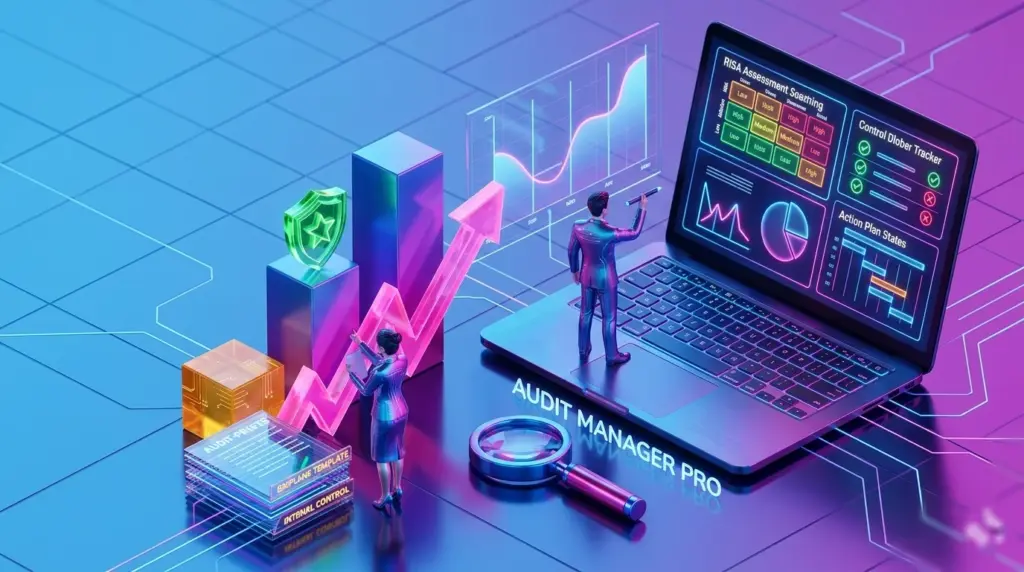
Audit Management Software

Imagine the last time your team had prepared for an external audit. They might have spent several days chasing evidence across different departments and manually updating an outdated status spreadsheet.

When audit findings are not properly tracked, critical issues may be overlooked. And if supporting evidence is not documented properly, proving compliance becomes difficult. These small gaps may not be immediately visible, but they accumulate over time until identified by an auditor. Manual audit processes are not only inefficient; they introduce hidden risks that can have consequences. This is why implementing audit management software is essential.

This blog covers what audit management software actually does, how it differs from generic compliance tools, and what to look for when you are ready to evaluate your options.


Key Takeaways

  • Audit management software is not simply a digital checklist. It can manage the full audit lifecycle: planning, scheduling, fieldwork, findings, remediation, and board-level reporting, all from one connected system.
  • Internal audit management software enables modern platforms to link audit activity directly to live risk registers. Continuous assurance is thus practical rather than just aspirational.
  • Regulated industries get the highest return. Financial services, healthcare, and manufacturing run the most audits. These industries face the steepest penalties for gaps, which is why ROI shows fastest there.
  • Best-in-class platforms do more than generate reports. Audit management and scheduling software, AI-powered analytics, mobile fieldwork tools, and real-time dashboards are standard expectations for enterprises today.
  • Choosing the right audit management software solution is more than comparing features. How deeply it integrates with your existing systems, which regulatory frameworks it supports natively, and whether your audit team will use it are the questions that matter most.


What Is Audit Management Software?

What-is-Audit-Management-Software

For the longest time, auditing ran on spreadsheets and email threads. Audit plans existed in Excel, and audit plan evidence arrived as email attachments. Findings were recorded in Word documents. These were manually updated after every status call.

This process worked when audit volumes were manageable, and regulatory requirements were relatively stable. Neither of those conditions apply anymore. This is where audit management software is most useful. It can handle all the stages- From the initial risk assessment and planning stage through fieldwork, evidence collection, remediation tracking, and the final sign-off. Audit managers get a single environment to assign work, track progress, and report results.

Auditors get a structured environment that keeps engagements consistent regardless of who is running them. And leadership gets a view of the control environment that correctly reflects today’s status.


Not sure which platform fits your industry? ⟶
Connect with us to shortlist the best solution.


Core Functions of an Audit Management System Software

Features can vary across various platforms, but any audit management system software worth evaluating should cover four core areas:

  • Planning and scheduling: This involves developing the annual audit plan based on risk scores, regulatory deadlines, and resource availability.
  • Fieldwork and evidence collection: The system software provides auditors with a structured space to collect evidence, link it to specific controls, and maintain clear control of custody.
  • Issue tracking and findings management: It tracks every finding from identification to closure. Who owns it, what the remediation is, and when it is due.
  • Reporting and sign-off workflows: They include generating audit reports, sharing them through the appropriate approval chain, and capturing sign-offs. When regulators ask for evidence of whether a specific finding was escalated, you need documentation, not a reconstructed email thread.

Audit Software vs. Compliance Tools: What’s the Difference?

Audit software, compliance audit management software, and audit and compliance software get used interchangeably in most vendor conversations. The distinction matters when you are making a purchasing decision.

  • Audit software specifically supports the internal audit function: workpaper management, findings tracking, and audit scheduling. The users are auditors.
  • Compliance audit management software manages audits against specific regulatory frameworks, including SOX, ISO 27001, HIPAA, GDPR, and PCI-DSS. The focus is on demonstrating adherence to external requirements, with evidence mapped directly to control frameworks.
  • Audit and compliance software combines both. One system handles the internal audit workflow and the regulatory framework mapping, so the same evidence does not need to be collected separately by two different teams.


Types of Audit Management Software

Not all audit management solutions are designed for the same purpose. Buying a platform well-suited to financial audit workflows will not serve a manufacturing team running supplier audits across 12 countries. Here is how the main categories break down.

Internal Audit Management Software

Internal audit management software is built for the internal audit function: risk-based audit planning, workpaper management, issue tracking, and audit committee reporting. The main users are Chief Audit Executives, internal audit teams, and the governance committees that rely on their work.

The best internal audit management software does more than store workpapers. It connects the audit plan to the organization’s risk register. The team is spending time on areas that pose the greatest risk.

External Audit

Independent third parties conduct external audits to confirm that financial statements, controls, and procedures adhere to reporting and regulatory requirements.

When the auditors arrive, they expect well-organized evidence and a transparent record of how findings are handled. This is made possible by audit management software, which records findings, stores evidence, and tracks remedies before, rather than after, the request.

IT Audit Management Software

IT audit management software covers technology controls: User access reviews, Change management audits, cybersecurity assessments, and IT general controls testing. The better platforms integrate directly with identity management systems and ITSM tools to automatically pull evidence. This removes the back-and-forth of manual evidence requests that slows down most IT audit cycles.

Many enterprises run separate teams for IT audit and financial or operational audit. The tools they use often reflect that split. Platforms that can serve both teams without forcing one group’s workflow onto the other tend to see higher adoption across the organization.

Operational Audit Management Software

Operational audit management software covers process-level audits: checking whether business processes work as designed, not just whether a control was documented. Auditors in this space assess vendor performance, operational procedures, workforce compliance, and process adherence across sites and business units.

This type of audit rarely happens at a desk. Fieldwork tools need to work on a tablet, capture photos and handwritten signatures, collect data offline, and sync everything once connectivity returns. That capability set is largely absent from platforms built exclusively for financial audit teams.

Audit Software for Supply Chain Management

Audit software for supply chain management handles supplier audits, third-party risk assessments, ISO 9001 certification reviews, and EHS inspections across extended supplier networks. It needs to work in multiple languages, span geographies, and support field-based evidence collection.

Organizations running multi-tier supplier programs need to manage hundreds of concurrent audits, track corrective action plans by supplier, and produce a consolidated view of supply chain compliance that procurement leadership can actually use. Generic internal audit tools were not built for that scale.

Financial Audits

Financial audits verify the accuracy and compliance of an organization’s financial statements with relevant accounting standards. Most teams lose time on preparation, including manually reconstructing sign-off trails, gathering evidence, and pursuing workpapers. The audit operates on actual documentation rather than a last-minute assembly job since audit management software stores everything in one location.

Compliance Audit

Compliance audits determine whether a company is adhering to internal and external regulations, such as ISO 27001, SOX, HIPAA, and GDPR.

The issue with handling these across several frameworks is that, for criteria that substantially overlap, the same proof must be gathered three or four times. Evidence gathered once counts across all frameworks because compliance audit management software automatically maps controls to them.


Why Enterprises Are Replacing Spreadsheets with Audit Management Solutions?

The Real Cost of Manual Audit Processes

A spreadsheet-based audit process has a predictable failure pattern.

The real risk is not inefficiency. It is the gap between what was flagged and what was actually remediated. Suppose a regulatory finding traces back to a risk that your own audit team identified. Perhaps they were not able to track it to closure. This is the kind of outcome that triggers consent orders. The cost of that outcome is rarely compared with the cost of the software that would have prevented it.


Start with a free audit process assessment. ⟶
Find your gaps before your next regulatory review does.


What Audit and Risk Management Software Changes?

Audit and risk management software changes the relationship between finding a problem and fixing it. Three things happen differently:

  • Audit findings connect directly to the risk register: When a control failure surfaces in an audit, the relevant risk score updates automatically. The risk and audit teams are no longer working from separate pictures of the same organization.
  • Monitoring becomes continuous rather than periodic: Instead of completing an annual plan and moving on, audit teams can track control performance on an ongoing basis and trigger reviews when something changes. This could be a new acquisition, a market shift or an operational incident.
  • Engagement cycle times drop substantially: With automated scheduling, structured evidence workflows, and configurable approvals, audits that previously took six weeks can finish in under two.


The Benefits of Integrated Audit and Compliance Software
Benefits-of-Audit-Management-Software

  • Regulatory Readiness: When every piece of evidence and every corrective action lives in a single searchable system, regulatory reviews become less disruptive. The team presents documentation rather than assembling it under deadline pressure.
  • Continuous Monitoring: Integrated audit and compliance software shifts the operating model away from annual snapshots. Control failures show up when they happen, not six months later, when the next scheduled audit finally reaches that area.
  • Cost Savings: Eliminating duplicate evidence collection, cutting manual preparation time, and avoiding non-compliance penalties all contribute to measurable savings. The ROI tends to be clearest in organizations that previously spent weeks each quarter rebuilding the same reporting packages from scratch.
  • Faster Audit Cycles: Automated scheduling, structured evidence workflows, and configurable approvals cut the time between audit kickoff and final sign-off. Engagements that previously ran for 6 weeks tend to finish in under 2. That time comes back to the audit team as capacity for work that actually requires judgment.
  • Better Risk Management: When audit findings automatically feed into the risk register, risk scores reflect the current control environment rather than the last manual update. The risk and audit teams stop working from separate pictures of the same organization. The leadership gets a view that neither function could produce on its own.
  • Enhance Compliance: Integrated compliance-tracking maps controls across multiple regulatory frameworks. Evidence collected for one audit satisfies overlapping requirements without having to be collected again. For teams managing three or four frameworks with significant overlap, this alone tends to justify the platform cost
  • Increased Transparency and Accountability: Every finding, owner, deadline, and remediation action sits in one place. Nothing gets quietly deferred or buried in an inbox. Audit committees can see what was found, who owns it, and whether it has been closed.


Core Features Every Audit Management Software Should Have

Audit Management & Scheduling Software

Audit management and scheduling software handles the mechanics of building and maintaining the annual audit plan.

This includes:

  • Assigning auditors based on availability and expertise
  • Setting schedules based on risk scores
  • Tracking whether engagements start and finish on time.

The practical value shows up in resource management.

Overallocation is one of the most common reasons audit plans slip. A platform that makes capacity visible before the quarter starts, rather than after two engagements have been quietly deferred, changes how planning conversations happen.

Recurring standard reviews should run on automated schedules. One need not rebuild them from scratch each cycle.

Workflow Automation

Manual handoffs are where audit cycles quietly fall apart. Tasks sit in inboxes. Reviewers miss deadlines because no one follows up.

With Audit Management Software, Workflow automation handles the routing. This includes sending tasks to the right people, triggering reminders, and escalating overdue items. The process runs the same way every time, regardless of who is running it.

Real-Time Dashboards & Reporting

Audit committee members do not read 40-page reports before board meetings. They need a consolidated view of what was tested and what was found, ideally in a format that can be reviewed in 10 minutes.

Audit and risk management solutions built for enterprise use automatically generate executive dashboards, heat maps of the audit universe, and reporting templates that pull live data.  This eliminates the need for an analyst to consolidate status from a stack of separate documents manually.

Risk Assessment and Control Management

Audit planning only works if it reflects where risk actually sits. Risk assessment and control management tools let teams score risks, map controls to risk areas, and build an audit plan that directs coverage accordingly. A risk may change mid-year. This might be a new acquisition or an operational incident. The plan updates rather than waiting for the next annual cycle to catch up.

Evidence Management

Evidence management is where the gap between a spreadsheet process and a proper audit platform becomes most concrete.

Auditors often attach files directly to specific findings. These files have a documented chain of custody that satisfies both internal quality standards and external regulatory requirements.

Version control, access logging, and tamper-proof storage are not premium features. For regulated industries, they are the baseline that makes electronic evidence usable during a regulatory examination.

Integration with ERP, GRC, and ITSM Systems

An audit platform that cannot connect to the systems where your business data actually lives is just a better-looking spreadsheet.

Platforms that deliver measurable value integrate with SAP, Oracle, ServiceNow, Salesforce, and GRC (Governance, Risk and Compliance) tools like Archer. It pulls data directly, eliminating the need for auditors to transfer information between systems manually.

API-first architecture is the indicator to look for. Platforms that rely on flat-file imports or scheduled data transfers accumulate integration debt that grows each year as the audit universe expands and underlying systems change.

Document Management

Audit documentation, such as Workpapers, policies, evidence files, and sign-off records, can add up quickly. It needs to be easily findable when a regulator asks for it.

Document management provides auditors with a structured repository that supports version control, access logging, and clear chain-of-custody records. The difference between producing documentation and scrambling to reconstruct it under deadline pressure comes down to whether this is in place before the review starts.

Mobile and Offline Fieldwork Capabilities

It is to be noted that Supply chain auditors, EHS inspectors, and operational reviewers do not work from offices.

The audit happens on a factory floor or at a remote supplier facility where connectivity is unreliable. The platform needs to work on a tablet, capture photos and signatures, support offline data entry, and sync everything back when a connection is available.

This requirement is straightforward. It is also missing from a surprising number of platforms that were designed primarily for financial audit teams who work from desks with reliable internet access.

Compliance Tracking

Compliance tracking connects audit activity to regulatory frameworks. Team members always know which controls have been tested, which findings are still open, and whether the organization is on track. For teams managing multiple frameworks simultaneously, it replaces the need for a separate tracking spreadsheet for each requirement.


Ready to take the next step?
Talk to Experion’s audit technology team and start with a process assessment before the vendor shortlist gets built.


Advanced Capabilities of Audit Management Software Solutions

AI-Powered Analytics

Traditional audits test samples.  An auditor selects 25 transactions from a population of 50,000 and assesses whether controls are in place for that subset. The implicit assumption is that the sample is representative. Often it is not, and the exceptions that matter most are precisely the ones that statistical sampling tends to miss.

AI-powered analytics in internal audit software solutions evaluate the full population instead. Every transaction, journal entry, vendor payment, or access event gets reviewed against expected patterns, and deviations are flagged for auditor investigation. The auditor’s job shifts from selecting what to test to following up on what the system has already identified.

Audit and Risk Management Solutions

Audit and risk management have historically lived in separate organizational silos. The risk team identifies and scores risks. The audit team tests controls. The problem is that findings from audit engagements rarely make it back to the risk register in any systematic way. Hence, risk assessments remained anchored to the last time they were updated rather than reflecting the current control environment.

Integrated audit and risk management solutions close that gap. Risk scoring in the audit planning module uses live register data. When an audit uncovers a control failure, the relevant risk score is automatically updated. When a new risk gets added, the planning module flags it for coverage.

Leadership gets a consistent view of risk and control status, which neither function could provide on its own when operating separately.


How to Choose the Best Audit Management Software?

Before scheduling vendor demos, map out where your current audit process actually breaks down. The most common mistake is buying a feature-rich platform that solves the wrong problem.

  • Identify your Business Needs: Before looking at any platform, map out what your audit function actually does.
    – How many audits are run each year?
    – Which regulatory frameworks apply?
    – Where does the current process break down: Scheduling, evidence collection, findings tracking or reporting?

A platform chosen without that baseline tends to be feature-rich but wrong for the job.

  • Scalability: Can the internal audit management software grow with your organization? Think about where audit volume will be in three years, not just today. New acquisitions, market expansion, and additional regulatory requirements all add to the audit universe. A platform that needs re-implementation every time the scope increases is a high hidden cost.
  • Integration: Does it connect with your ERP, GRC, HR, and ITSM systems? Integration depth is often what separates a platform that gets fully adopted from one that runs alongside the existing process.
  • User Experience: The best audit management software is the one your team actually opens and uses. A platform with strong features and a frustrating interface will be quietly worked around within months. Evaluate the experience for auditors conducting fieldwork, not just for the CAE reviewing a dashboard.
  • Check Compliance Requirements: List the regulatory frameworks your organization operates under. Check whether the platform supports them natively. Pre-built templates for SOX, ISO 27001, HIPAA, and GDPR significantly reduce implementation time. For regulated industries, also check data        residency requirements, certifications, and whether the vendor’s infrastructure meets your  jurisdiction’s specific obligations.
  • Security: Minimum requirements include SOC 2 Type II certification, multi-factor authentication, role-based access controls, and encryption for data at rest and in transit. For regulated industries, ask specifically about data residency and whether the vendor’s infrastructure can meet your jurisdiction’s requirements.

When you reach the evaluation stage, request a proof-of-concept using your actual audit data. How a platform handles your real organizational data tells you far more than a polished demonstration built on clean sample records.


Take the first step toward a fully connected audit process ⟶
Talk to our team today


Top Use Cases Across Industries

BFSI- Regulatory Compliance

Financial services organizations run audits against regulatory frameworks, with higher stakes for gaps than most other sectors.

SOX compliance requires documented testing of internal controls over financial reporting.

AML programs need transaction monitoring and defensible audit trails. Model risk management audits require detailed validation documentation. Internal audit software in banking needs to handle all of this in a single environment, with access controls that restrict auditors to authorized data and an audit trail that withstands examiner scrutiny without weeks of manual preparation.

Manufacturing – Operational Audits

Manufacturing audit programs encompass multiple audit types: quality reviews, supplier compliance assessments, EHS inspections, and ISO 9001 certification maintenance.

Audit software for supply chain management sits at the center of this. It tracks corrective action plans across large supplier networks and manages audit frequency by risk tier.

Organizations managing this well are not running a separate tool for each audit type. They use a single operational audit management software platform with configurable workflows that adapt to each category, eliminating the need for custom development for every new program.

Healthcare- Compliance Audits

Healthcare audit teams handle HIPAA compliance, clinical operations reviews, billing integrity audits, and a payer environment that is becoming increasingly complex.

Clinical documentation audits need EHR integration.

Billing audits connect to revenue cycle platforms. Any audit management platform that handles protected health information must meet strict data residency and access requirements before deployment.

Compliance audit management software in healthcare also has to distinguish clearly between findings that require human clinical judgment and those that can go straight to automated remediation tracking. Getting that boundary wrong creates both clinical and compliance risks.

Retail and Ecommerce – Supply Chain Audits

Retail organizations face steady pressure to verify supplier compliance across extended supply chains covering labor standards, environmental requirements, product safety, and data security. Audit management solutions in retail need to run high volumes of concurrent supplier audits, support corrective action workflows across languages and time zones, and feed results into supplier scorecards that procurement teams rely on for vendor decisions.

IT & SaaS

IT and SaaS organizations deal with a concentrated set of audit requirements: SOC 2 Type II reviews, access control audits, change management testing, and vendor security assessments. IT audit management software built for this environment connects to identity platforms and ITSM tools to automatically pull evidence, cutting the back-and-forth that makes most IT audit cycles run longer than they should.

Government & Public Sector

Public sector audit programs have limited funding and personnel. They are often subject to stringent accountability regulations. Government organizations may maintain comprehensive documentation trails, standardize departmental operations, and prove compliance by using audit management software. In this setting, manual procedures are not only ineffective but also difficult to defend when outcomes are examined publicly.


Implementation Best Practices

These are some of the best practices to follow during implementation:

  • Define audit scope before you configure anything

Decide which audit types, business units, and regulatory frameworks are in scope for the initial deployment. Implementations that start focused on one audit type or one region consistently go live faster and see higher adoption than attempts to deploy everything at once.

  • Train teams before go-live, not after

Auditor adoption is the most common point of failure. Training needs to cover why the new process is better than the spreadsheet approach it replaces, not just how to click through the interface. That context is what drives actual behavior change.

  • Start with pilot testing

Before rolling out to the entire organization, run the platform against a specific audit type or one business unit. A focused pilot will surface integration gaps, workflow mismatches,  and usability problems while the scope is still small enough to fix without disrupting the rest of the deployment.

  • Bring in integration and IT teams early

Connecting audit management software to your ERP, GRC, and ITSM systems is where implementations most often run over schedule. Waiting until the platform is already configured to address integration requirements means rebuilding work that was already done.

  • Set baseline metrics before go-live and measure against them

Track audit cycle time, finding closure rate, and evidence collection time per engagement before the platform launches.

Then measure again at 30, 90, and 180 days. That data is how you demonstrate ROI to leadership and identify where the implementation needs adjustment.


Future Trends: AI and Agentic Auditing in 2026

Agentic AI – Autonomous Preliminary Control Testing

Agentic AI systems can plan and execute multi-step tasks without continuous human direction. In audit management, that translates to autonomous agents that pull evidence from integrated systems, check it against defined control criteria, flag exceptions, and prepare findings summaries, all without an auditor having to initiate each step manually. The auditor reviews the output. The agent handles the initial work.

Predictive Auditing

Predictive auditing uses historical audit data, risk indicators, and other operational metrics to identify where control failures are most likely before they occur. Rather than discovering a problem during the next scheduled cycle, predictive models surface elevated-risk areas in real time, enabling audit coverage to shift accordingly.

Platforms investing in this capability offer a meaningfully different value proposition than tools that simply digitize existing audit workflows.

Global Collaboration via Cloud-Based Internal Audit Software

Global enterprises need audit programs that operate consistently across continents, time zones, regulatory regimes, and languages. Cloud-based internal audit software makes that possible by giving distributed teams access to the same platform, evidence repository, and reporting environment regardless of location.

For organizations that previously ran regional audit programs on separate tools and then tried to consolidate results at the group level, a single cloud-based platform eliminates the need for consolidation.

Increased Automation

Certain routine audit tasks, such as scheduling, status reminders, and report generation, will now run automatically. Audit teams, who spent a significant portion of their time on administrative work, can now reclaim their time.

Greater use of Machine Learning

Machine learning models are trained on historical audit data. It often gets better at detecting anomalies over time and produces fewer false positives.

The real-time effect is that the model learns what a typical dataset for an organization looks like.

Continuous Auditing Models

Continuous monitoring frameworks are replacing annual audit cycles. Controls are tested on an ongoing basis, and exceptions surface in real time. This requires platforms that connect directly to operational systems. They should not rely on periodic data exports.

The gap between when a control fails and when an auditor discovers it goes from months to days.

Integration with Enterprise Ecosystems

Audit management platforms will connect to ERP, GRC, HR, and operational systems as a default rather than through custom integrations built project by project. When the audit function has live access to data across the organization, findings can be connected to operational responses more quickly.

The audit team stops functioning as a separate layer that has to request everything manually.


Conclusion

For years, the internal audit function has been pushed to accomplish more, including covering more risk, reporting more often, and exhibiting independence.

By eliminating the administrative burden that keeps qualified auditors from using their judgment, audit management software fills that gap. A single, interconnected environment is used for scheduling, gathering evidence, tracking findings, following up on remediation, and executive reporting.

By playing a crucial role in performance, audit management software has evolved beyond compliance. The degree of integration, alignment with the regulatory framework, management of the implementation, and whether your audit team genuinely accepts the platform or discreetly keeps using the old method all affect the result.


AI Chatbot Development Services

At their core, AI chatbots are sophisticated software programs designed to simulate human conversation through text or voice. Unlike the rigid, rule-based bots of the past that relied on “if/then” logic and often frustrated users, modern ai powered chatbots development services leverage Large Language Models (LLMs) and advanced neural networks to understand context, sentiment, and intent.

The evolution from basic button-based bots to conversational ai chatbot development service models represents a paradigm shift in digital engagement. Businesses are rapidly adopting these systems because they offer immediate scalability; a single ai chatbot can handle thousands of simultaneous inquiries with zero wait time. This transformation is reshaping digital customer engagement by shifting the burden of navigation from the user to the bot, creating a “concierge” experience that feels personalized rather than automated.


Understanding AI Chatbot Development

Successful chatbot development is a multi-disciplinary process that combines linguistics, software engineering, and data science. It isn’t just about writing code; it’s about training a model to represent your brand’s voice accurately while solving specific user problems. Whether it is a customer service ai chatbot development service for ecommerce or a complex internal tool for HR, the development process focuses on creating a loop where the bot learns from every interaction, becoming more efficient and accurate over time.


What Are AI Chatbot Development Services?

What-is-AI-Chatbot-Development-Services

AI chatbot development services encompass the full lifecycle of creating an intelligent conversational agent, from strategy and persona design to technical architecture and continuous optimization. These services go beyond simple bot-building to include the heavy lifting of data engineering, API connectivity, and security compliance required for modern enterprises.


Transform your customer experience with 24/7 intelligent automation. ⟶
Connect with our AI Chatbot Experts


Core Components of an AI Chatbot

A professional ai chatbot development service focuses on four critical technical pillars:

  • Natural Language Processing (NLP): This is the engine that allows the chatbot to parse human language, identify entities, and understand the “why” behind a user’s question.
  • Machine Learning Algorithms: These allow for ai chatbot development that improves over time. The bot identifies patterns in successful resolutions to refine its future responses.
  • Conversational Interfaces: This involves the UX/UI design of how the bot appears on a website, app, or social channel, ensuring the conversational ai chatbot development service for ecommerce feels intuitive.
  • Backend Integrations: A bot is only as good as the data it can access. Effective custom ai chatbot development involves linking the bot to your CRM, ERP, and inventory databases so it can provide real-time answers.

Difference Between Chatbot Development and Chatbot Platforms

While there are many DIY “no-code” chatbot platforms available, there is a distinct difference between using a template and seeking enterprise ai chatbot development services.

Feature Chatbot Platforms (DIY) AI Chatbot Development Services (Custom)
Customization Limited to platform templates. Fully tailored to unique business logic.
Integration Surface-level (e.g., Zapier). Deep, secure API-level backend sync.
Ownership You rent the platform. You own the IP and the custom models.
Scalability Subject to platform limits. Built for high-volume enterprise ai chatbot development service needs.

Types of AI Chatbots Businesses Can Use

Not all chatbots are the same. It depends on what you want to do. Like using a chatbot for customer support on an ecommerce website or getting information from inside the company. The way your chatbot is built will be very different.

Rule-Based Chatbots

These are the kinds of chatbots. They work based on rules that are already set and are often called “button-based” bots.

There are decision tree chatbots where users choose from options like “Press 1 for Sales”.

There are also script-based chatbots that’re good for simple tasks like resetting passwords or checking the status of an order.

AI-Powered Chatbots

This is where custom chatbot development is really useful. It uses language models to understand unstructured data.

There are NLP-driven chatbots that understand what you mean even if you use words. For example if you ask “Where is my package?” or “Track my stuff” the chatbot knows you want the thing.

There are also context- chatbots that remember what you talked about before. This makes it feel like you are having a conversation with a person.

Voice Chatbots

These chatbots are part of apps or websites and use speech-to-text and text-to-speech technology. They are important for making things accessible and for customer service that does not require hands.

Hybrid Chatbots

The best chatbot development often uses a mix of approaches. The AI handles most of the questions but if something is too complicated or emotional, it will transfer the conversation to a real person. This way no customer gets frustrated.


Why Do Businesses Need a Chatbot?

In todays world being available all the time is not a luxury. It is necessary. Chatbots solve the problem of waiting. By using a chatbot on a website companies can talk to visitors at the moment they are interested so they do not go to a competitor.

Also as there is more data companies need a way to make interactions personal. Custom chatbot development allows a brand to treat customers like individuals at the same time. This is something a human support team could never do.


Stop losing leads to slow response times and start scaling with. ⟶
Consult our Chatbot Development Team


Key Benefits of Enterprise AI Chatbots

Using enterprise AI chatbot development services has an impact on a company’s success.

  • There is 24/7 automated customer support. A chatbot never sleeps and can answer questions anytime.
  • There are reduced costs. Automating routine questions can lower costs significantly.
  • There is response time. Speed is important for customer satisfaction and chatbots can respond very quickly.
  • There is increased lead generation and qualification. A chatbot can ask questions and send leads, to the company’s CRM.
  • There is enhanced customer experience. Modern chatbot development allows for engagement like offering a discount code if a user is about to leave the website. This turns a support tool into a sales driver.


Cost Breakdown for Chatbot Development: Calculating Return On Investment and Business Impact

Cost-Breakdown-AI-Chatbot-Development-Services

When you invest in a chatbot development service you need to understand what you are spending money on and what you will get back. The cost of developing a chatbot usually depends on how complicated the project’s how much data the chatbot needs to process.

Development Costs: This is where you pay for people to plan, design and build your custom chatbot.

You get a team that works on the strategy user experience design and the technical engineering of the chatbot development project.

Integration Fees: If you want your chatbot to work with systems like your customer relationship management system or payment gateways you need to pay for that too.

This way your chatbot can do things not just answer questions.

Optimization: The company that develops your chatbot will also help you keep it running smoothly. They make sure the chatbot learns from customer queries and remains accurate.

Return On Investment Analysis: To see if your chatbot is working you look at how money you are saving how many leads you are getting and how happy your customers are.

Most companies that use chatbots see a return on their investment within the first six to twelve months.


Industries Using AI Chatbots

Lots of industries are using chatbots to talk to their customers.

From stores to hospitals chatbots are changing the way companies communicate with people.

Banking and Financial Services

In the banking industry chatbots can handle tasks easily.

  • Automated Financial Queries: Chatbots can give you updates on your account balance and spending.
  • Fraud Alerts and Transaction Assistance: Chatbots can help verify if something fishy is going on with your account.

Healthcare

In healthcare chatbots can help reduce the workload of clinics.

  • Appointment Scheduling: Patients can. Cancel appointments using a simple chatbot interface.
  • Patient Triage Systems: Chatbots can ask patients questions to figure out what kind of care they need.

Retail and E-commerce

Chatbots are really useful in shopping.

  • Product Recommendations: Chatbots can suggest products based on what you have looked at
  • Order Tracking: Chatbots can give you updates on where your order’s so you do not have to call customer support.

Travel and Hospitality

In the travel industry chatbots can help with booking flights and hotels.

  • Booking Assistance: You can book a flight or hotel room using a chatbot.
  • Travel Information: Chatbots can give you updates on flight changes or weather so you are always informed.

Real Estate

Chatbots can also help real estate companies.

  • Property Inquiry Automation: Chatbots can answer questions about properties like how big they’re what amenities they have.

Experion has a lot of experience in building chatbots for industries. We can build chatbots that do not just talk to customers. Also do complicated tasks to help your business. 


How AI Chatbot Development Works?

Building a high-performance ai chatbot is an engineering journey that balances linguistic nuances with robust backend architecture. It requires a strategic approach to ensure the bot doesn’t just “talk” but actually “solves.”

AI Chatbot Development Process

A professional ai chatbot development company follows a rigorous lifecycle to move from a concept to a high-ROI digital asset.

Requirement Analysis

The first step in ai chatbot development is defining the “why.” Developers identify the core use cases—such as a customer support ai chatbot development service for ecommerce—and map out the key performance indicators (KPIs) like resolution rate and handover frequency.

Conversation Design

This phase focuses on the “persona” of the bot. Designers create scripts and decision trees that feel natural, ensuring the conversational ai chatbot development service aligns with your brand voice while providing clear paths to information.

AI Model Development

Here, engineers select and train the Large Language Models (LLMs). This involves feeding the system industry-specific data so the custom ai chatbot development project results in a bot that understands technical jargon and complex user intent.

Integration with Business Systems

For a bot to be useful, it needs access to your “source of truth.” Enterprise ai chatbot development services prioritize deep connectivity:

  • CRM Integration: Syncing with Salesforce or HubSpot to personalize greetings and log leads.
  • ERP Systems: Allowing the bot to check real-time inventory or order status.
  • APIs and Databases: Enabling the bot to pull dynamic data, such as flight times or account balances.

Testing and Optimization

Before a full rollout, the chatbot undergoes “stress testing” with thousands of sample queries. A chatbot development company uses these results to refine the NLP models, reducing “hallucinations” and improving accuracy.

Deployment and Monitoring

The bot is launched across your chosen channels. Post-launch, ai chatbot development services include continuous monitoring to identify new patterns in user questions, allowing for ongoing “fine-tuning” of the AI.


Key Features of Modern AI Chatbots

To provide a competitive edge, custom ai chatbot development services must go beyond simple text responses.

  • Natural Language Understanding (NLU): The ability to grasp context, slang, and even emotional sentiment.
  • Multi-Channel Support: Ensuring a seamless experience whether the user is on your website, mobile app, or social media.
  • Personalization Using Customer Data: Using previous purchase history or location to provide tailored recommendations through an enterprise ai chatbot development service for ecommerce.
  • Multilingual Communication: Breaking down global barriers with real-time translation capabilities.
  • Analytics and Reporting: Providing a dashboard that shows exactly what your customers are asking and where they are getting stuck.


AI Chatbot Technologies and Frameworks

The “brain” of a conversational ai chatbot development service is built using a stack of sophisticated technologies.

  • Natural Language Processing (NLP) Frameworks: Tools like SpaCy, NLTK, or Google’s Dialogflow that help the bot parse and understand human language.
  • Machine Learning Models: Leveraging GPT-4, Llama 3, or proprietary neural networks to power ai powered chatbots development services.
  • Cloud Platforms: Utilizing AWS, Azure, or Google Cloud to ensure the ai chatbot development service for websites is scalable and secure.
  • Integration APIs: Using RESTful or GraphQL APIs to connect the chatbot to the rest of your digital ecosystem.


Popular AI Technologies

The current situation with chatbot development is based on three technologies that are coming together:

AI Conversational Engines: These are advanced systems that help a chatbot understand what people mean and respond in a way that sounds like a human. This means the chatbot can have a conversation with people and understand what they want. The AI Conversational Engines are very good at understanding intent and generating human- responses.

There are also Voice Recognition Technologies that allow people to talk to the chatbot and get a response without having to type anything. This is done by using Speech-to-Text and Text-to-Speech technologies in the development of chatbot apps. The Voice Recognition Technologies make it possible for people to interact with the chatbot using their voice.

Then there are Generative AI Models that use kinds of machine learning to make chatbots that can think for themselves and come up with creative solutions to problems. The Generative AI Models are very useful for custom chatbot development because they allow the chatbot to move away from following a script and be more fluid and context-aware.


Use Cases of AI Chatbots for Customer Engagement in Business

AI chatbots can do a lot more than just answer questions. They can be like employees that help with many different tasks. For example AI chatbots can be used for:

  • Customer Service Automation: This means the chatbot can handle up to 80% of customer inquiries without any help from a human. The AI chatbot can understand what the customer wants and respond accordingly.
  • Lead Qualification: A conversational AI chatbot can be used to talk to customers and find out if they are really interested, in buying something. This can help the sales team focus on the people who’re most likely to make a purchase.
  • Sales Assistance: The chatbot can act like a shopper and help people find what they are looking for in a complex product catalog. The chatbot can ask questions. Provide recommendations to help the customer make a decision.
  • Internal Employee Support: An enterprise AI chatbot can be used to automate HR queries and IT helpdesk tickets. This means employees can get help with problems without having to wait for a human to respond.
  • Helpdesk Automation: The chatbot can provide technical support 24 hours a day 7 days a week. This means people can get help whenever they need it without having to wait for a human to be available.


Bridge the gap between automated scripts and human-like empathy. ⟶
Talk to our Conversational AI Specialists


AI Chatbots vs. Traditional Customer Support

Metric Traditional Support AI Chatbot Development Service
Cost High (Salaries, training, overhead) Low (Scalable per interaction)
Response Time Minutes to hours Sub-second / Instant
Scalability Linear (Need more people for more calls) Exponential (One bot handles millions)
Availability Usually 8/5 or 12/5 24/7/365

Custom AI Chatbot Development vs. Off-the-Shelf Solutions

Custom Chatbots

A custom ai chatbot development project is built specifically for your data and brand voice. It offers deep integration with your proprietary APIs and provides a unique competitive advantage by solving niche business problems that “one-size-fits-all” tools miss.

Pre-Built Chatbots

Off-the-shelf platforms are faster to deploy but often lack the security and integration depth required for an enterprise ai chatbot development service. They are suitable for basic site navigation but struggle with complex conversational ai chatbot development service for ecommerce needs.


AI Chatbot Development for Digital Transformation

Ai powered chatbots development services are often the “tip of the spear” for broader digital transformation. By digitizing the customer interface, businesses are forced to modernize their backend data structures, leading to a more agile organization.


Role of AI Chatbots in Business Automation

  • Automating Repetitive Processes: Freeing human talent for high-value strategic work.
  • Improving Operational Efficiency: Reducing the friction between user request and system execution.
  • Supporting Digital Transformation Strategies: Acting as the primary touchpoint for a data-driven customer journey.


Factors to Consider When Choosing AI Chatbot Development Services

  • Scalability and Performance: Can the bot handle a 10x surge in traffic during peak seasons?
  • Integration Capabilities: Does the ai chatbot development services company have experience with your specific CRM and ERP?
  • Data Security and Compliance: Is the bot GDPR, HIPAA, or SOC2 compliant?
  • AI Training and Model Updates: How does the ai chatbot development company handle “drift” or declining accuracy over time?
  • Vendor Expertise: Look for a partner with a proven track record in enterprise ai chatbot development services.


Challenges in AI Powered Chatbot Development

  • Training Accurate NLP Models: Avoiding “hallucinations” where the bot provides confident but incorrect answers.
  • Handling Complex Queries: Knowing exactly when the ai chatbot should hand off to a human.
  • Maintaining Conversational Context: Keeping track of details shared ten messages ago in a long dialogue.
  • Data Privacy Concerns: Ensuring sensitive user data is never used to train public models.


Future Trends in AI Chatbot Development

Future-of-AI-Chatbot-Development-Services

Agentic AI

Bots that don’t just talk, but “act”—executing tasks like booking flights or processing refunds autonomously.

Generative AI Chatbots

Hyper-fluent bots that create unique content in real-time.

Emotion-Aware Chatbots

Using sentiment analysis to detect frustration and adjust tone accordingly.

Hyper-Personalized Interactions

Bots that know a user’s entire history across every touchpoint.

Multimodal Bots

Systems that can “see” images or “hear” voice to provide context-rich help.


Build an enterprise-grade AI chatbot tailored to your unique business logic. ⟶
Get Expert Guidance Today


Metrics to Evaluate AI Chatbot Development Services Success

  • Response Accuracy: Percentage of correct answers provided.
  • Customer Satisfaction Score (CSAT): Direct feedback from users post-interaction.
  • Automation Rate: How many sessions were completed without human escalation.
  • Lead Conversion Rate: The percentage of bot-qualified leads that become customers.


How to Choose the Right AI Chatbot Development Company?

  • Check if the company has experience working with different industries like healthcare, eCommerce, finance, or education. Industry experience helps them understand specific business needs and build more effective chatbot solutions.
  • Choose a company that can develop custom AI models based on your business data and requirements. Custom models provide more accurate responses and better align with your workflows.
  • Ensure the company can integrate the chatbot with existing systems such as CRM, websites, apps, and APIs. They should also design scalable solutions that can handle increasing user interactions as your business grows.
  • Look for companies that provide ongoing support after launch, including updates, monitoring, performance improvements, and bug fixes to keep the chatbot running efficiently.


How Experion Can Offer Support in AI Chatbot Development?

Experion’s technical architects design conversational AI ecosystems that move beyond simple chat, creating intelligent agents that drive actual business transactions and enterprise-wide automation.

We help you by:

  • Building custom ai chatbot development services that prioritize data security.
  • Integrating conversational ai chatbot development service for ecommerce directly into your supply chain.
  • Providing end-to-end ai chatbot development services company support, from initial NLP training to post-deployment scaling.


Conclusion

The use of AI chatbot development services is a change in how businesses work.

AI powered chatbots development services help businesses engage with customers 24/7 with accuracy, so no customer question is left unanswered and no potential customer is lost.

These chatbots are not about cutting costs; they help businesses grow and are a key part of modern automated companies that use AI chatbot development services to stay ahead.

In the term AI chatbot development services are essential, for business growth.

Construction ERP Software

The construction industry faces a unique set of challenges, from volatile material costs and labor shortages to stringent regulatory compliance. For many firms, the biggest hurdle is internal: fragmented workflows. When procurement, finance, and project management operate in silos, the result is often delayed timelines and eroded margins.

As projects grow in complexity, there is a burgeoning need for centralized digital systems. Construction ERP software serves as an integrated operational platform, helping contractors, builders, developers, and infrastructure firms synchronize every moving part of their business. By implementing a dedicated construction industry ERP software, companies can transition from reactive troubleshooting to proactive, streamlined management.


What is Construction ERP Software?

What-is-Construction-ERP-Software

Construction ERP software is a set of tools that helps construction companies manage their business. It is different from business tools because it is designed to handle the unique needs of the construction industry.

Construction ERP software acts as a platform that combines important functions like finance and accounting, procurement, project planning, human resources and payroll and asset management.

For example it can help with:

  • Finance and Accounting: managing bills and invoices for projects
  • Procurement: getting supplies from start to finish
  • Project Planning: making sure projects are on schedule
  • HR and Payroll: managing workers and making sure the company is following the rules
  • Asset Management: keeping track of machinery and making sure it is well maintained

Using Construction ERP software helps everyone involved in a project see the same information so the person in charge of the project and the person in charge of money can both see the same numbers.

Why Generic ERP Systems Are Not Enough?

Some companies try to use ERP software but it does not work well for the construction industry. The best Construction ERP software is special because it can handle the needs of the construction industry.

For instance it can handle:

  • Construction workflows: like tracking requests for information and managing submittals
  • Project-based accounting: tracking costs and revenue for each project not the whole company
  • Field workforce management: managing workers who are in different places and move around a lot
  • Contract and subcontractor tracking: managing complex contracts and insurance certificates


Unify your field and office with one powerful digital backbone ⟶
Connect with our ERP Experts


Why Your Business Needs a Construction Management ERP Software?

Implementing Construction ERP software is no longer a luxury it is necessary to stay competitive.

It can help with:

  • Real-time visibility: seeing how every project is doing at all times
  • Eliminating data silos: making sure information flows easily between parts of the company
  • Improved compliance: automating tracking of safety certifications and regulatory filings
  • Scalability: growing the company without having to hire administrators

Construction ERP software is like a tool that helps construction companies manage their business better. It is a tool, for any construction company that wants to stay competitive.


Key Features of Construction ERP Software

The best construction ERP software acts as a digital system. It helps every department from the job site to the office use the information in real-time.

Project Management and Scheduling

Construction project management software helps managers align timelines with resources. They can track milestones manage paths and adjust schedules as site conditions change.

Financial Management and Job Costing

Construction accounting software provides job costing. It tracks every dollar spent against work breakdown structures. This allows for profitability analysis at the project level.

Procurement and Supply Chain

Modern ERP software for construction automates the procurement process. It manages vendor relationships tracks lead times for materials and ensures that inventory is delivered on time.

Contract and Subcontractor Management

An ERP construction software suite simplifies managing partners. It centralizes contract documents tracks insurance compliance and automates progress billing and lien waiver collections.

Equipment and Asset Management

A construction ERP system tracks equipment location, fuel consumption and engine hours. This ensures that preventive maintenance is scheduled automatically.

Workforce and Payroll Management

Managing field crews involves rules. An ERP system for construction automates time-tracking and payroll processing. This ensures workers are paid accurately and on time.

Document Management

Construction generates a lot of paperwork. Construction software ERP modules provide a repository for documents. This ensures that the latest version is accessible to everyone.

Bidding (Pre-Construction)

The best ERP software for construction helps estimators build bids. It uses data and converts winning bids into active project budgets.

Reporting, Analytics and BI Dashboards

Top construction ERP software turns data into insights. BI dashboards provide a view of KPIs like cash flow, safety incidents and project health.


Stop managing silos and start scaling your construction empire ⟶
Talk to our Solutions Team


Benefits of Implementing ERP Software for Construction

Benefits-of-Construction-ERP-Software

Construction ERP solutions empower leadership with visibility. This ensures that every project drives growth.

  • Improved Project Visibility: A construction ERP solution helps stakeholders see where a project stands. They can view progress and financial health.
  • Cost. Budget Accuracy: ERP software for construction eliminates budget surprises. It flags cost variances as they occur.
  • Enhanced Collaboration: A centralized construction management software platform ensures that the field, warehouse and office are in sync. This reduces rework and miscommunication.
  • Better. Documentation: Automated workflows in a construction ERP system ensure that safety logs, permits and tax documents are audit-ready.
  • Improved Decision Making: With real-time data from an ERP system in construction executives can make choices.


Key Modules in Construction ERP Systems

A high-performance ERP software construction suite has modules. These modules can be scaled as the business grows:

  • Project Planning Module: Handles the build schedule and resource allocation.
  • Financial Accounting Module: Manages accounts receivable and general ledger.
  • Procurement and Vendor Module: Manages purchases and vendor performance.
  • Equipment Management Module: Monitors equipment health and ROI.
  • HR and Workforce Module: Manages recruitment, certifications and labor compliance.
  • Quality and Safety Management Module: Ensures projects meet build standards and tracks HSE metrics.
  • Reporting and Analytics Module: Synthesizes data from all modules, into reports.


Construction ERP vs. Regular Accounting Software

While both systems handle financial data, a construction ERP system is fundamentally different from generic accounting packages like QuickBooks or Xero. Standard accounting software focuses on the general ledger, accounts payable, and accounts receivable across the entire company.

In contrast, construction accounting and project management software is built for “job costing.” It allows you to track expenses, labor, and equipment down to a specific sub-task within a single project. A construction ERP also integrates non-financial data, such as site photos, RFI logs, and weather delays, directly into the financial record, providing a context that regular accounting software simply cannot offer.


Types of ERP Software for Construction Industry

Selecting the best construction ERP software requires understanding which architecture and scale fit your specific business model.

By Deployment: Cloud vs. On-Premise vs. Hybrid

  • Cloud-Based ERP Solution: This is the modern standard for erp software for construction industry. It offers remote access for field teams via mobile devices, automatic updates, and lower upfront infrastructure costs.
  • On-Premise ERP: Preferred by some massive enterprises that require total physical control over their data and have the IT staff to maintain internal servers.
  • Hybrid ERP: A mix where core financial data stays on-premise, while project management and field modules live in the cloud for better accessibility.

By Company Size: SMB, Mid-Market, Enterprise

  • SMB: Focuses on ease of use and core features like payroll and job costing. ERP software for construction company needs at this level are often about replacing manual spreadsheets.
  • Mid-Market: Adds layers of complexity, such as multi-entity management and more robust construction project management erp software features.
  • Enterprise: Top construction ERP software for global firms includes multi-currency support, advanced BI analytics, and deep integration with complex supply chains.

By Specialty: GC, Homebuilder, Specialty Trade, Civil/Infrastructure

The best erp software for construction is often tailored to a niche. A General Contractor (GC) needs heavy subcontractor management, while a Homebuilder needs “sales to service” workflows. Civil and infrastructure firms require an erp construction software that excels in heavy equipment tracking and high-volume material procurement.

Best-of-Breed vs. All-in-One Platform

  • All-in-One Platform: A single construction management erp software that handles everything from HR to Estimating.
  • Best-of-Breed: Using a specialized erp system in construction for finance but integrating it with a different, specialized tool for field productivity.


Who Needs a Construction ERP Solution?

If your business is struggling with manual data entry, mismatched reports, or lack of site visibility, you likely need a dedicated erp software construction platform.

  • Small Construction Firms: Even small teams benefit from erp software for construction by professionalizing their bidding and ensuring they don’t lose money on untracked change orders.
  • Mid-Size Contractors: As you juggle more projects, a construction erp solution becomes the only way to maintain a “single version of truth” across growing teams and multiple sites.
  • Large Construction Enterprises: For global players, a high-end erp system for construction is a non-negotiable requirement for regulatory compliance, risk management, and multi-national financial reporting.
  • Infrastructure Developers: Firms managing long-term, high-capital projects need construction management software to track complex funding, long-lead procurement, and multi-year timelines.

Experion provides the technical bridge between your current operational hurdles and a high-performance construction ERP system, ensuring your software scales at the same pace as your ambition.


Real-time site visibility and total cost control, all in one place ⟶
Consult our ERP Specialists.


Construction ERP Cost Breakdown & ROI Analysis

Selecting the best construction ERP software is a significant investment that goes beyond the initial price tag. Understanding the Total Cost of Ownership (TCO) is essential for long-term financial planning.

Experion engineers construction ERP solutions with a focus on high-impact ROI, ensuring that your digital backbone reduces overhead while accelerating project delivery.

  • Total Cost of Ownership: What You’re Really Paying: Beyond the ERP software construction license or subscription fee, TCO includes implementation, data migration, hardware upgrades (if on-premise), and ongoing maintenance.
  • Hidden Costs Most Contractors Miss: Many firms overlook the cost of internal staff time dedicated to the rollout, specialized training for field crews, and potential custom API development to link the construction ERP system with legacy tools.
  • Quantifiable ROI: Where Savings Actually Come From: Real value is found in last-mile delivery cost reduction (within the supply chain module), the elimination of manual data entry errors, and a significant decrease in unbilled change orders.
  • Sample ROI Calculator Framework: To estimate value, firms should measure the reduction in “Days Sales Outstanding” (DSO) and the percentage increase in labor productivity enabled by construction accounting and project management software.
  • Typical Payback Period: Most companies implementing a top construction ERP software see a full return on investment within 18 to 24 months, driven by improved resource utilization and reduced material waste.


How Construction ERP Software Improves Project Lifecycle Management?

An ERP solution does more than just handle accounting; it keeps track of a projects progress from start to finish.

Pre-construction Phase

  • During this stage the ERP software for construction acts like a database of projects.
  • Estimators use data from builds to create accurate bids.
  • The construction software then turns these bids into budgets and schedules for buying materials soon as a contract is awarded.

Construction Phase

  • This is where construction project management ERP software really helps.
  • It keeps track of labor hours, material deliveries and equipment usage in time.
  • If a project starts to go over budget the ERP solution alerts you away.
  • This allows you to make changes before costs get out of control

Post-construction Phase

  • When the project is finished the ERP system gathers all the drawings, warranty information and maintenance manuals.
  • This makes it easy to hand over the project to the client. Gives the firm a complete set of data to improve the next project.


Emerging Technologies in ERP Construction Software

Emerging-Technologies

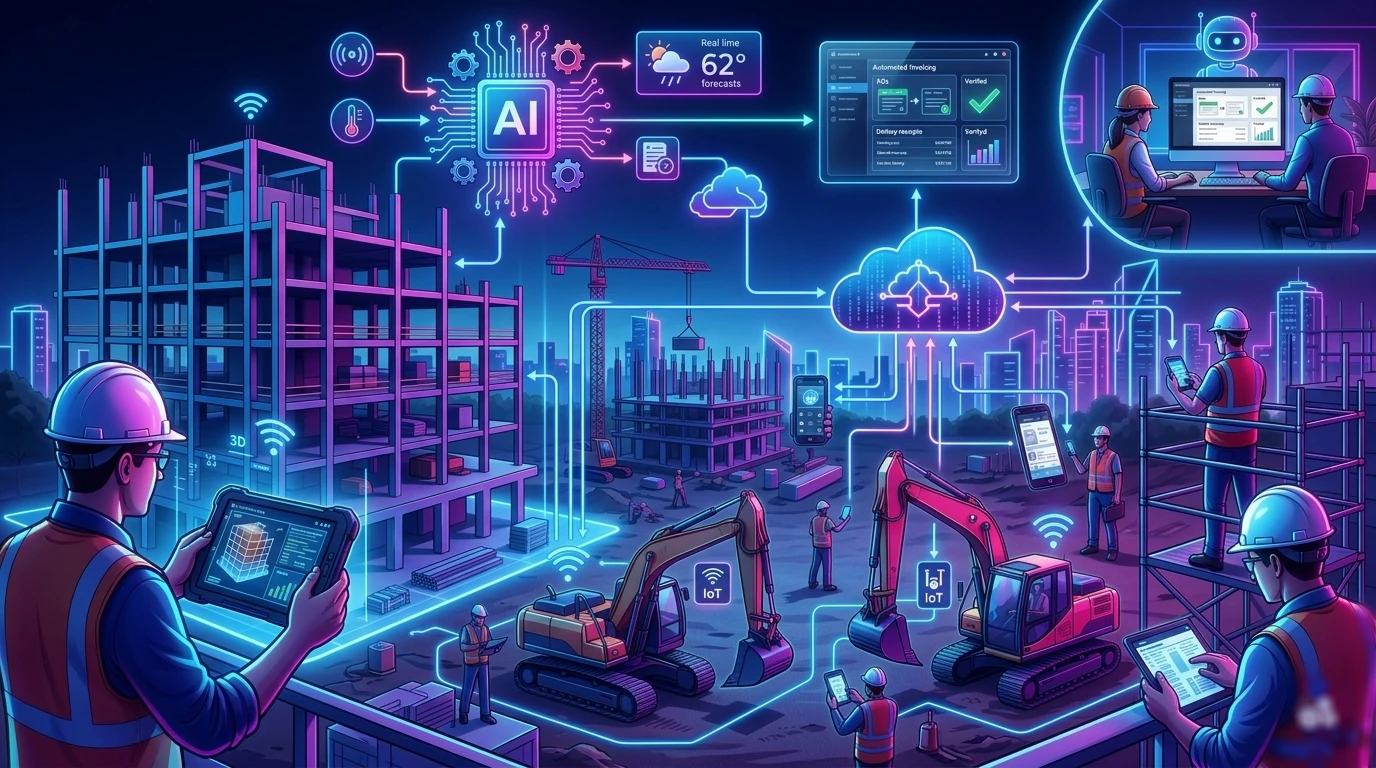
The best ERP software for construction is changing with Intelligent ERP” features.

Artificial Intelligence

  • AI in ERP software for construction can predict project delays by looking at weather patterns and past vendor performance.
  • It also automates invoicing and checks for discrepancies between purchase orders and delivery receipts.

Cloud ERP Platforms

  • Moving to cloud-based construction ERP software has made it easier to access project data on site.
  • Now you can get the up-to-date information on a smartphone at the job site or a desktop in the office.

IoT Integration

  • By connecting ERP construction software with sensors on heavy equipment firms can track fuel consumption and equipment performance.
  • This helps maintenance logs and reduces the risk of equipment breaking down during a project.

Digital Twin Integration

  • Modern ERP systems, for construction are starting to work with Digital Twins, which’re virtual models of the physical build.
  • This allows managers to see logistical data directly on a 3D model of the structure.

Mobile ERP Applications

  • A construction management ERP software is only useful if people actually use it.
  • Mobile apps let field supervisors submit logs take site photos and approve timecards instantly.
  • This ensures the back office always has the data.


Common Challenges in Construction ERP Implementation

Even the top construction ERP software can fail without a strategic implementation plan. Recognizing these hurdles early is the key to success:

  • Resistance to Digital Transformation: Cultural pushback is common. Overcome this by highlighting how the ERP software construction tools make daily tasks—like reporting or tracking hours, easier for the field team.
  • Data Migration from Legacy Systems: Moving decades of messy data into a clean construction ERP system is a massive task. It requires a dedicated data scrubbing phase before the “Go-Live” date.
  • Integration with Existing Tools: Roadblocks often occur when trying to link a new ERP software for construction company operations with specialized third-party tools for CAD or HR.
  • Training Field Teams: If the construction management software is too complex, adoption will stall. Implementation must include tiered training sessions tailored to different user roles, from executives to foremen.


How to Implement ERP System for Construction?

A successful rollout of construction ERP software is a marathon, not a sprint. Following a structured implementation lifecycle ensures that your ERP solution delivers value without disrupting active project sites.

Phase 1 — Discovery & Requirements Gathering

Before looking at vendors, identify your specific pain points. Are you struggling with labor tracking or inaccurate job costing? Mapping out your current “as-is” processes helps define the “to-be” state for your new construction industry ERP software.

Phase 2 — Vendor Selection and Contract Negotiation

Evaluate top construction ERP software based on their ability to handle your specific niche—whether that is civil infrastructure or residential builds. Ensure the contract includes clear milestones for deployment and long-term support for your ERP construction software.

Phase 3 — Data Migration and System Configuration

This is the most technical stage. You must scrub your legacy data before moving it into the new construction ERP system. Simultaneously, configure the software settings to match your company’s unique work breakdown structures and approval hierarchies.

Phase 4 — Training and Change Management

A construction management ERP software is only as good as the people using it. Conduct tiered training sessions for office staff and field foremen, emphasizing how the ERP software for construction will make their daily reporting easier.

Phase 5 — Go-Live and Hypercare Period

Switching to the new system requires a “Hypercare” window where technical support is available 24/7. This ensures that any initial friction with the ERP system in construction is resolved immediately before it affects payroll or procurement.

Common Implementation Mistakes to Avoid

  • Over-Customization: Trying to make the ERP software construction suite perfectly mimic your old manual habits can lead to bugs and high costs.
  • Underestimating Data Cleanup: Importing “dirty data” into a new construction ERP solution will lead to inaccurate reporting from day one.


Best Practices for Successful ERP Software Implementation

Experion partners with construction leaders to ensure that every ERP software for construction industry rollout is backed by a robust change management strategy and deep technical integration.

  • Conduct Workflow Analysis Before Deployment: Understand exactly how information moves from the site to the office to ensure the ERP system for construction optimizes rather than complicates your path.
  • Choose Scalable ERP Architecture: Your best construction ERP software should be able to handle a 10x increase in project volume without requiring a complete system overhaul.
  • Invest in Employee Training: Digital literacy is the backbone of successful construction software ERP adoption; don’t skimp on user workshops.
  • Ensure Strong Data Governance: Establish clear rules for who can enter data and how it is categorized within the erp software for construction company database.
  • Use Phased Implementation Strategies: Instead of a “big bang” rollout, consider deploying the financial module first, followed by project management and HR in later stages.


Key Factors to Consider When Choosing Construction ERP Software?

Choosing the best ERP software for construction industry requires looking beyond the sales pitch to the underlying technical and functional capabilities.

  • Industry-Specific Functionality: Does the ERP construction software natively handle lien waivers, AIA billing, and union payroll, or will you need expensive add-ons?
  • Integration Capabilities: Ensure the construction management software offers open APIs to talk to your existing CAD, BIM, and estimating tools.
  • Cloud vs. On-Premise Deployment: Most modern firms prefer a cloud-based construction ERP software for its superior field accessibility and lower maintenance overhead.
  • Scalability and Customization: Look for a construction ERP system that can be tailored to your unique branding and reporting needs while growing with your fleet and workforce.
  • Vendor Expertise in Construction Technology: Choose a partner who speaks “construction,” not just “software.” Understanding the difference between a submittal and an RFI is vital for a successful erp software for construction industry partnership.


Future Trends in Construction ERP

The next generation of construction industry ERP software is moving beyond data entry and into the realm of intelligent, autonomous operations. These trends are redefining how the best construction ERP software adds value to the job site.

AI-Driven Project Forecasting

By leveraging machine learning, modern ERP software for construction can analyze thousands of historical data points to predict potential schedule slips or budget overruns months in advance. This allows for proactive resource leveling that traditional construction management software cannot provide.

Autonomous Construction Equipment Integration

As self-driving machinery becomes more common, the ERP system in construction will act as the command center. It will track the productivity of autonomous excavators and haulers in real-time, syncing their output directly with the project schedule and fuel procurement modules.

Predictive Maintenance for Machinery

By connecting ERP construction software to IoT sensors on heavy equipment, firms can move from reactive repairs to predictive maintenance. The system identifies mechanical wear before a breakdown occurs, automatically ordering parts and scheduling a mechanic through the construction ERP solution.

Real-Time Supply Chain Monitoring

Global volatility requires an ERP software for construction industry that monitors the entire supply chain. Using GPS and blockchain integration, contractors can track the exact location of critical materials, from the factory to the port to the site, ensuring the construction ERP system always has an accurate “Estimated Time of Arrival.”


Real-World Use Cases of Construction ERP

An ERP solution is adaptable across various scales and sectors, providing a “single version of truth” for diverse project types:

  • Large Infrastructure Projects: Managing the multi-year lifecycles of bridges or highways requires the robust construction project management ERP software capabilities found in enterprise systems to handle thousands of subcontractors and massive material volumes.
  • Residential Construction Projects: Homebuilders use ERP software for construction company needs to manage high-volume “production” building, syncing sales office data with site-level procurement and trade scheduling.
  • Commercial Real Estate Development: For office or retail builds, top construction ERP software manages complex financing, tenant improvements, and the transition from construction to facility management.
  • Government Construction Programs: Public works require the extreme transparency and auditability offered by an ERP system for construction to ensure compliance with strict tax-funded reporting requirements.


Build smarter with a construction ERP designed for global scale ⟶
Get Expert Guidance Today


The Business Impact of Construction ERP

The shift to an ERP software construction platform delivers measurable improvements to the corporate bottom line:

  • Reduced Project Delays: Integrated scheduling and real-time communication ensure that the right resources are always in the right place, minimizing “wait time” on-site.
  • Increased Operational Transparency: With construction management ERP software, executives no longer have to wait for end-of-month reports to see the health of a project; every data point is live.
  • Improved Financial Accuracy: Automated construction accounting and project management software eliminates the manual entry errors that lead to tax penalties or unpaid vendor disputes.
  • Higher Project Profitability: By tightening cost controls and reducing material waste, the best ERP software for construction protects margins that are often lost to inefficiency.


How Experion Can Offer Support in Building Construction ERP Software?

Experion provides the technical backbone for construction digital transformation, engineering custom ERP systems that harmonize complex site data with enterprise-level financial strategy.

Our team specializes in:

  • Custom ERP Development: Building a bespoke construction ERP system that fits your exact workflow, rather than forcing you to adapt to “out-of-the-box” limitations.
  • Legacy Modernization: Seamlessly migrating your data from fragmented spreadsheets or outdated tools into a modern cloud-based construction ERP software.
  • Advanced Analytics Integration: Layering AI and BI tools onto your ERP construction software to provide predictive insights and automated reporting.
  • Mobile & IoT Connectivity: Ensuring your construction management software is accessible in the field and connected to your physical assets.


Conclusion

Digital transformation is no longer a choice in the building industry; it is the primary driver of survival and growth. Construction ERP software serves as the vital link between the physical work on the ground and the financial strategy in the office. By adopting an integrated ERP solution, companies can move away from fragmented silos and toward a future of high-efficiency, data-driven success.

Key Takeaways

  • Centralization is the cure for fragmented site data.
  • ERP system for construction ROI is driven by improved accuracy and reduced delays.
  • AI and IoT are making the best construction ERP software more predictive and less reactive.


Ready to unify your operations? ⟶
Contact Experion Today for a consultation on building a future-ready construction ERP platform.